After our breakfast at the Berg and Dal rest camp at Kruger national Park and a quick peek at the water hole on the S 110 near the rest camp we drove towards the Malelane gate and started our journey towards Saint Lucia, our next stop. We chose the route through Eswatini, crossing the border at the Mananga border crossing. You first have to go to the South Africa departure where you get an exit stamp in your passport. You then continue to the Eswatini side where you pass three counters, one to take your personal information, the second counter where they give you an entry stamp, and the third counter where you pay 100 rand for your vehicle and receive a border pass. They never checked the papers prepared by the car rental company for crossing the border. You then pass the gate into Eswatini where you hand over the pass and payment slip. Just past this point there is a stop line on the tarmac. DO MAKE A FULL STOP with your car here! We never noticed the stop sign on the road, and were stopped by the police just 20 metres further and asked for our drivers license. They then gave us a fine for ignoring the stop sign. We had to pay 60 rand, and I am sure we were not the only ones. Not a great welcome into Eswatini. Before continuing my husband first ran back to the gate to warn the next tourists and at least save them the fine.
The drive through Eswatini is uneventful and pretty boring on tarmac roads bordered by sugar cane fields. But again beware of the speed limits, they keep on changing between, 120, 100, 80 and 60. You pass through Hlane national park where the speed limit is just 60 km/h, and just before the park, and after the first 60 km/h sign, a police check point was set up with a speedometer, and we were again stopped and told that we had ignored the allowed 60 km/h and would have to pay a fine. It started to feel like racketing. My husband said he started to feel very unwelcome, having been stopped already an hour before at the border crossing for a petty reason, and was thinking about writing a letter to the Eswatini government about the way they made tourists feel very unwelcome in their kingdom. And believe it or not, he was left off the hook. We met another speed check point close to the Lavumisa border crossing, but were warned by someone in the opposite direction, and were by then already meticulously keeping to all speed limits. When crossing the border into South Africa, you have to get and exit stamp on the Eswatini side and an entry stamp on the South African side. We were lucky and did not have to queue at either border crossing.

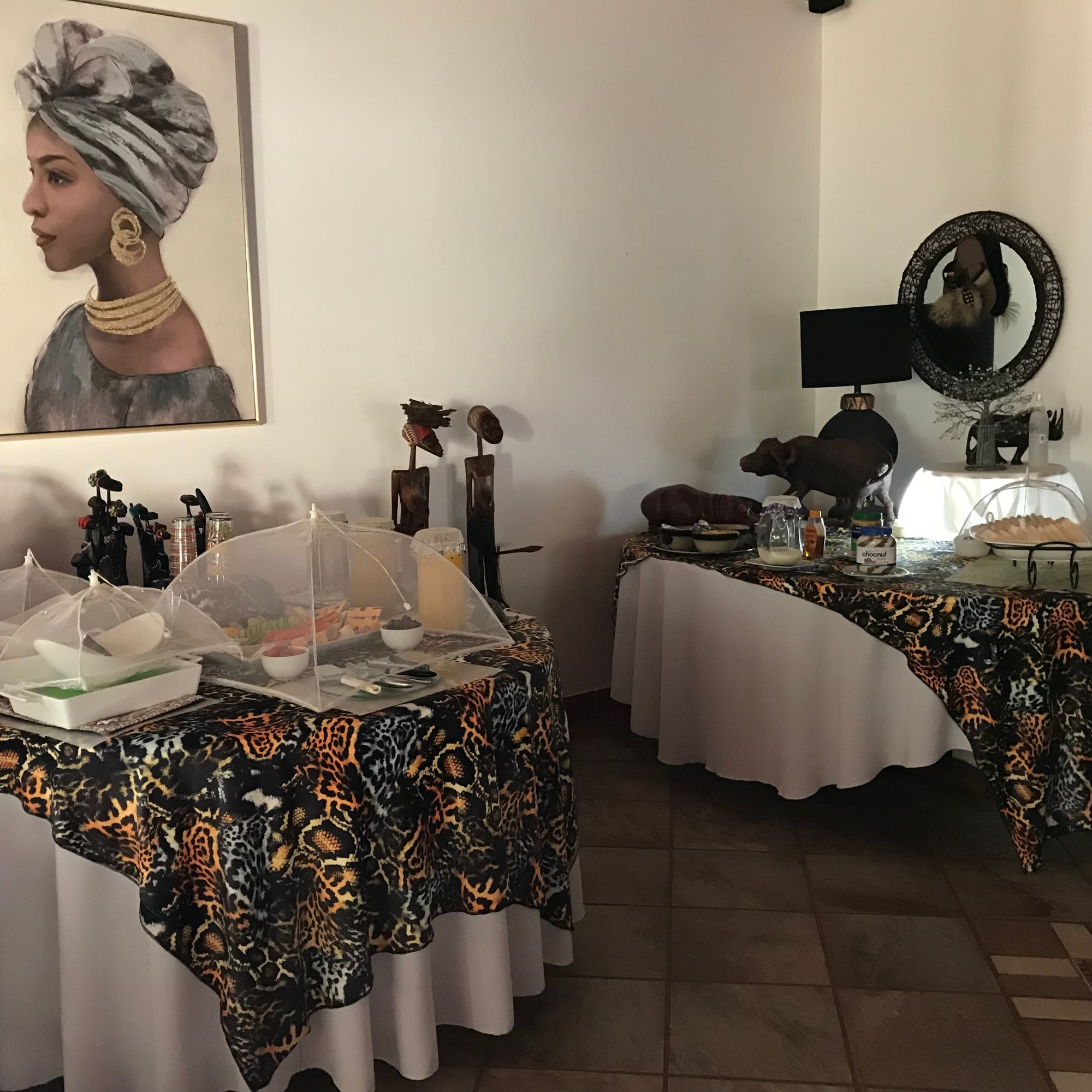

By 4 PM and on time for check in (between 2 and 5 PM), we arrived at the Elephant coast guest house in Saint Lucia, where we were welcomed by Cisca, the owner. She gave us a fresh orange juice and ran us through all the possible activities in the area, restaurant choices and house rules, as well as the load shedding schedule as the guest house does have an inverter back up battery system but no generator (just a small one). They will install solar panels in a few weeks though. Just after we settled into our room, a huge storm broke loose outside, with lots of rain, hail and wind, and frightening lightning and thunder. The storm caused the electricity to fall out even before the scheduled load shedding between 7 and 9:30 PM. There were three periods of load shedding every day in Saint Lucia. (Stage 3 and 4). During power cuts the lights, water and fan still work in the room, power sockets and airco doesn’t. ( so no recharging phones or other devices…) We had dinner at the Ocean’s Grill where we had the very fresh grilled catch of the day: slinger. After dark it is advised not to walk the streets of Saint Lucia, where hippo’s roam at night. You have to take the car to go to the restaurant in the evening!
After a good nights sleep we enjoyed the great breakfast that is served beween 7:30 and 8:45 AM, with a choice of freshly prepared eggs, fresh fruit, yoghurt, cereal, bread, coffee and tea.
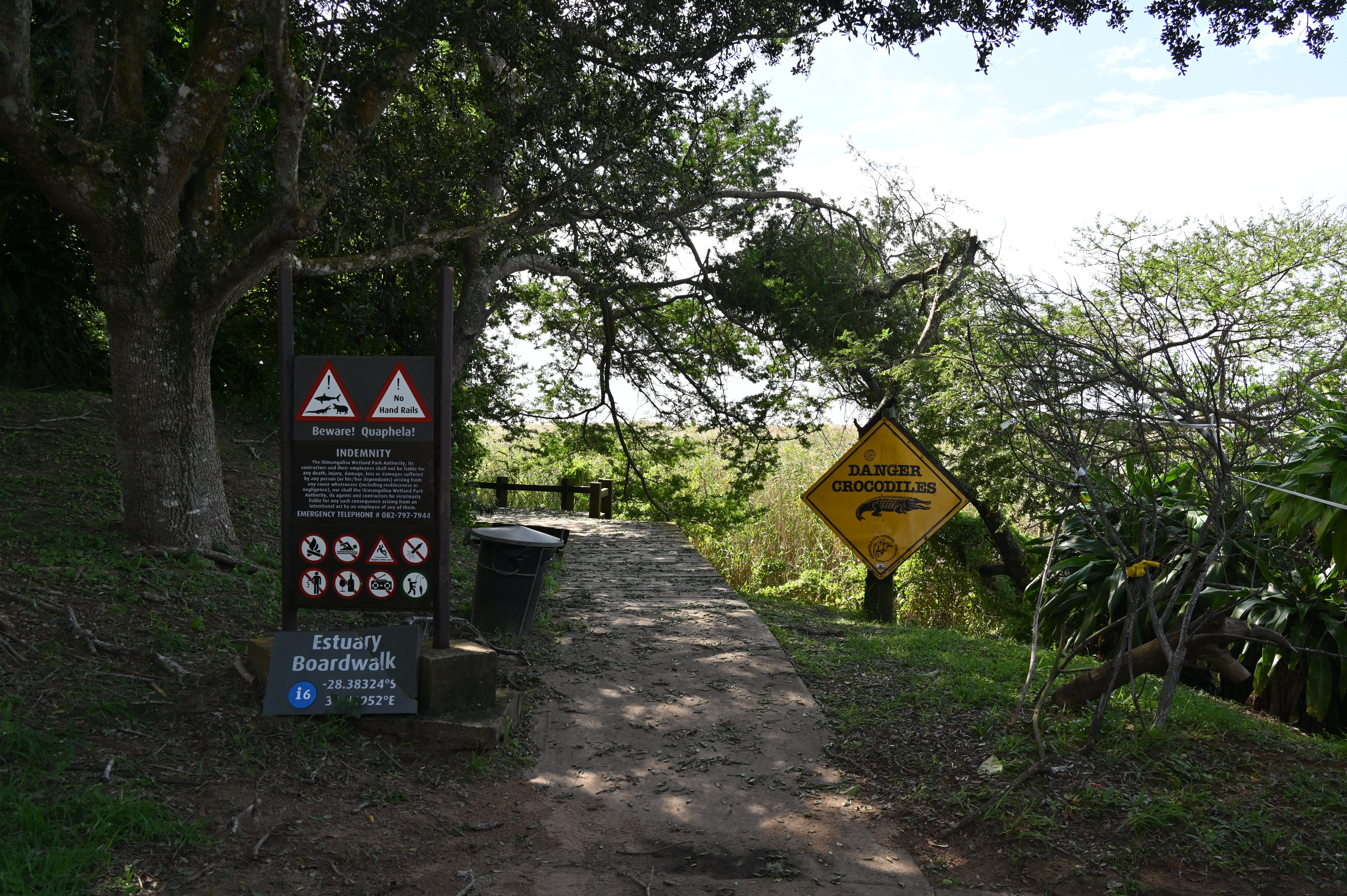
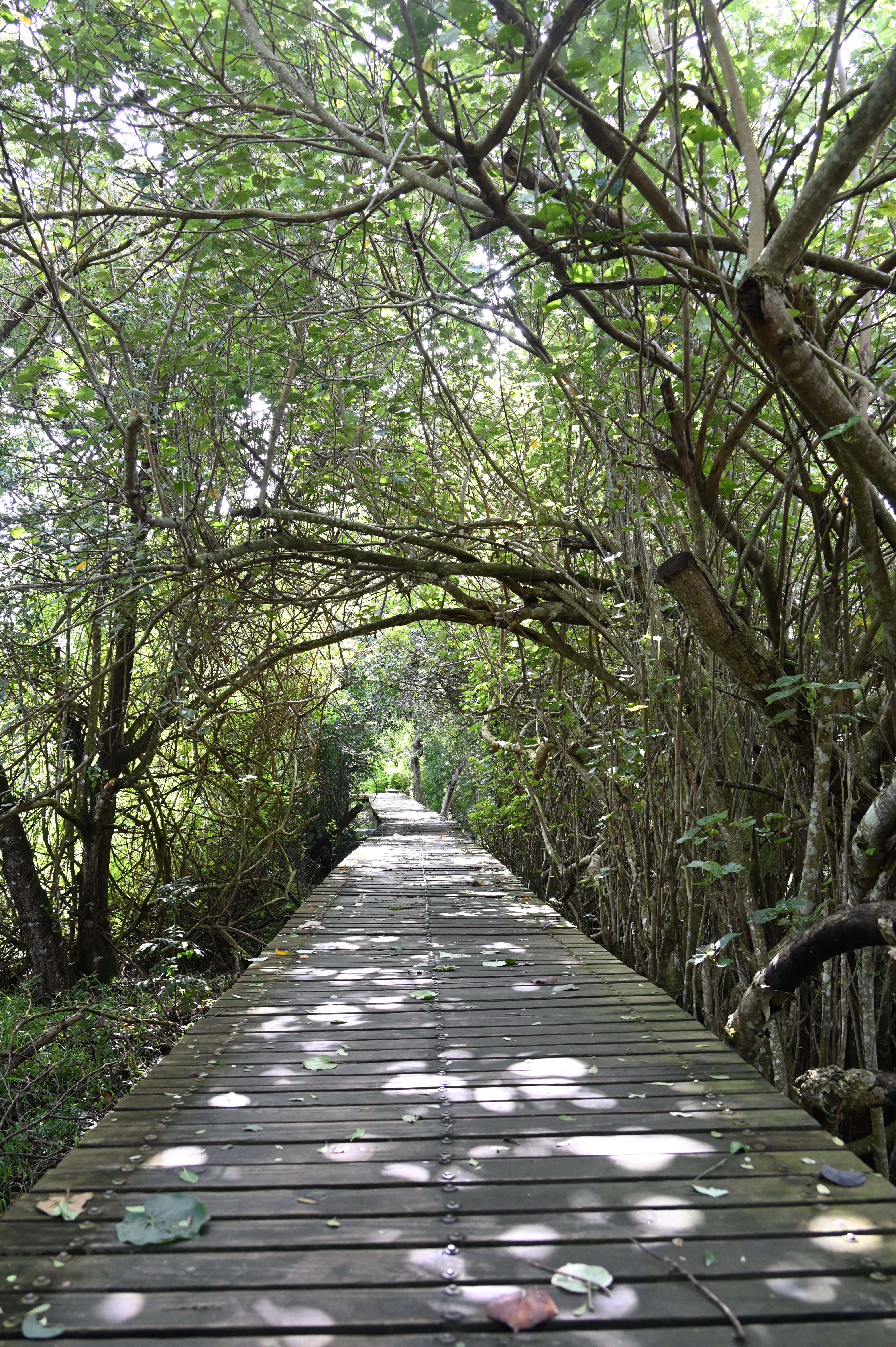

The storm had felled quite some trees, and they were already busy clearing the street towards the beach. We drove towards the Ski boat club, parked our car and walked the board walk path through a mangrove to the seaside were anglers were catching sea-fish. Afterwards we bought some fresh fruit from the market and some drinks and snacks from the Spar supermarket and drove towards the Bhanhazi gate.
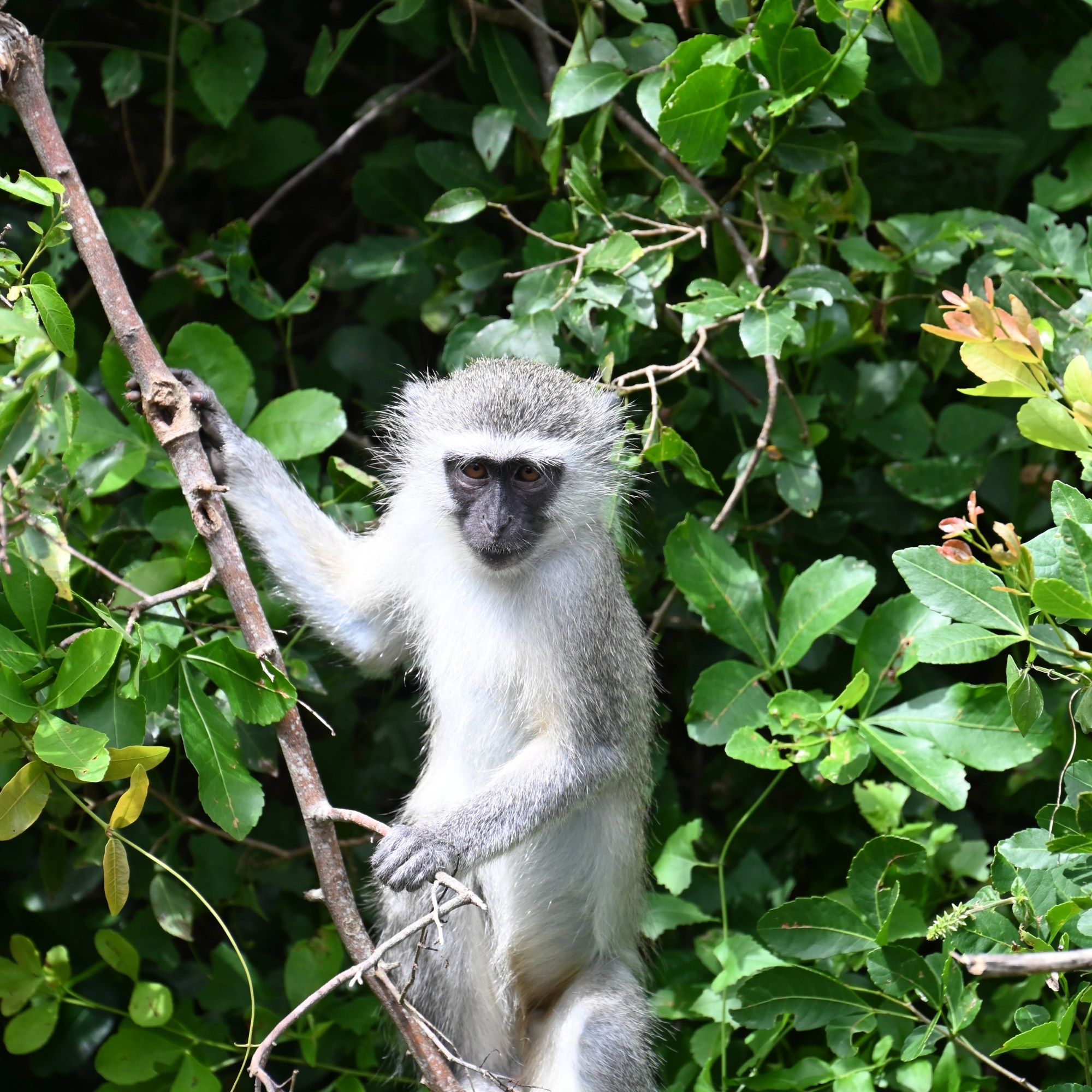


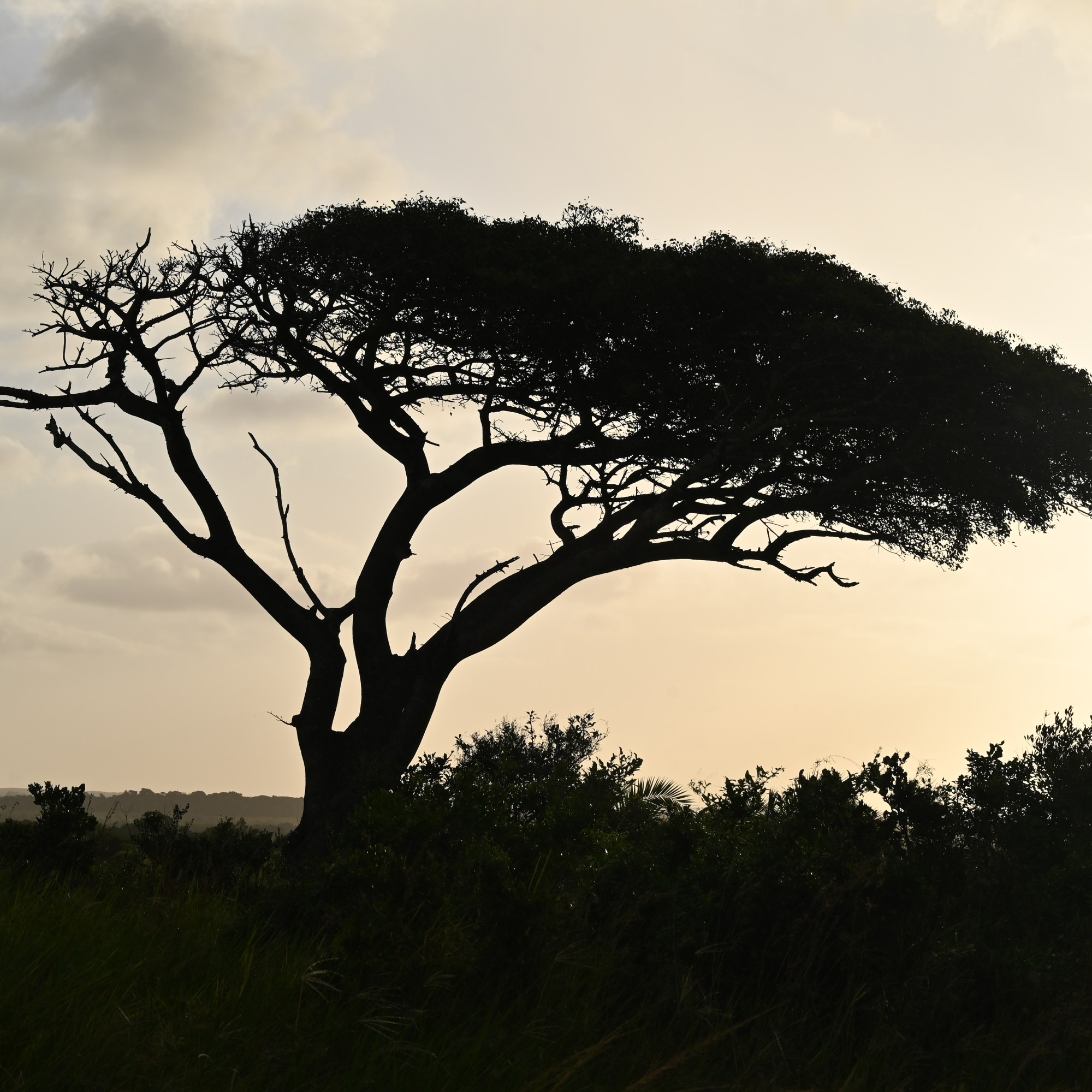
We paid R 118 per person and R 70 for one car to enter the Eastern shore of the iSimangalosi wetland park. A 33 km tarmac road connects the gate with Cape Vidal, and on this road you can take several side roads, often one direction gravel loops with extra view points or picnic spots or short trails to a viewpoint or hide. The fist loop to Amuzibu pan was inundated, the loop to to the Mafazuma pan and hide was blocked with fallen trees, and the walking trail to the hide was flooded. Cape Vidal is a stretch of sandy beach that attracts a lot of families with kids. A real nice loop is the last loop, the Grassland loop that is about 20 km long and leads you to a beautiful area with marshes, lakes and hilly grassland. The scenery is really fantastic with a lot of mangrove and marshland interspersed with forested dunes and red dunes.


We saw quite some wildlife: mountain zebra, duiker, hippo, baboon, buffalo, kudu, impala, wildebeest, warthog, secretary bird, and a couple white rhino to end off the day. In the evening we headed back to Ocean’s grill and again took the catch of the day which was again slinger. Because of the problems with the electricity it wasn’t possible to pay by card, luckily we had enough cash, and we decided to change some currency the next day, to be able to always pay in cash incase of an emergency like this where the electricity completely fails.
We were tired and went to bed early.
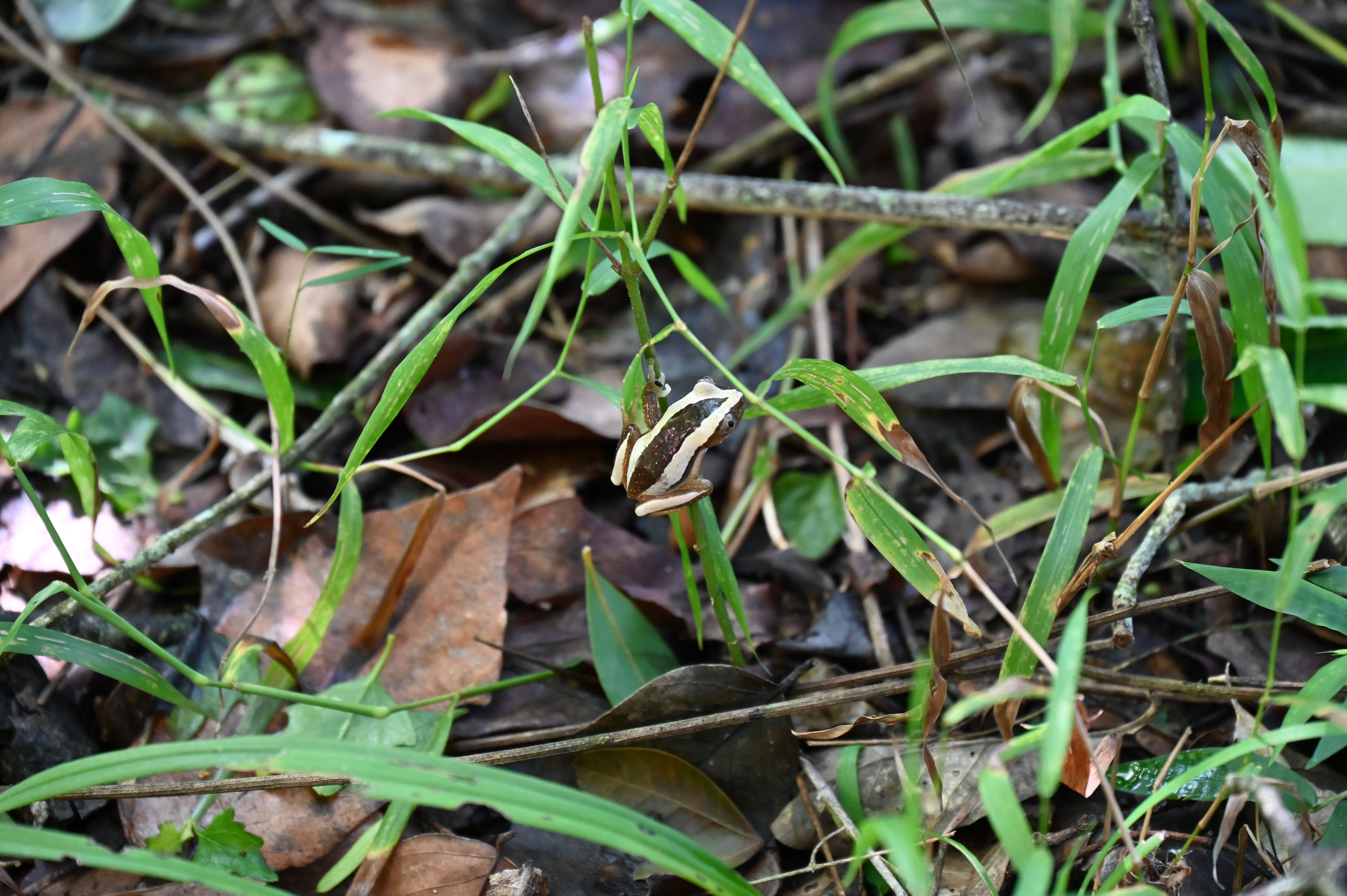

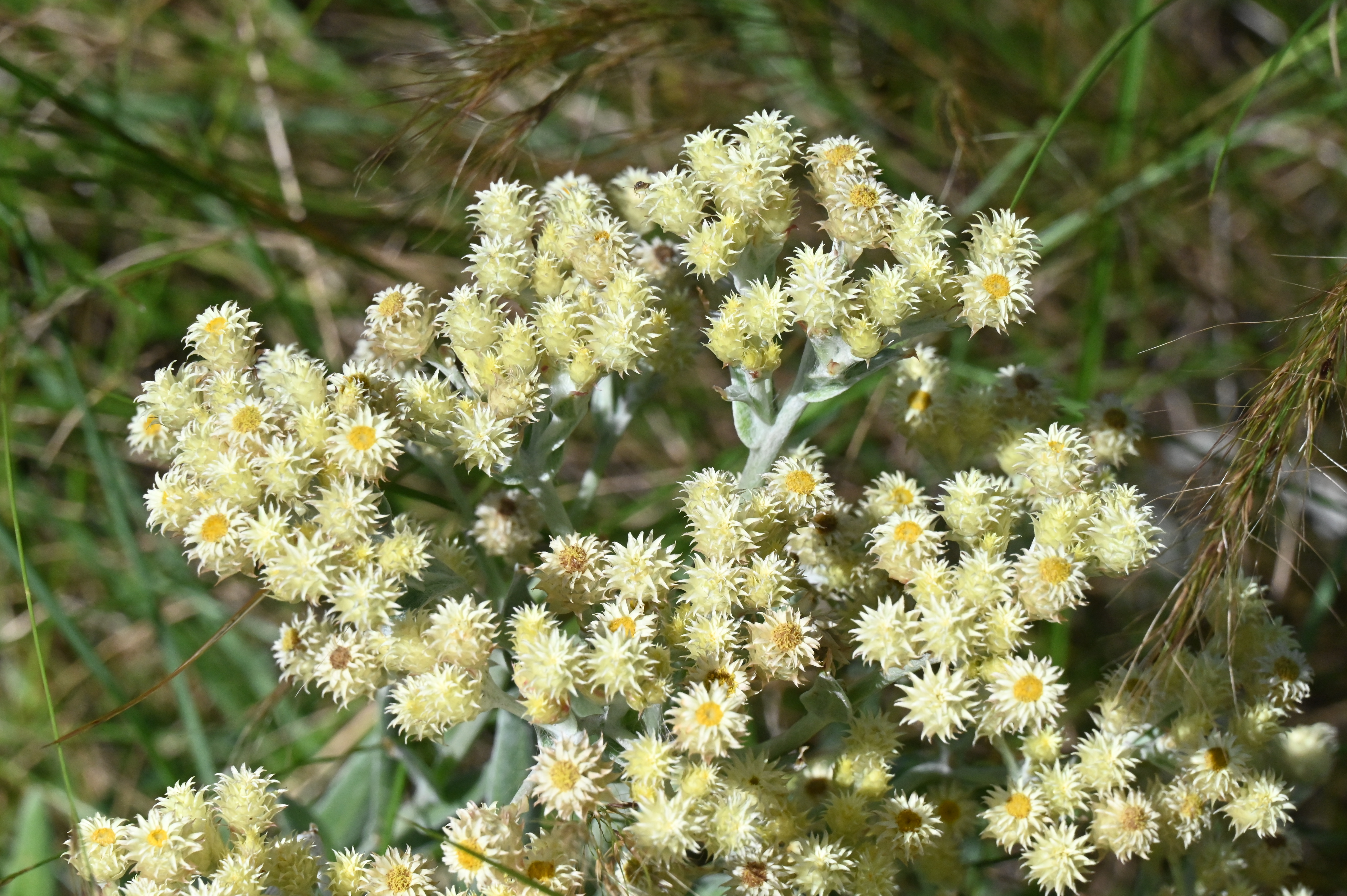
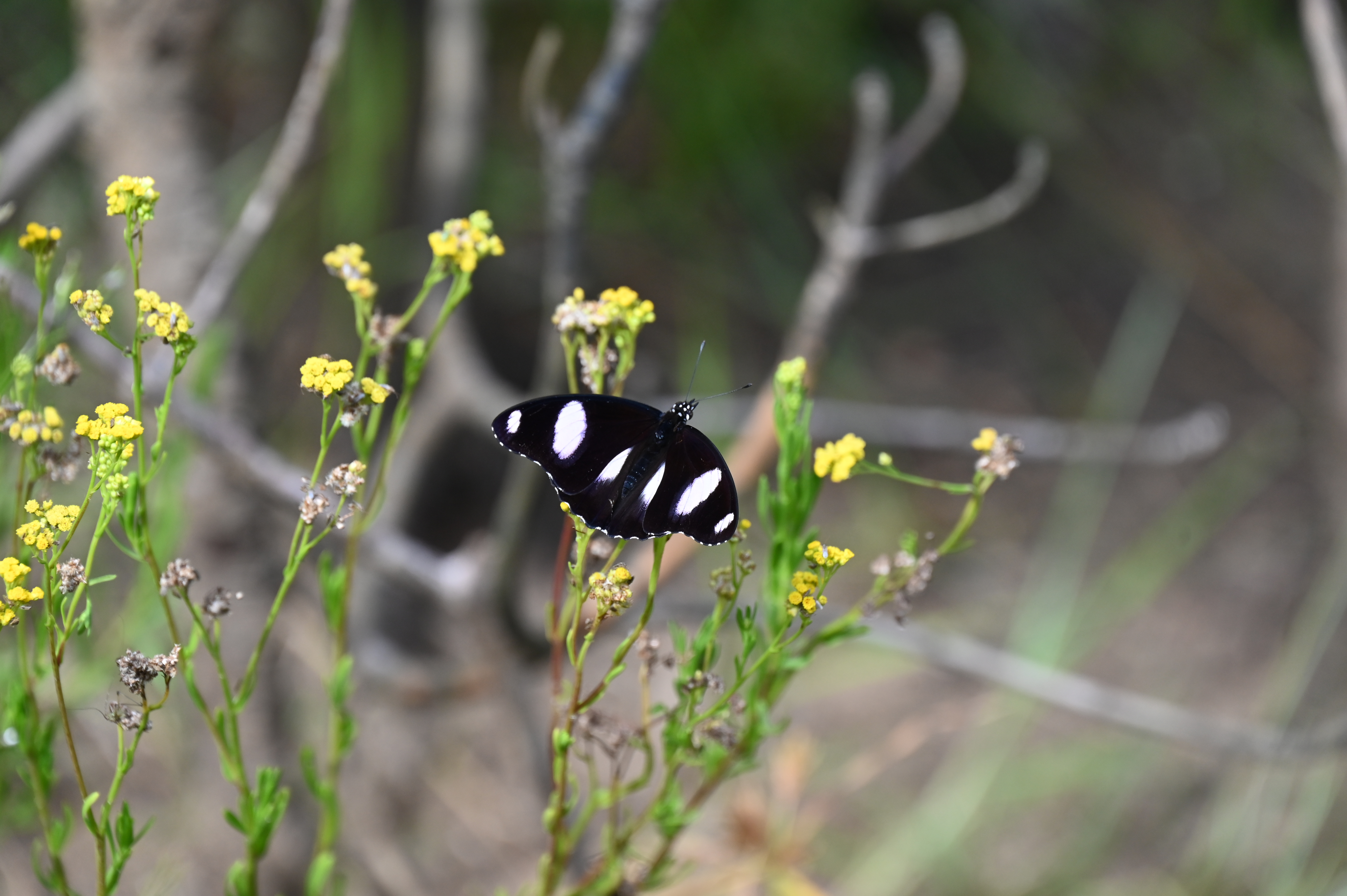
When we got up the electricity was restored! Time to load everything up again. After breakfast we drove to the the Bhanhazi gate of the iSimangalosi wetland park where we parked our car at the reception, went in and asked for the self guided walk. They said it would take between 2 and 3 hours, but that maybe we wouldn’t get through since fallen trees might block the way after the storm. The walk starts at the back of the reception room, and they open the door for you. You take the path to the left, then take the first path on the right. The path runs past the water of a marshy lake filled with purple lotus flowers. Very soon we met a fallen tree on the path, but we managed to walk around it and joint the path a bit further. Further on the path splits again, and you have to take the left path this time. During the dry winter you might also be able to take the right path but we couldn’t continue because the path was inundated. The path makes a loop, and comes back to the back of the reception area. But it only took us 1 hour and 10 minutes to finish the whole loop. We didn’t really see any animals and there weren’t a lot of birds either, just some beautiful butterflies, but it was fun to be able to walk instead of sitting in the car all day.
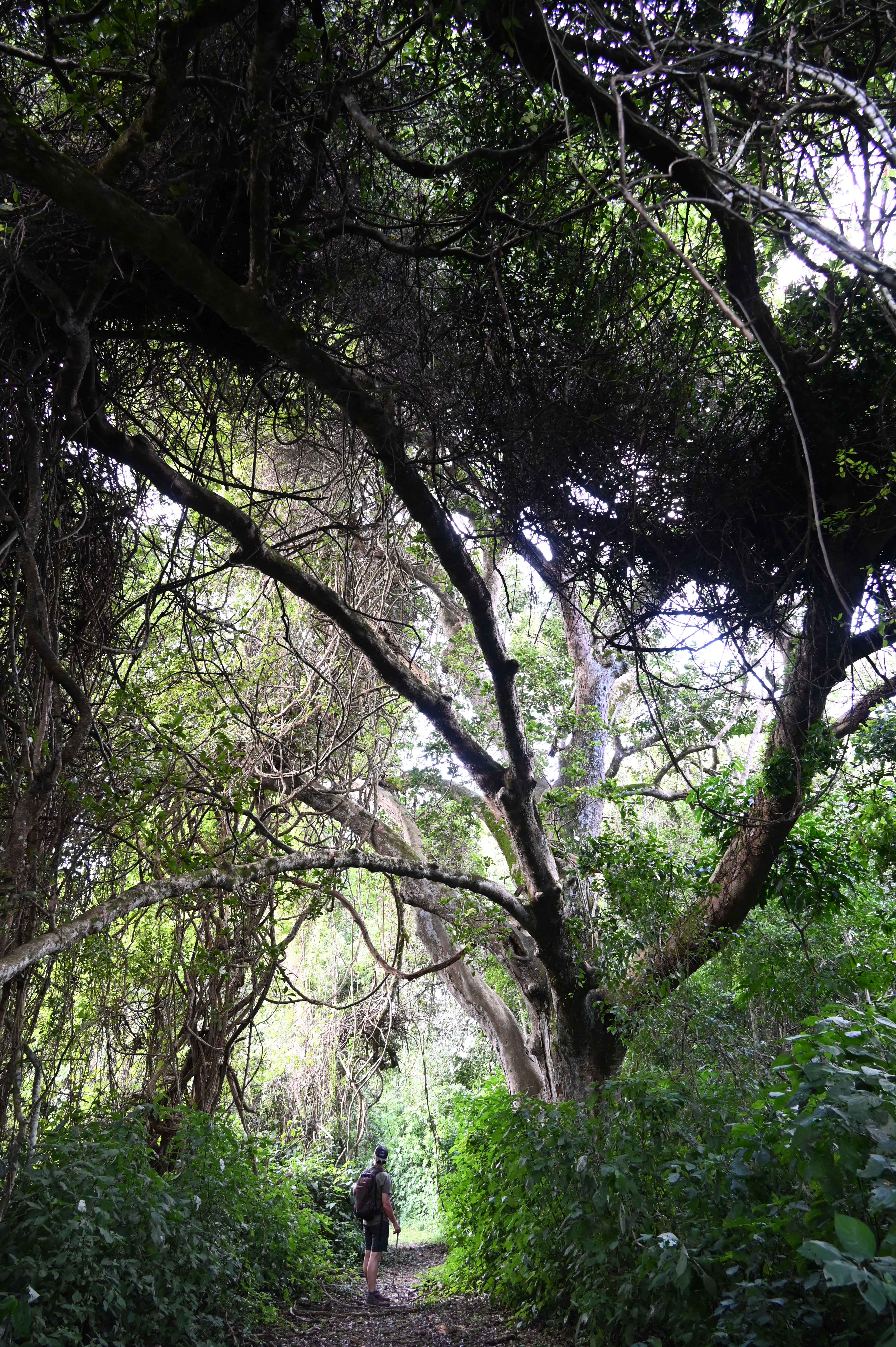
After the walk we drove to Saint Lucia, and drove all the way to the end of McKenzie road, where the iGwala Gwala forest trail starts. You can park your car on a clearance just before the start of the walk, but the walk itself is not signed. You walk for 1,5 km in this beautiful forest, also known as lover lane. It is a popular birding spot, but we did not see a lot of birds, just some guineafowl, but the place feels like an enchanted forest, with thick foliage, lots of birds singing and many butterflies.


After these short walks, we drove back to McKenzie street where we took a seat outside Kauai for a lunch of a smoothie with a vegetarian Poké Bowl. The place is open for lunch and offers quite some vegetarian and vegan choices, al made fresh with loads of veggies.


Feeling refreshed we set out to the Western Shore of iSimangalosi wetland park. We parked at the reception of the Kudukduku gate, where we paid our entrance fee en entered the park. We drove the main road ( not yet in tarmac), and the few loops on the right and left hand side, of which the 22 km long loop is probably the most interesting.
There is also an aerial boardwalk and a beautiful hide which shouldn’t be missed on the right hand side. We drove the last five km to Chatters Creeck where you have a view over Saint Lucia lake, but it was unfortunately closed. This day we saw giraffe, zebra, buffalo, elephant, wildebeest, hippo, kudu, reedbuck, bushbuck, waterbuck, white herron, two kinds of kingfisher and commorant.


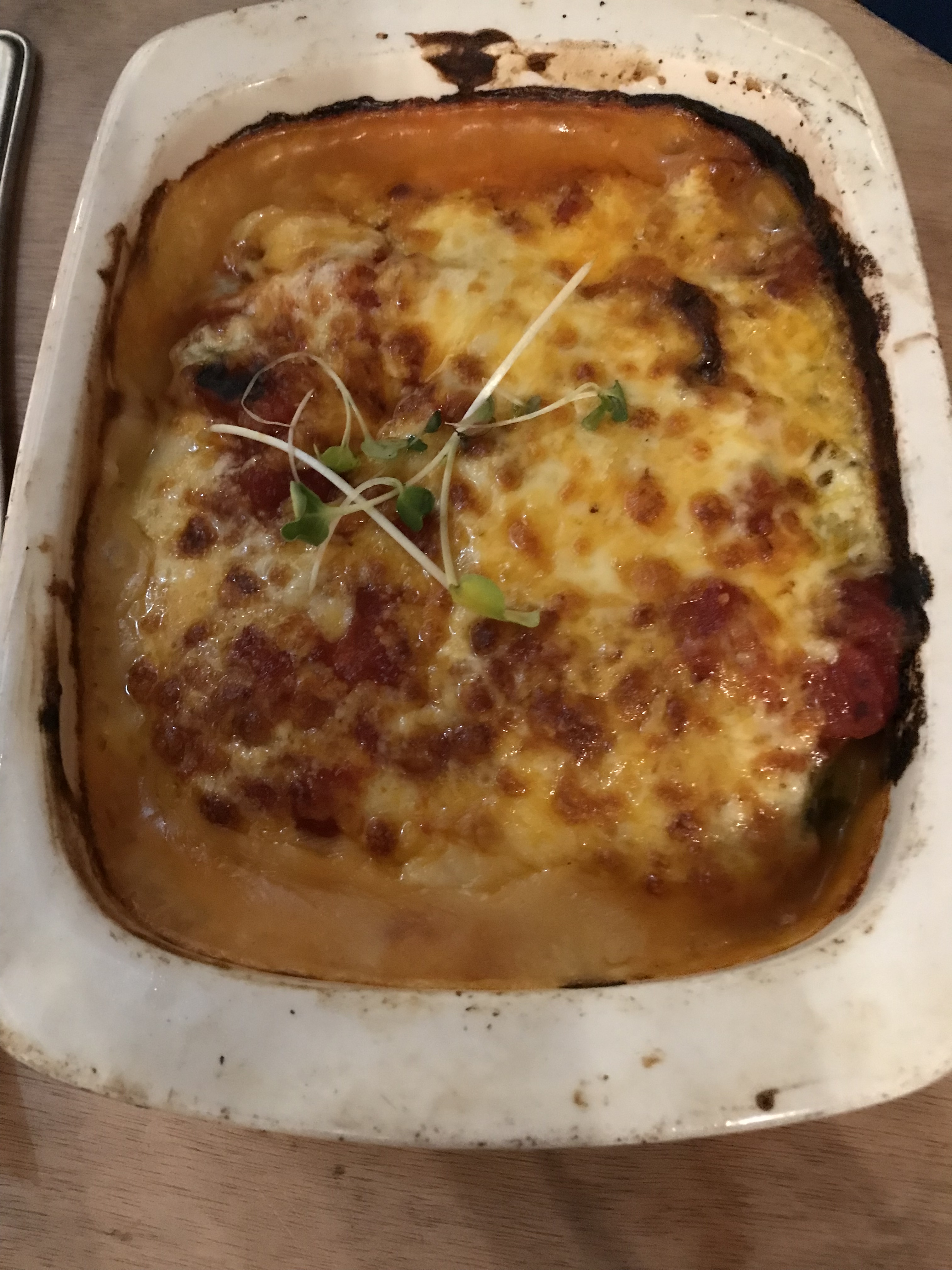
We watched the sunset over the grassy plains before exiting the park, and after a refreshing shower headed for Reef and Dune for a light dinner with a salad. The place is smartly decorated which attracts another kind of visitor, most of them were locals getting away for the long Easter weekend. The coming weekend promises to be a very busy weekend with mostly locals travelling.
Link to South Africa Part 1: Kruger Park and Johannesburg
Link to South Africa Part 3: Drakensberg
 chefmaison
Pingback: 12 day self-drive trip from Johannesburg – South Africa – Part 1: Johannesburg and Kruger park | chefmaison
Really useful blog post. Thank you.
What time did you leave camp?
What driving route did you take through eSwatini? Did you stop anywhere?
Hello, thank you, glad you like the post! We left quite early, I think somewhere between 8 and 9 AM. I remember we arrived at the border crossing around 10 AM. We used the following route through eSwatini: MR5, MR 24, MR3, MR 16 and MR 8, a straightforward tarmac road in very good condition. Just be aware of the speed limits! We did not make any stops in eSwatini and found the surroundings rather boring, con’t help you there.
Happy travels!