

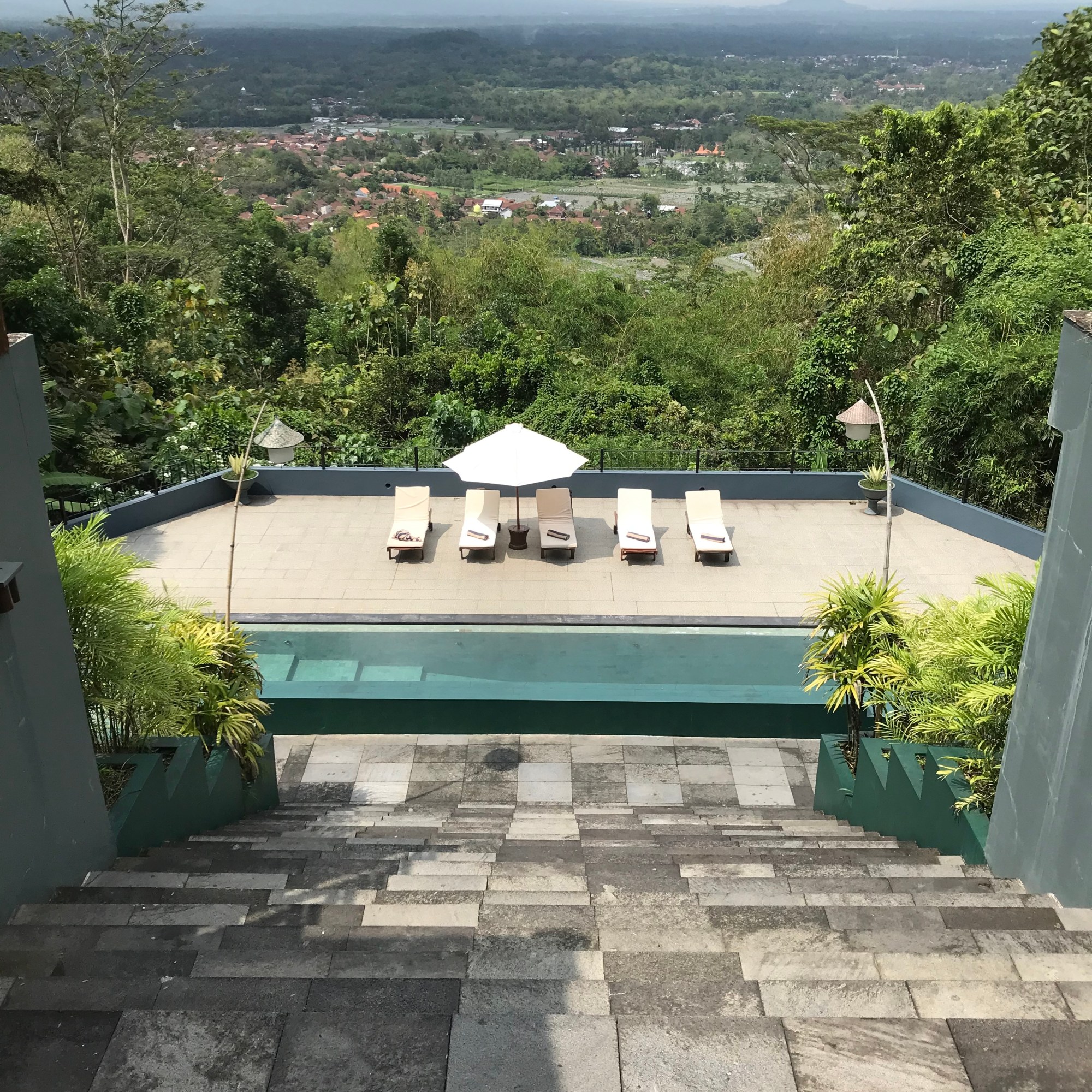
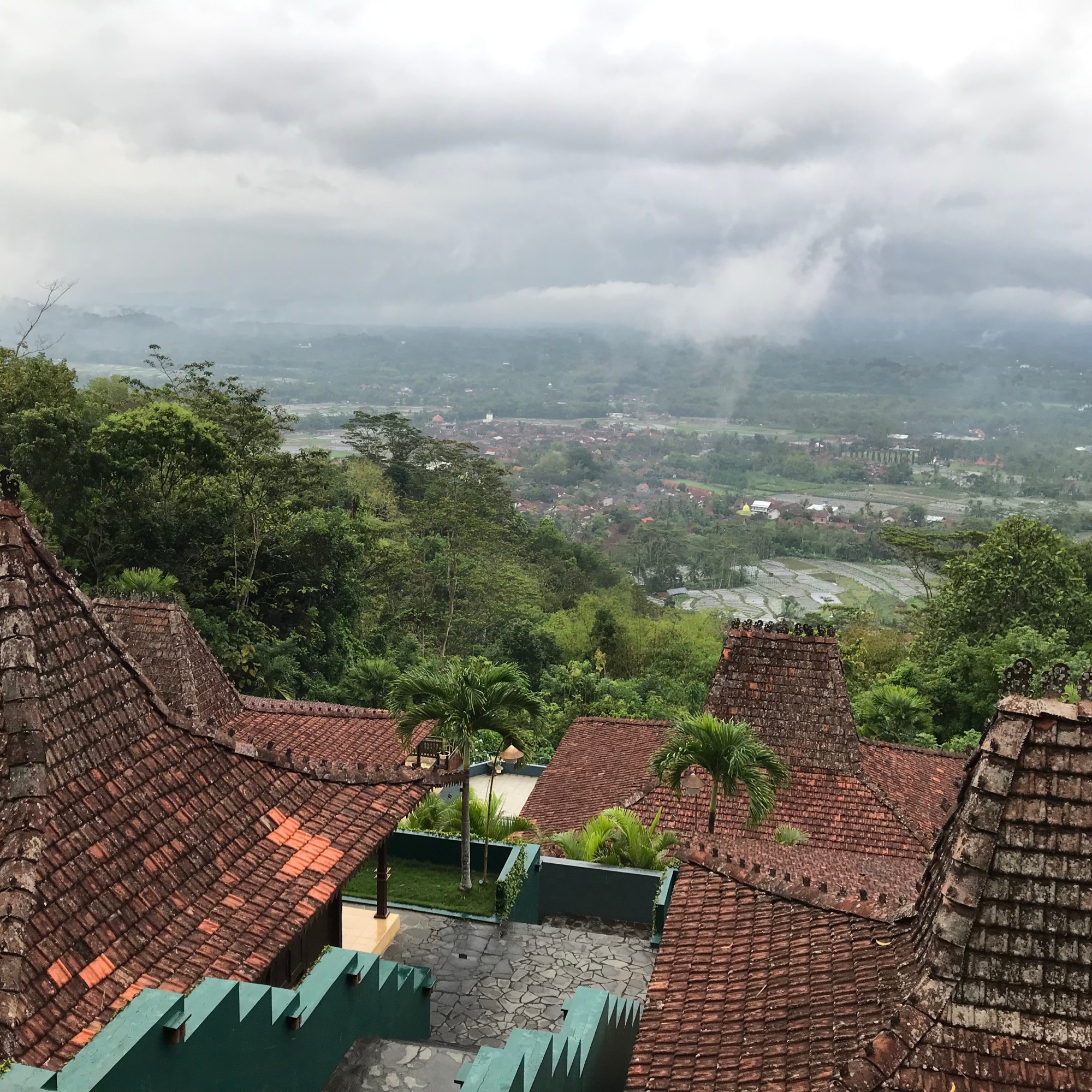
After checking out at the Phoenix hotel in Yogyakarta we called a Grab taxi to take us to Villa Borobudur Resort where we had booked a room for three nights. It took 1,5 hours to get there, at the hotel they take you from the parking area to the hotel lobby in a separate hotel car because the road is very steep. We were the only guests at the suites, there were some other guests who had booked a villa with personal staff. Since we were the only guests it was as if we had the whole hotel with lobby, swimming pool and staff all to ourselves. The rooms are built in a beautiful wooden Javanese style, with a large bed, and a balcony with a beautiful view over the valley. You see Borobudur temple in the middle of the valley and Merapi moutain at the horizon, really stunning! There is a swimming pool at the bottom of the stairs with the same stunning view. The hotel is built on terraces, with an open restaurant and bar area in the middle. We relaxed a bit, watching a downpour from our balcony, and around 5 PM took a hotel car to Sinar hill which is in fact just above the resort. You can take a drink while watching the sunset, unfortunately it was raining and foggy. We walked back to the hotel, since it is just a 200 m walk, which can be strenuous because of the heat and the humidity.
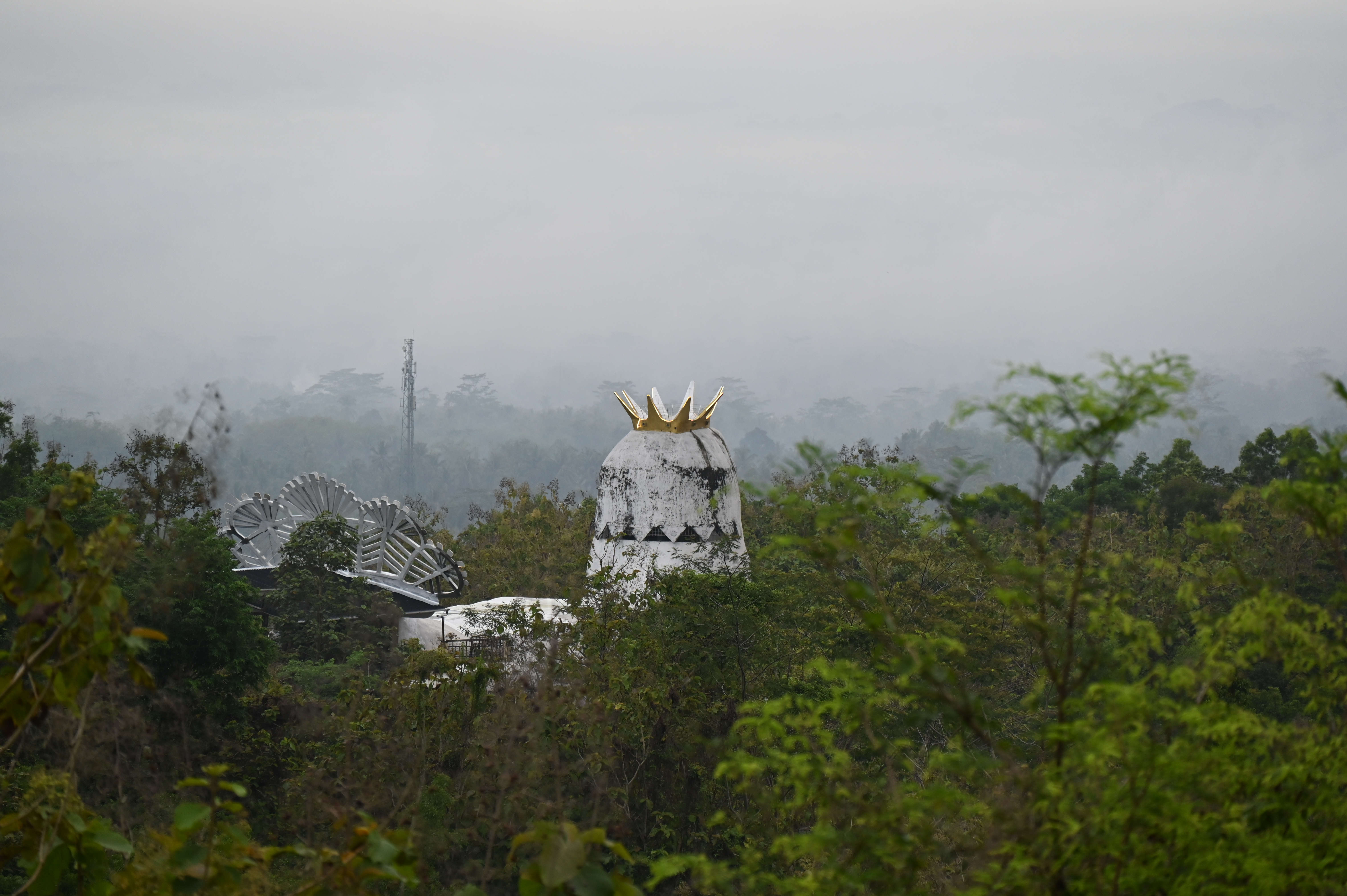

My husband got up at 4 AM to take a car to Sumbing mountain to see the sunrise over the Borobudur temple. The mountain is a 20 minute drive from the resort, and after parking the car you walk 200 m to the top where there is a viewpoint. You can buy a coffee while watching. When walking back down to the parking lot you pass several stalls where you can buy drinks, coffee, tea, some souvenirs, fruit or snacks. He had no trouble waking up at 4 AM, because ten minutes to four AM, the imam of all the mosques in the valley start calling for the morning prayer, the sound from the different mosques mixe in a vibrant disharmonious loud chant that rises from the valley up the hill. The hotel supplies ear plugs for a good reason! The chanting continues for about half an hour, after which it becomes quiet and you can try to fall asleep again. The chanting is repeated around noon for quite some time, the imam not only calls for the prayer but also chants the whole ceremony through the speakers. And again around 3 PM and 6 PM. After 7 PM it becomes quiet again.
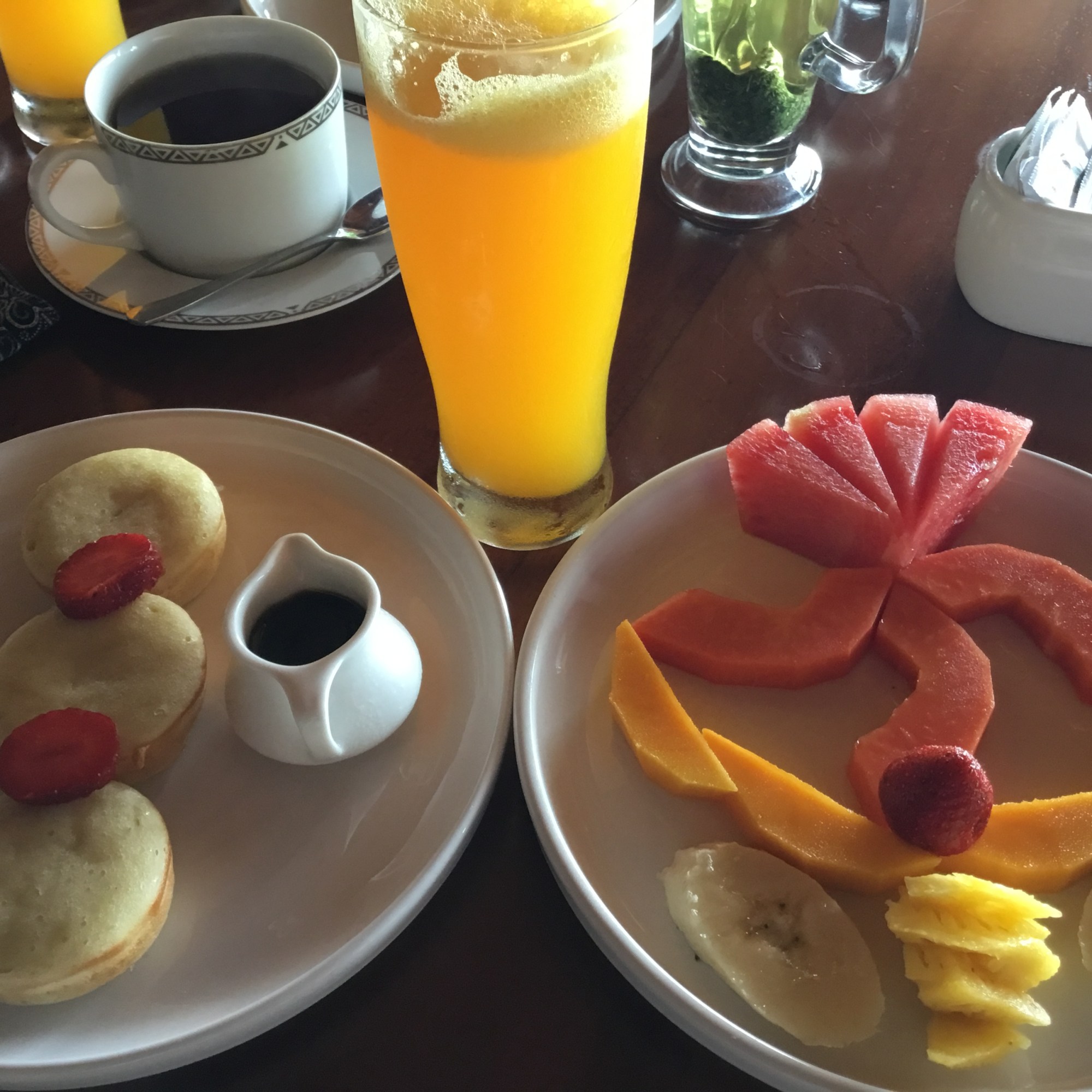
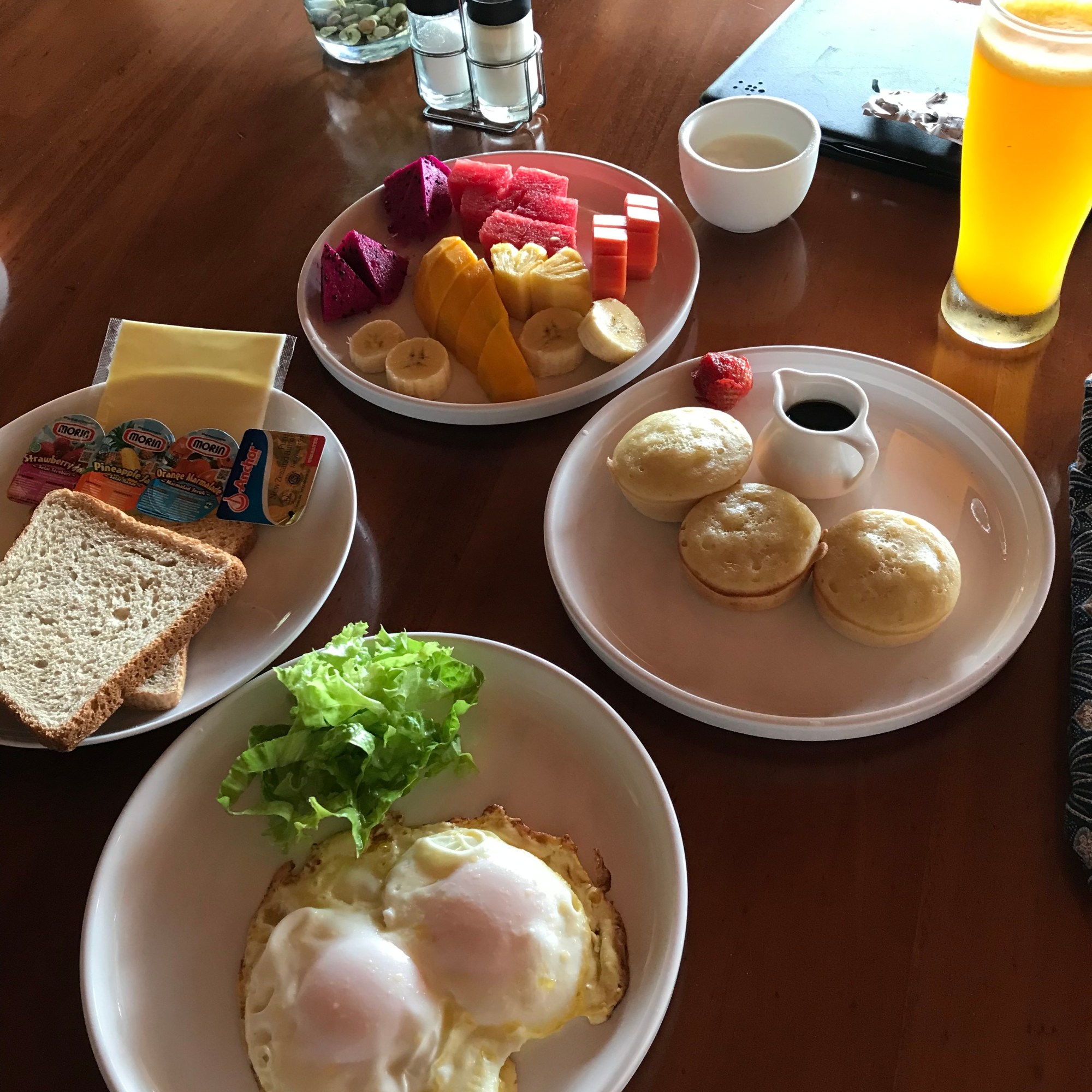
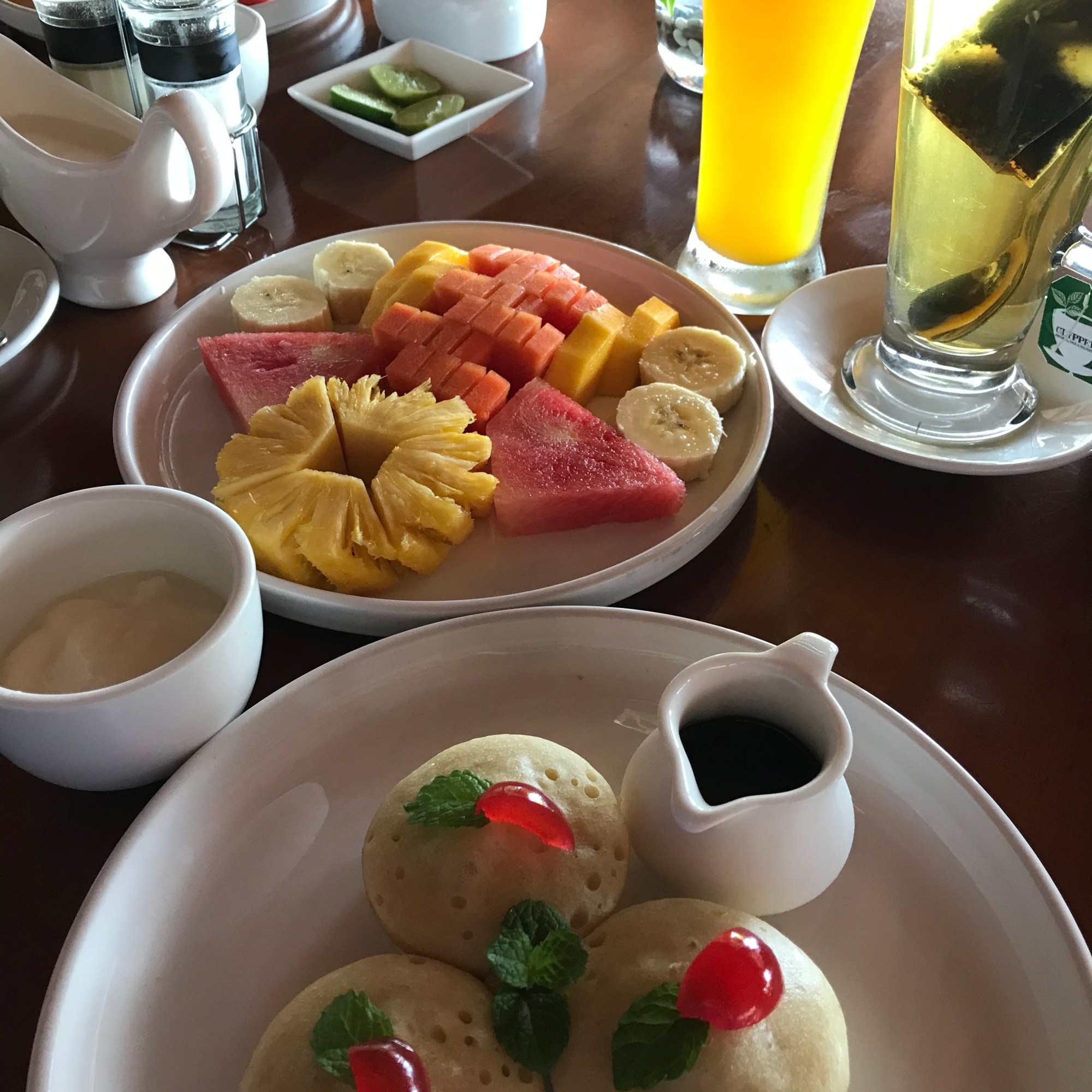
I eventually managed to fall asleep again, and we had breakfast around 9 AM, which you order the evening before. After breakfast we walked up to Batu Puti, white rock, on Menorah mountain. The walk up takes about 45 minutes, through lush vegetation, with wonderful views over the valley. Just before you reach the top you pass a small farmer’s village. When walking back down we passed some youngsters coming from school. We had lunch and lazed away our afternoon by the pool.
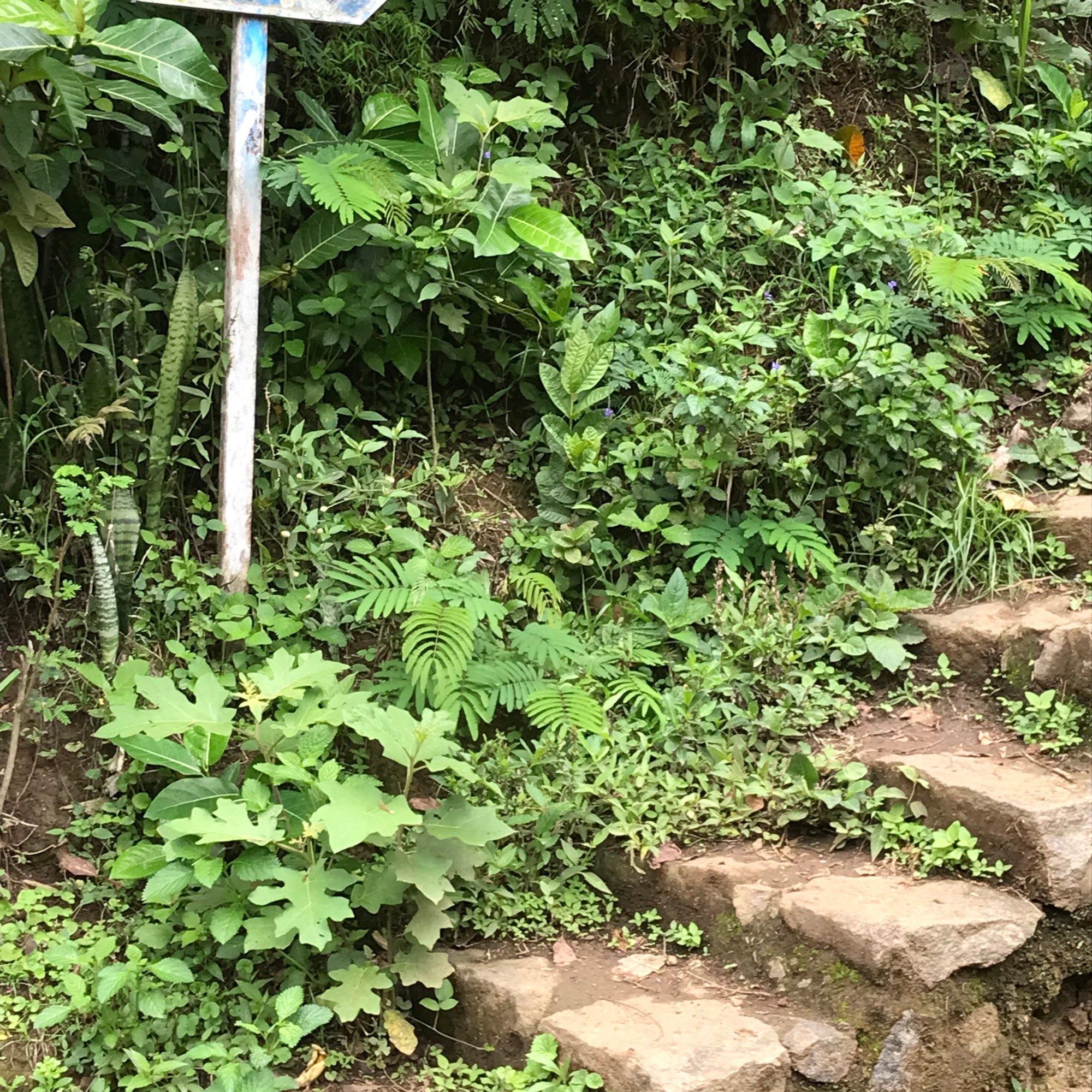
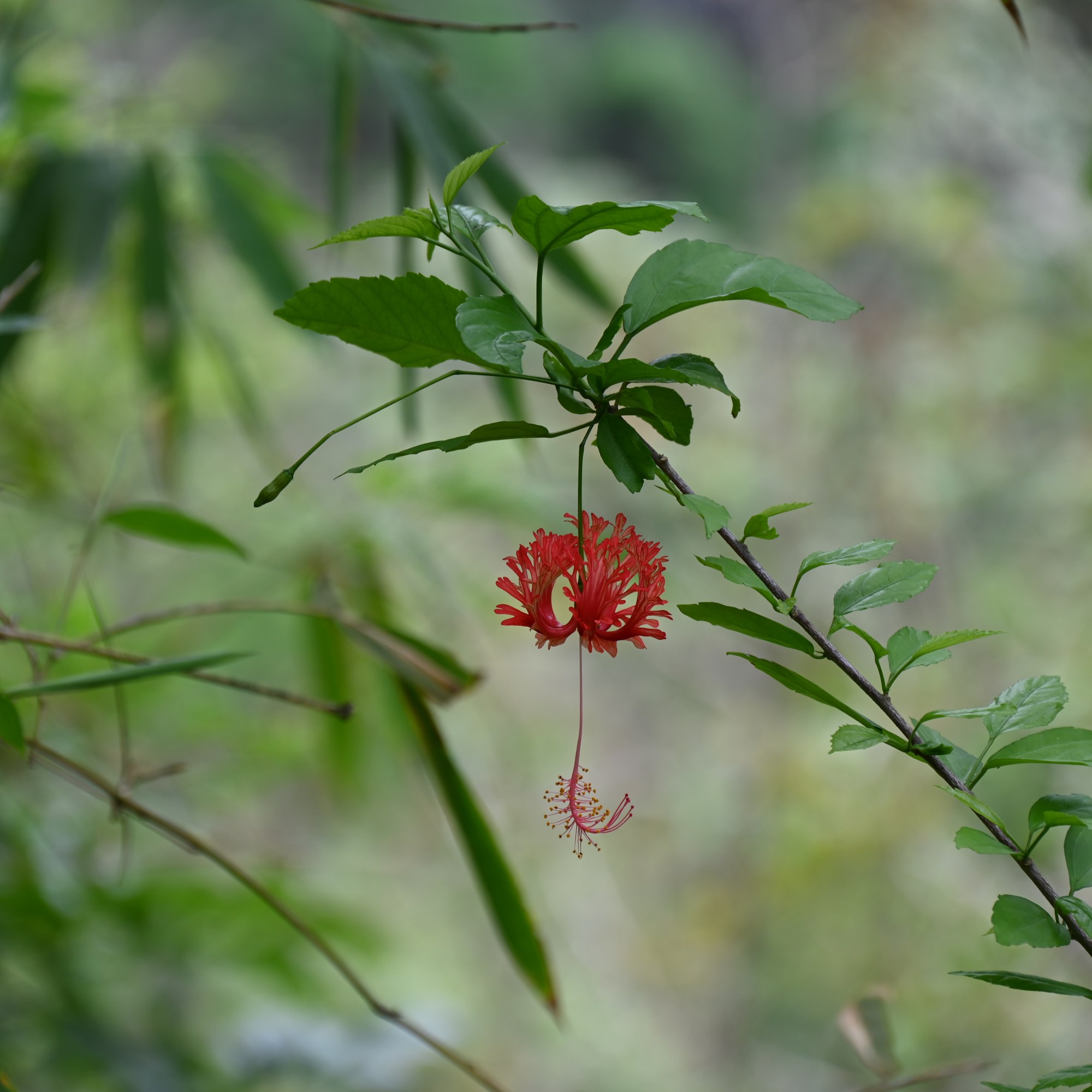

In the afternoon we booked our Borobudur tickets for the next day via the website: https://ticketcandi.borobudurpark.com/en/, first the website did not function well, and our payment was rejected, when we tried again later, the tickets for the first slot at 8:30 were already sold out, so we bought tickets for the next one at 9:30, meaning we would climb the temple from 10 to 11 AM. The ticket booth opens at 6:30, the temple grounds open at 7 AM and close at 5 PM. A ticket for foreigners to climb the temple and visit the temple grounds cost 455.000 rupiah.
Borobudur is the larges Buddhist temple in the world, built in the 8th and 9th century, and a Unesco World heritage site. It is built out of 2 million blocs of volcanic stone on a hill and consist of nine levels in a pyramidal structure. The five lower levels are built in a square, the three top ones are circular and it is topped of with a large stupa (ninth level), and has a height of 33 m. On the structure you find 504 Buddha statues, some of them have been lost, and many are now headless. The temple was abandoned in the 15th or 16th century and was hidden under a layer of volcanic ash and overgrowth until it was rediscovered in 1814 by governor general Thomas Raffles. Between 1907 and 1911 the Dutch restored the three upper levels led by Theodoor van Erp. The hill under the temple became water logged and in the seventies the whole structure was dismantled, the foundation stabilized, a drainage system installed and completely rebuilt. This restoration phase was undertaken by the Indonesian government in cooperation with UNESCO. Borobudur was not affected by the 2006 earthquake near Yogyakarta, but was damaged by volcanic ash from the 2010 Merapi eruption.

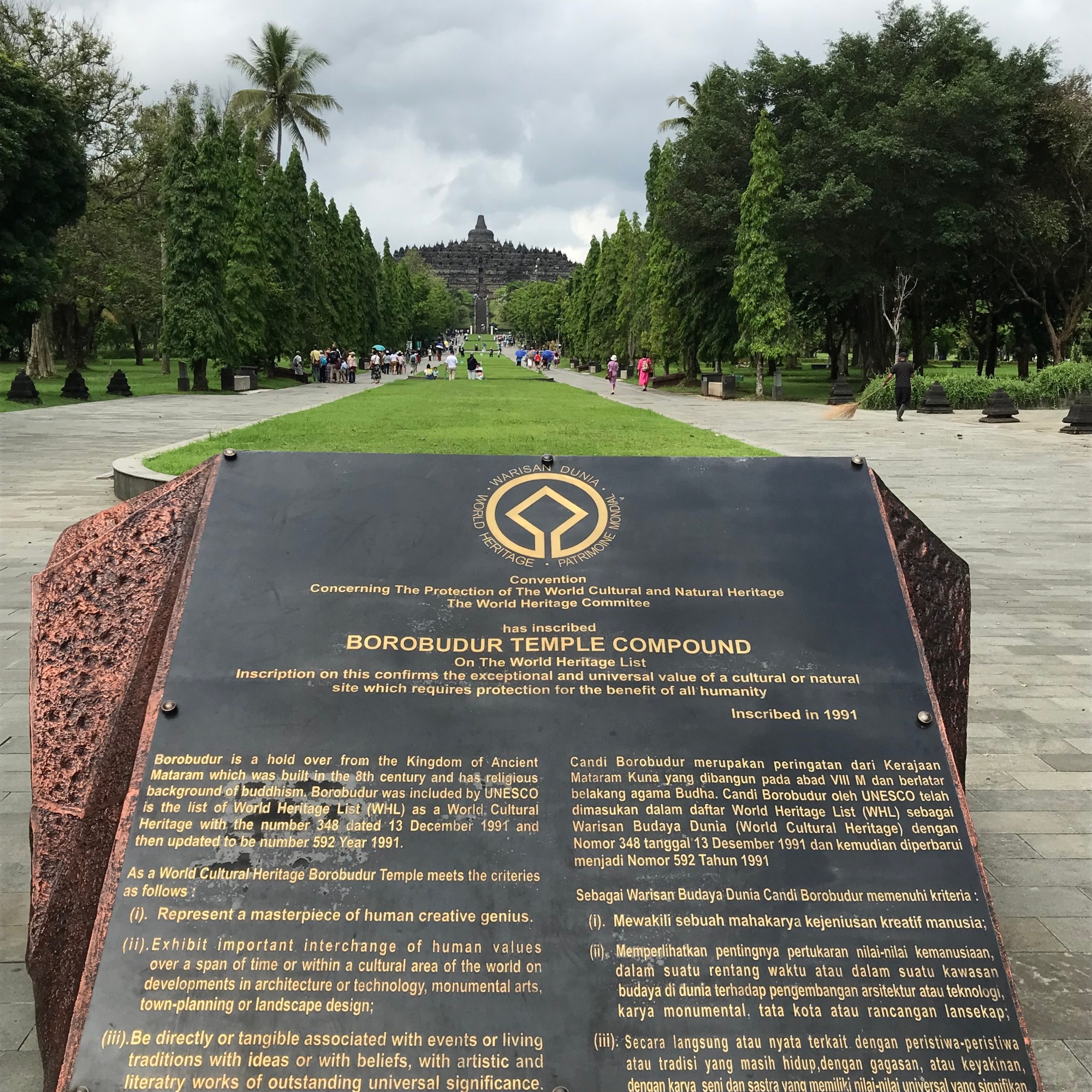

The next morning after breakfast a car from the hotel took us to the Borobudur temple. The shuttle to Borobudur is complementary for hotel guests. From the parking you have one entrance for domestic tickets and one entrance on the left for international visitors. You immediately get hassled by souvenir sellers. You enter the ticket office, they scan your ticket, give a bracelet with QR code, a voucher for a bottle of mineral water and a voucher for special slippers to visit the temple. If you do not yet have a ticket you can buy it here. You walk through a security scanner, and receive the number for the guide allocated to you. There is a toilet just before you go outside. You then get a bottle of mineral water, and a pair of slippers in your size. If they do not fit you well you can change them for another pair. You also get a bag to carry your own shoes with you. The bag and slippers are for you to keep.
You are then divided in groups of a maximum of 15 and joined by your guide. We left the ticket area around 9:40, but could only climb the temple from 10 to 11, so the guide explains about the origins and meanings of the temple and the several restoration phases until 10 AM. There is a larger crowd on the temple grounds, but many of them only have tickets for the temple grounds and cannot climb the temple structure.


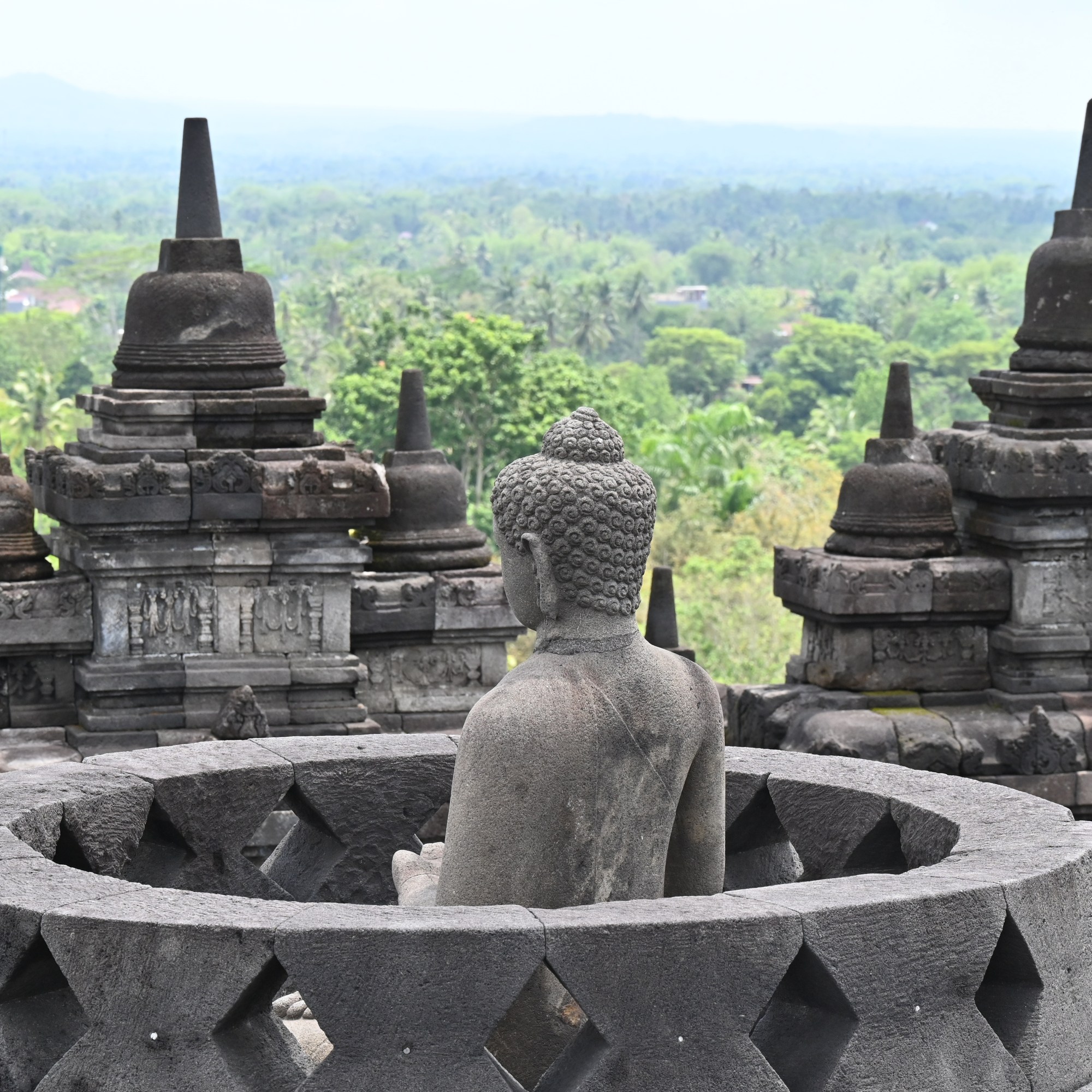
To climb the temple structure they scan your bracelet. The guide takes you to the ground level first where 160 relief panels that depict the law of Karma have been covered in the past. No one really knows why these panels were covered. Only on the Southeast corner some reliefs are still visible. From there you climb up and make a stop on one or two more levels, where the guide explains about the meaning of the reliefs, the different Buddha poses, the meaning of the three Buddhist levels, the desire level, the world of forms and nirwana. There are nine levels in total. The tenth level is the level which Buddha, born as the Hindu prince Siddharta, eventually reached. One of the former reincarnations of prince Siddartha was as a turtle. As a turtle he sacrificed himself to feed humans who where hungry. When you reach the top levels you get around 20 minutes to walk around by yourself. We descended down on the lower levels which we had all to ourselves, since most tourists stay on the top level to take pictures and selfies. The stupas on the top level all contain a Buddha statue, one or two stupas as open, revealing the Buddha inside. After about one hour on the structure you go down again. Our guide stopped on a lower level to give some extra explanation on the reliefs. When exiting the temple your bracelet is scanned again to make sure everyone leaves the structure. You can then walk the temple grounds where again, students come asking for a picture with you. We had an ice-cream before leaving and also visited the museum of Borobudur, where a large number of stones and carved pieces are on display. The museum can use a serious overhaul though. Before reaching the parking area you have to go through a huge area with souvenir stalls. We sent a whatsapp message to the hotel and the driver waited for us in the parking lot of the Borobudur temple. We took a light lunch and lounged at the pool.
Since it was rainy season the Merapi volcano was hidden from sight by fog and clouds most of the time. We saw him for the first time, but still not too clear, on the second morning, after that he disappeared again in a white mist. The day before, the Marapi volcano on Sumatra had erupted killing 23 climbers. The next day we learned that just a few weeks before the Merapi volcano had also erupted during several days. So the volcano is not as innocent as it looks! It is one of the 16 most dangerous volcanoes worldwide.
We ordered a Grab car for the next morning to go to Yogyakarta train station where we would take the train to Surabaya and then a car to the Plataran Bromo hotel. You can order a Grab car in advance by clicking on the pull down menu ‘now’ and choose another day and or time for a grab car. The driver then contacted us via Whatsapp, and asked us to cancel the order in the Grab app and continued the conversation via Whatsapp. The price for the drive was the same as the price mentioned in the Grab app.
 chefmaison