


Leipzig is not on the radar of many tourists visiting Germany, and that is a pity, because it is a very interesting and fascinating place. It has a rich history and is the centre of some important moments in history like the breakdown of the iron curtain and communism which started with demonstrators rallying for freedom in the centre of the city of Leipzig and the downfall of Napoleon after he was defeated by a coalition army on the battlefield of Leipzig in 1813.
Hardly any other European city can boast such a rich musical heritage as Leipzig. As the birthplace of Richard Wagner and the place where Bach, Mendelssohn, the Schumanns and Mahler worked, Leipzig is a must for music lovers. And the weekend we visited the yearly Bach fest was on.
It is a university city with one of the oldest universities in de world and the second oldest in Germany. The university was founded in 1409 by Frederick I. Famous alumni are Angela Merkel, Goethe, Nietzsche, Schumann and Wagner.
And it is a congress city, reason we visited Leipzig. My husband had to be there for a congress and we decided to add some days visiting the place together. To reach he airport of Leipzig you need to make a stop at Frankfurt airport coming from Brussels.




From the airport the easiest way to get to the centre is to take the train S5 or SX5 from the airport to Hauptbahnhof (main train station) or the Markt. (central market square) If your hotel or stay is a bit further away from these two stops Leipzig boasts a dense network of busses and trams. A ticket for the train from the airport to the centre costs 5,8 euro. There are ticket machines on train platform 1, first choose your language, enter your destination and pay the ticket by card.

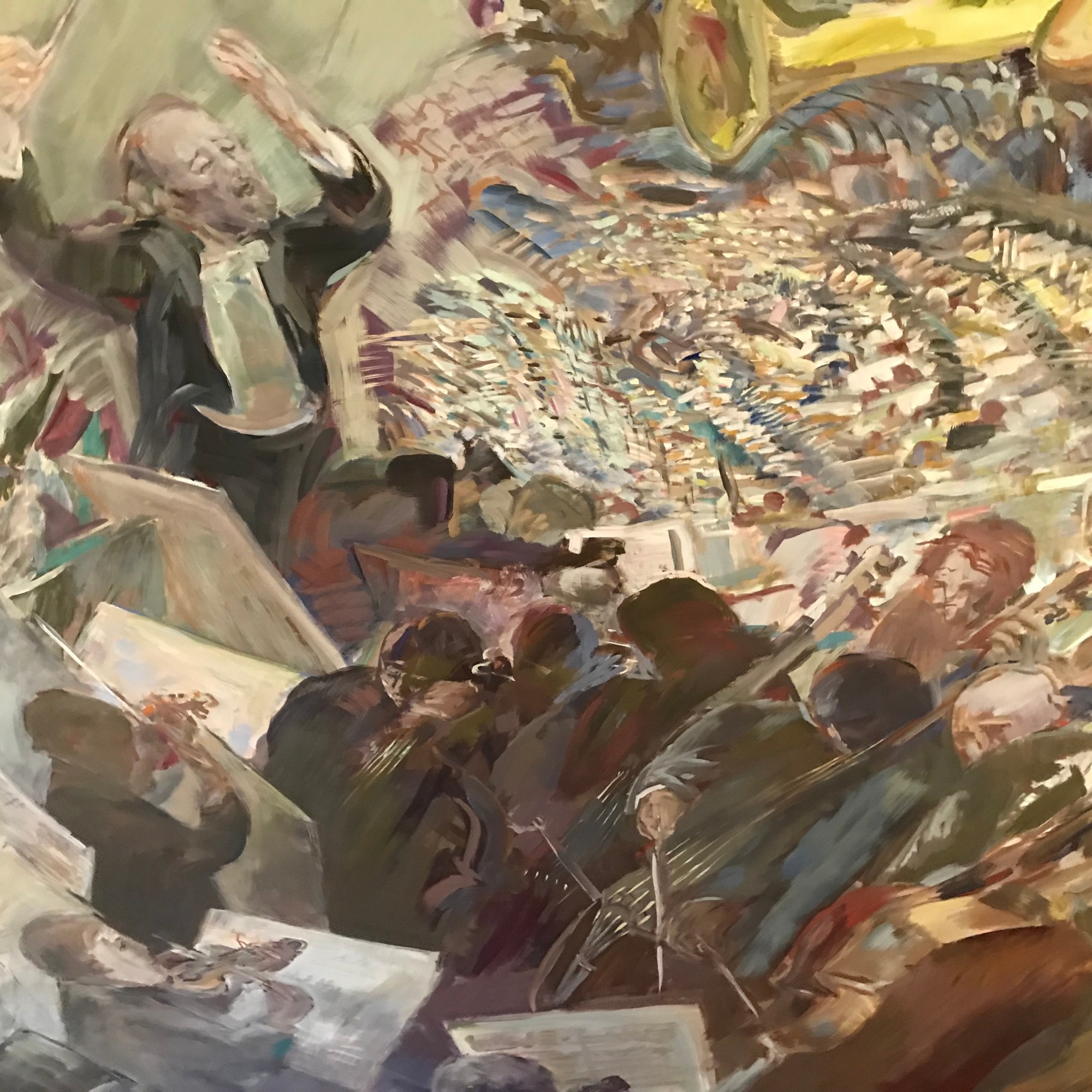
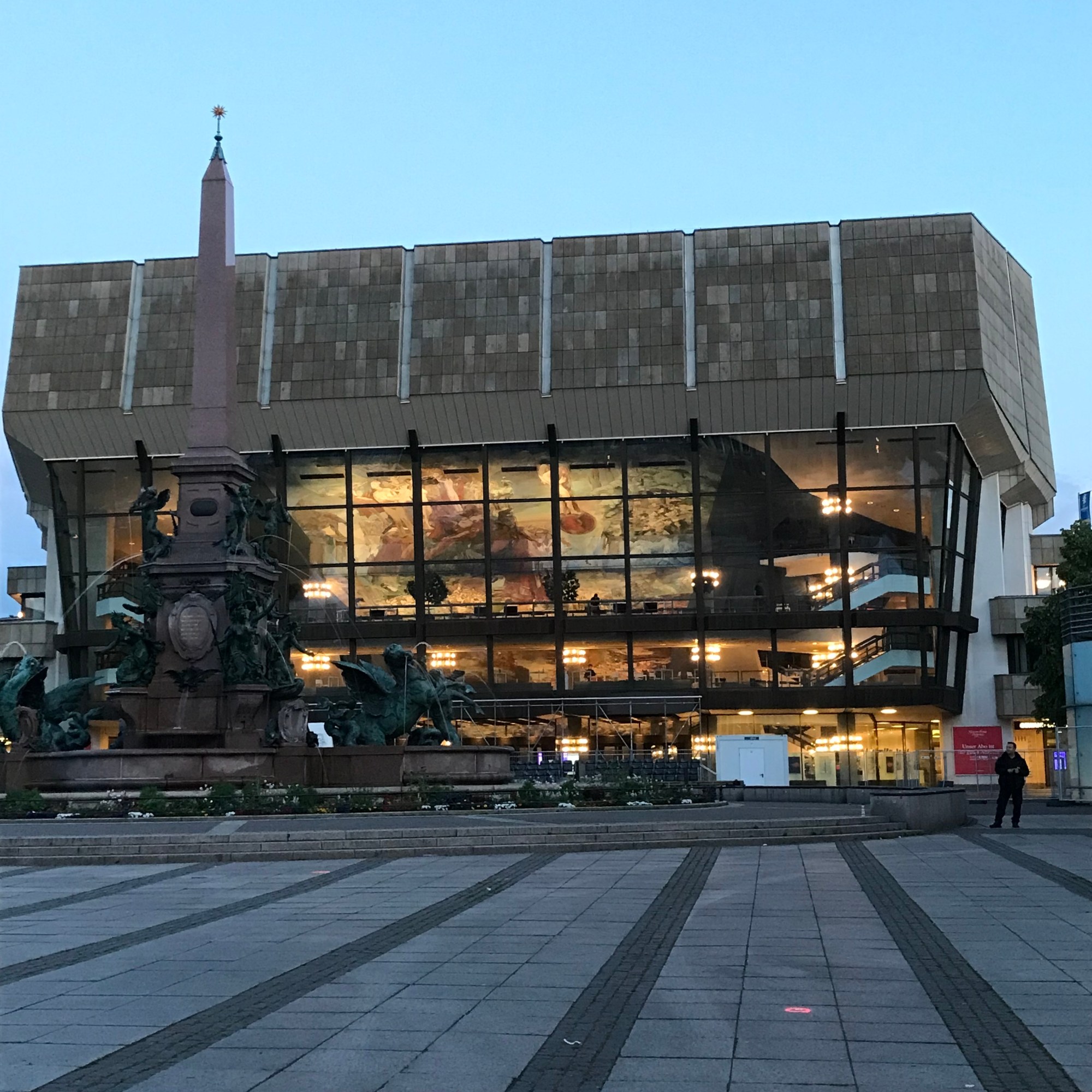
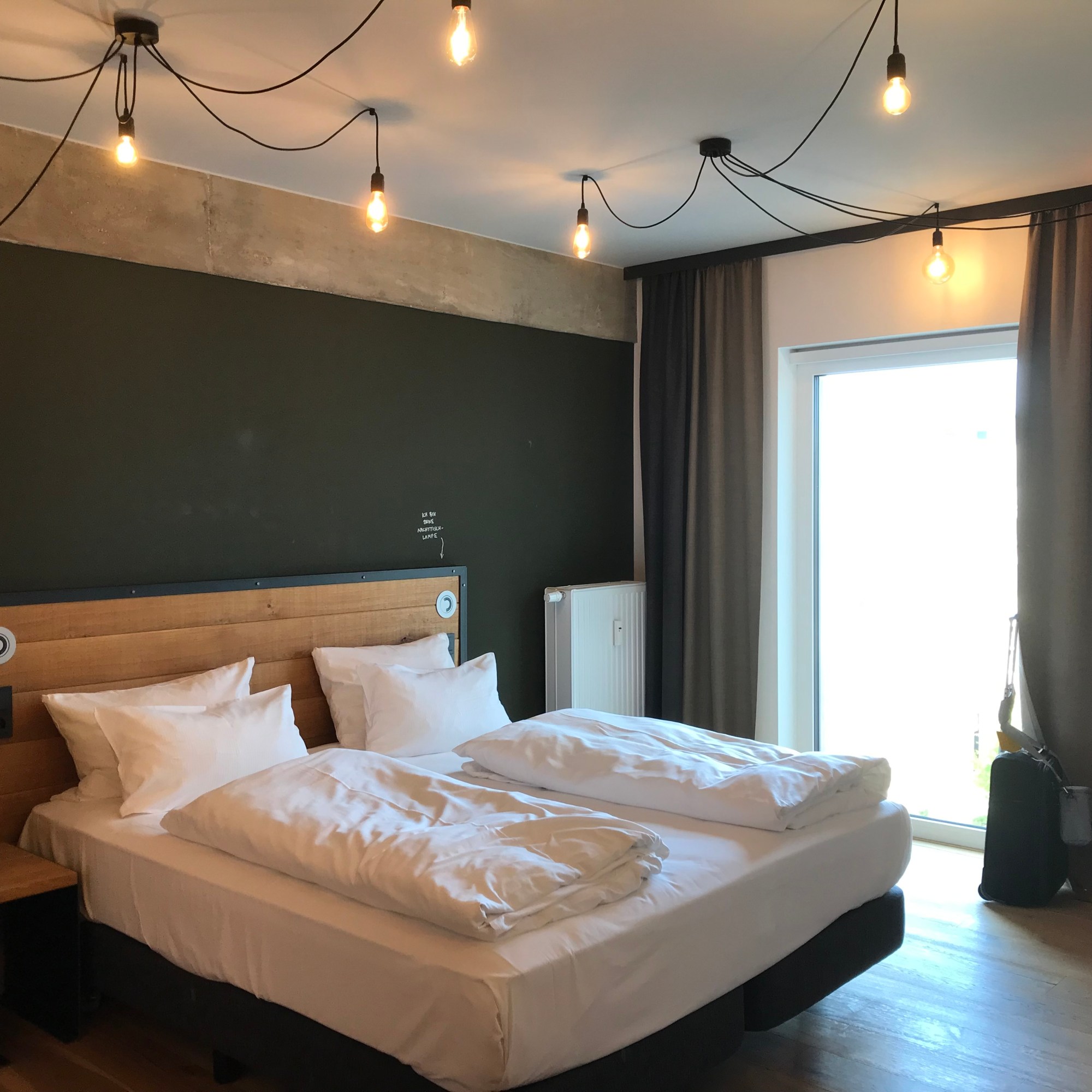
We stayed on Augustusplatz which is just a 10 min. walk away from the Markt where I got of. We stayed one night at the Radisson Blu hotel and the next two nights at Felix Suites am Augutusplatz, both conveniently located minutes away from the centre and with a tram stop in front of the hotel for trips a bit further away. Felix Suiten is a great hotel, with spacious rooms that have a kitchenette, are soundproof, have comfortable beds and offer some free drinks in the mini bar ( two large bottles of water, two bottles of lemonade and a large bottle of beer), a coffee machine with pods, a water cooker, a stove and a dishwashing machine. We did not take breakfast at the hotel but in the centre of the city. From the bar on the sixth floor you have great views over Augustusplatz and the centre of the city in the evening. Don’t miss the beautiful paintings on the ceiling of the Gewandhaus concert hall on Augustusplatz which is beautifully lighted in the evening.

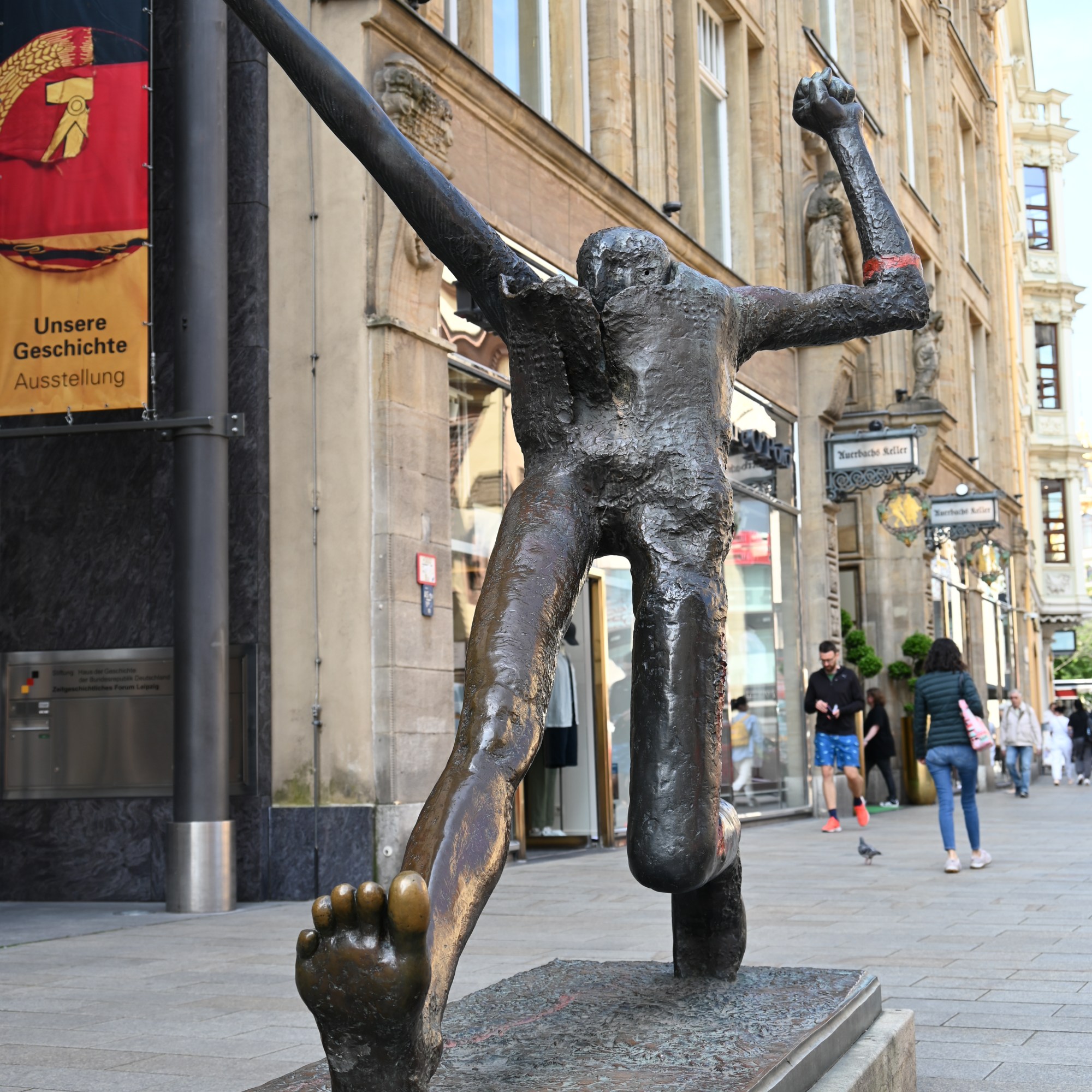
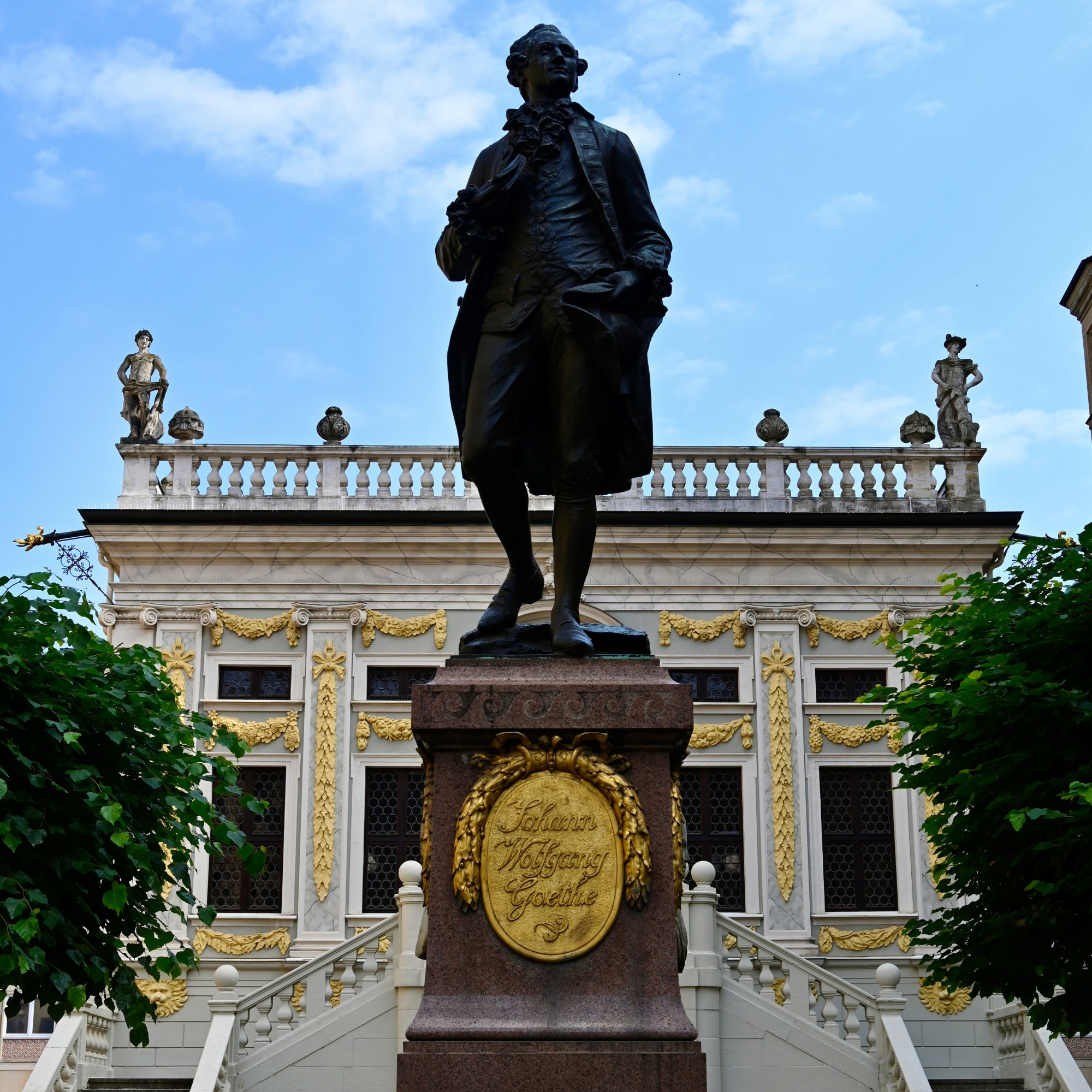


The first morning we discovered the city centre on foot, walking through the main Grimmaische Strasse, where you find a statue by Bernd Göbel, Untimely Contemporaries, a statue that holds all his frustration about the hypocrisy of communist East Germany. A bit further another contemporary statue: The Century Step created by Wolfgang Mattheuer in 1984 and considered one of the most important works of art of the GDR in times of the German division as a parable on the fragmentation of the 20th century. One arm shows the Hitler salute while the other becomes a communist fist while one leg is naked and the other one has a boot on. On the square on the right you find a statue of the German writer Goethe, and almost opposite the Mäddler passage where Goethe found inspiration in the wall paintings of Auerbach’s Cellar for his work Faust. At the entrance of the cellar, a famous old restaurant, stand two sculptures showing Mephisto and Faust on one side and the Bewitched students on the other.




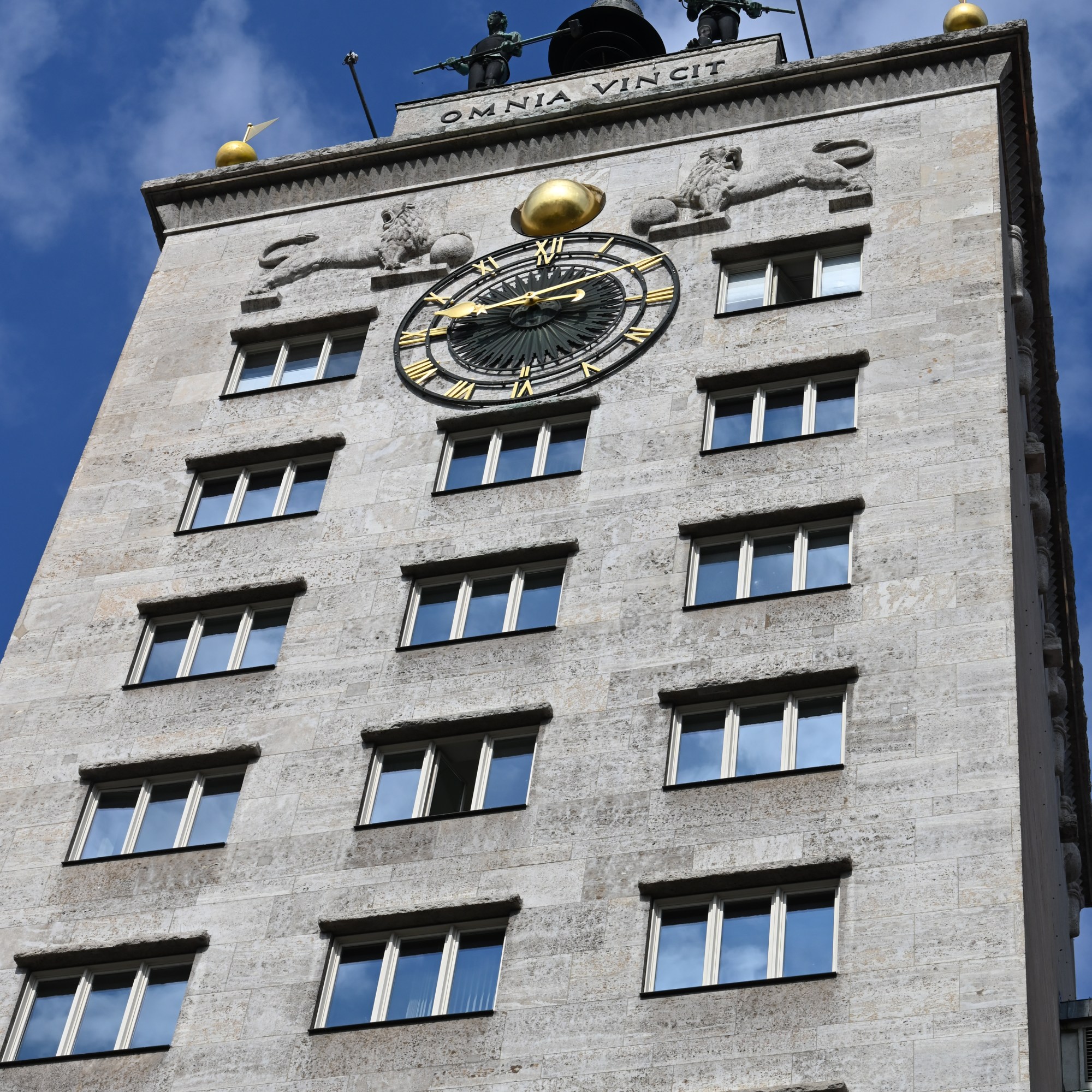
On the Markt we enjoyed the rehearsals for the performances of the next evening. The Markt is dominated by the old City hall which is today turned into a museum. On the way to Saint Thomas church you cannot miss the Commerzbank in a restored building that used to be a department store that had to attract the rich with its golden facade.
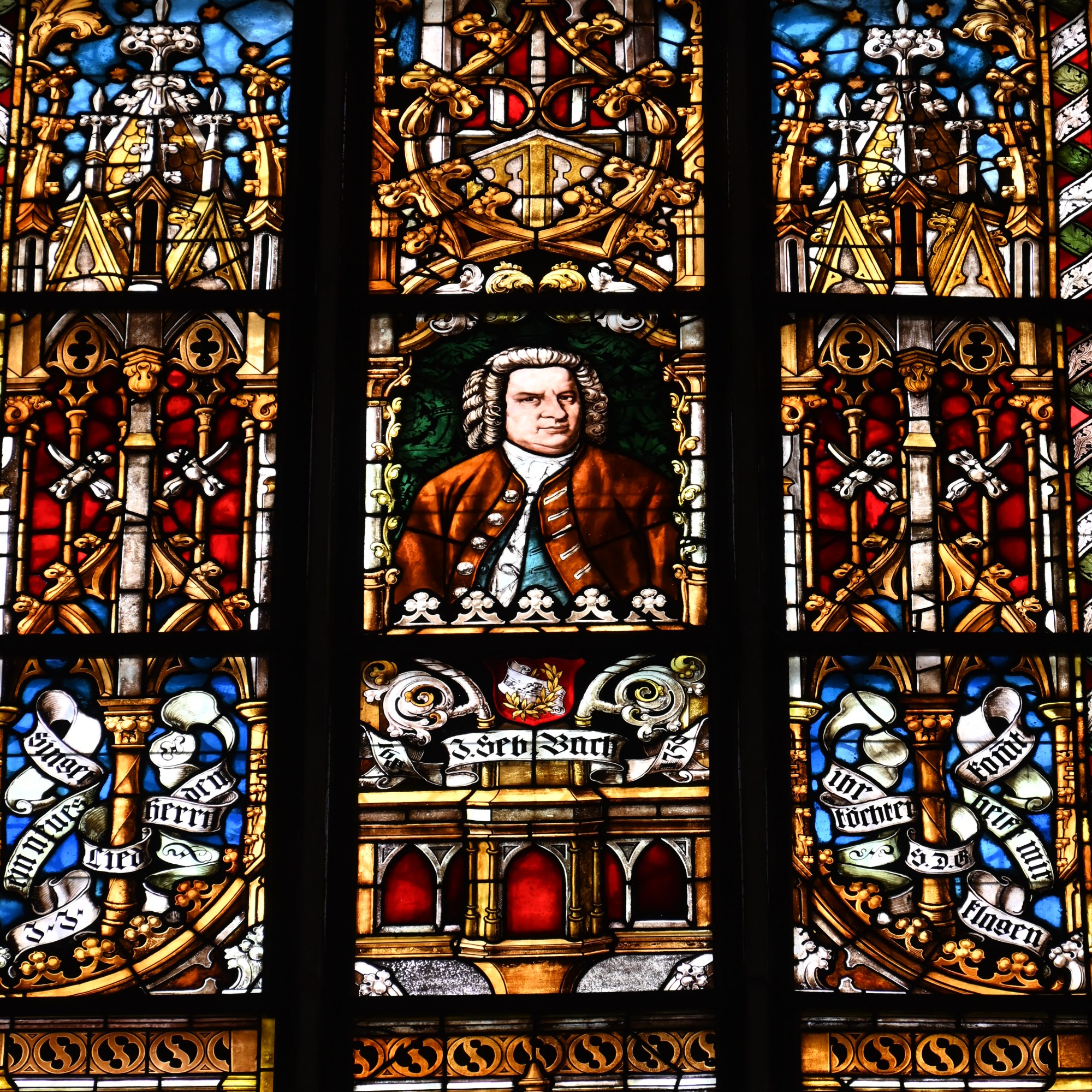
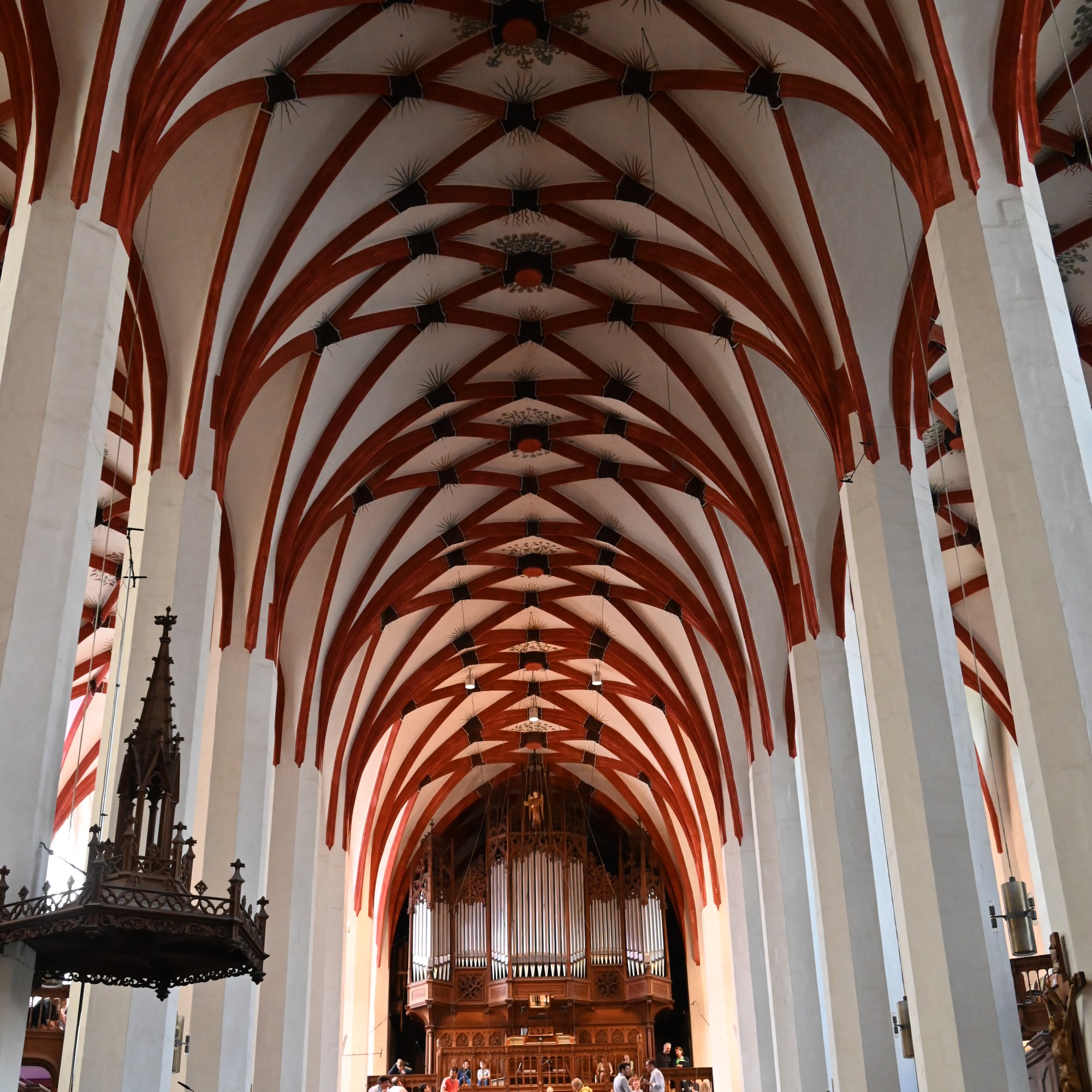
We visited the Saint Thomas church, one of the oldest churches dating back to the 12th century but which was over time enlarged and renovated thanks to the prosperity of the city it owed to the mining of silver in the Ore mountains. It was the church where Bach was a cantor, where he played the organ and where you find Bach’s grave. It is also home to the world famous Boy Choir dating back to 1254 counting 100 members today. We listened to the rehearsals for the concerts of the next evening in the church. Outside the church you find a statue of Johannes Sebastian Bach, and the Bach museum.
West of the church you find a memorial for the in 1938 during Kristallnacht demolished synagogue of Leipzig and where now stand 140 empty bronze chairs. A very moving symbol.

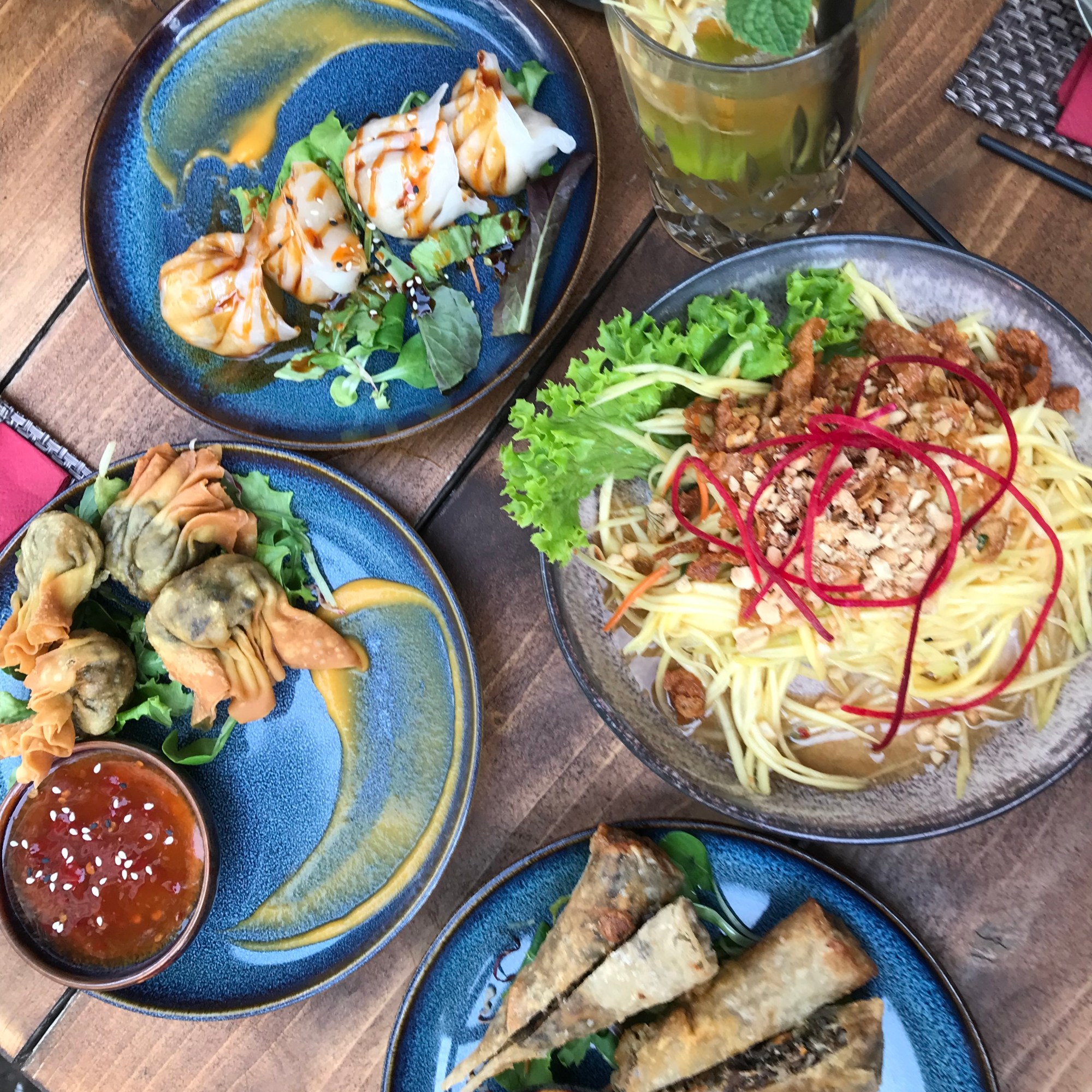


We had lunch in the vegan Vietnamese Gao on Gottschedstrasse, a real good Vietnamese run by Vietnamese. There seems to be a quite large Vietnamese community in Leipzig, probably thanks to their shared communist past. The food was so good we had a meal here again the next day.
We walked towards the Runde Ecke, now a memorial site and the Stasi Museum, where you learn about the contemporary history of the former Ministry for State Security of Eastern Germany. The rooms are perfectly preserved and not only focus on the infamous secret service but also on the peaceful revolution of the Monday demonstrators in 1989.



We walked back in the direction of the Markt past the Arabian coffee museum Baum, housed in one of Germany’s oldest coffee houses, which is now closed for restorations. Ever since 1711 coffee is Saxon’s favorite drink.
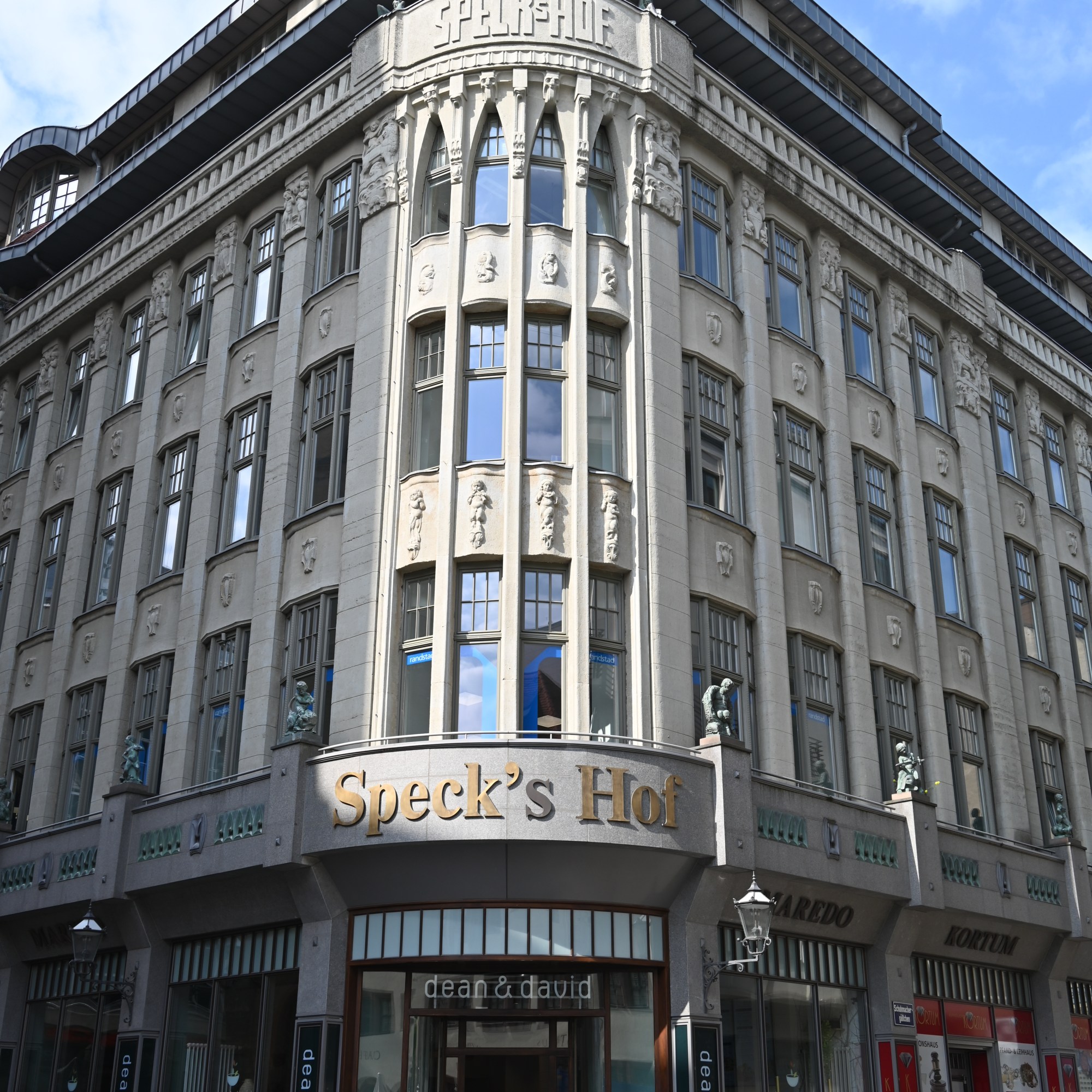
We walked through Speck’s Hof, the oldest preserved arcade of Leipzig where friezes, paintings and ceramic medaillons by the artists Bruno Griesel, Johannes Grützke and Moritz Götze adorn the three inner courtyards. After a few days you start to know the many passages that let you take short cuts through the city centre. Do not hesitate to walk into the many passages still present in Leipzig, a great alternative way to discover the city.
On the other side you find the beautiful art nouveau facade of Riquet with its elephant heads above the entrance door. We decided to have breakfast there the next morning.
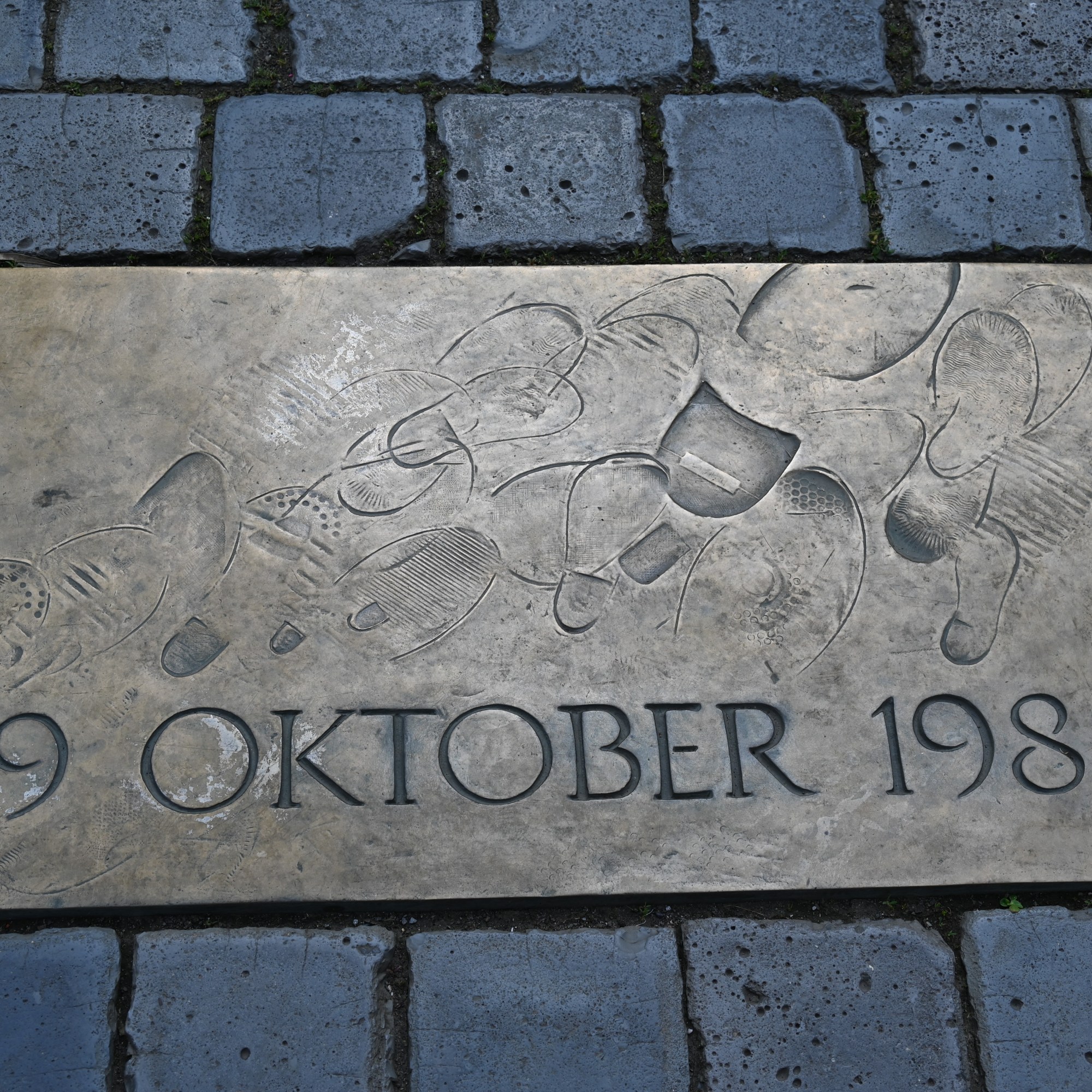
We entered the Saint Nicholas church also dating back to the 12th century, many works by Bach went in premiere here. The church is most famous for the 1989 Monday demonstrations that took place here, and became the centre of the peaceful revolt against communist rule. The demonstrations started on September 4, 1989 after the weekly Monday prayer for peace when they gathered in front of the church demanding freedom of travel and democratic elections. Outside the church you find several monuments commemorating the revolt, the most visible one is the Saint Nicholas column, crowned with the palm you also find in the church, a fountain that overflows and symbolizes the final straw or final drop that makes the cup overflow, a plaque on the square with footprints and a light installation of 144 colorful cubes in the pavement of the square. Every year on October 9th, Leipzig holds the light festival to commemorate the peaceful demonstration of 70000 people on October 9th, 1989.

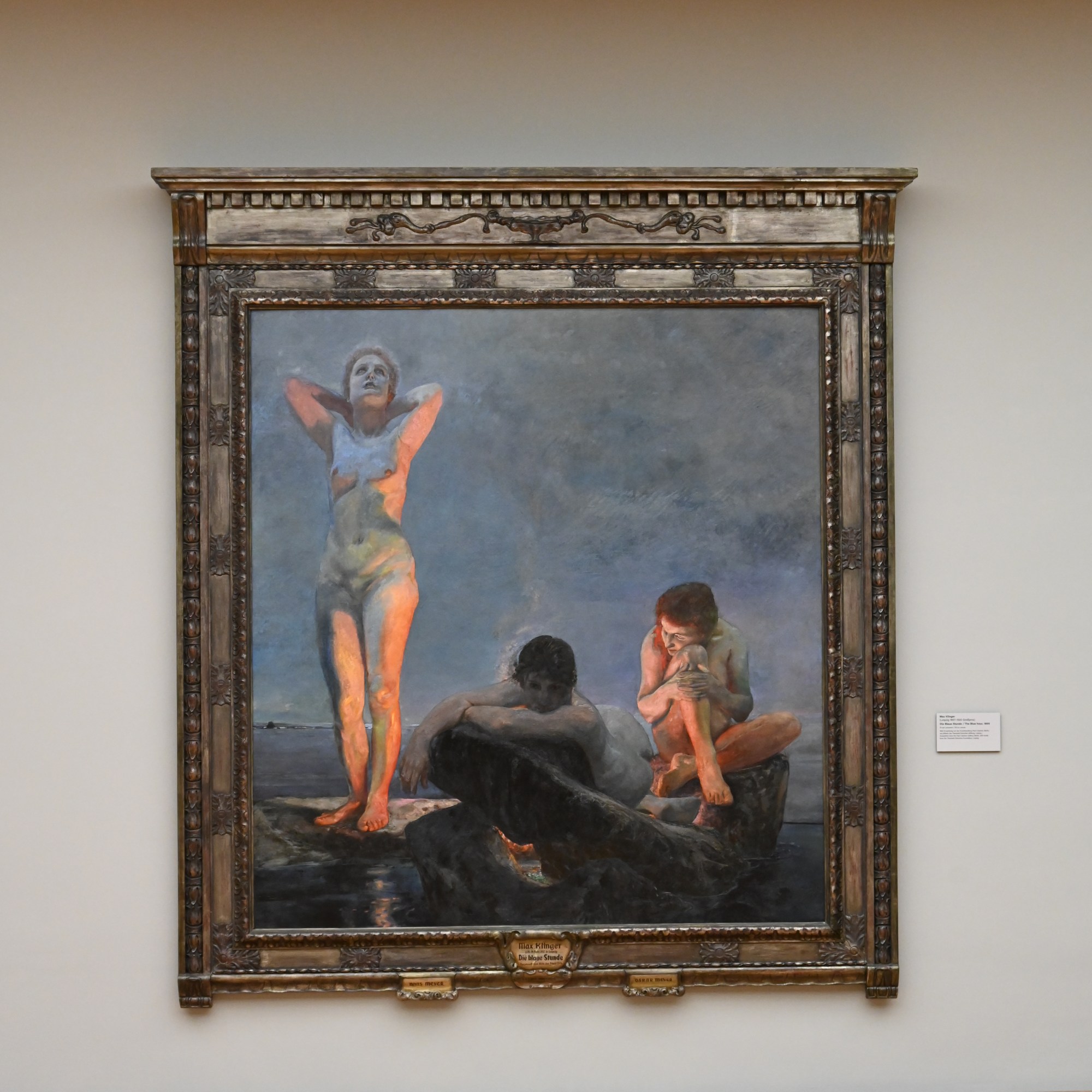
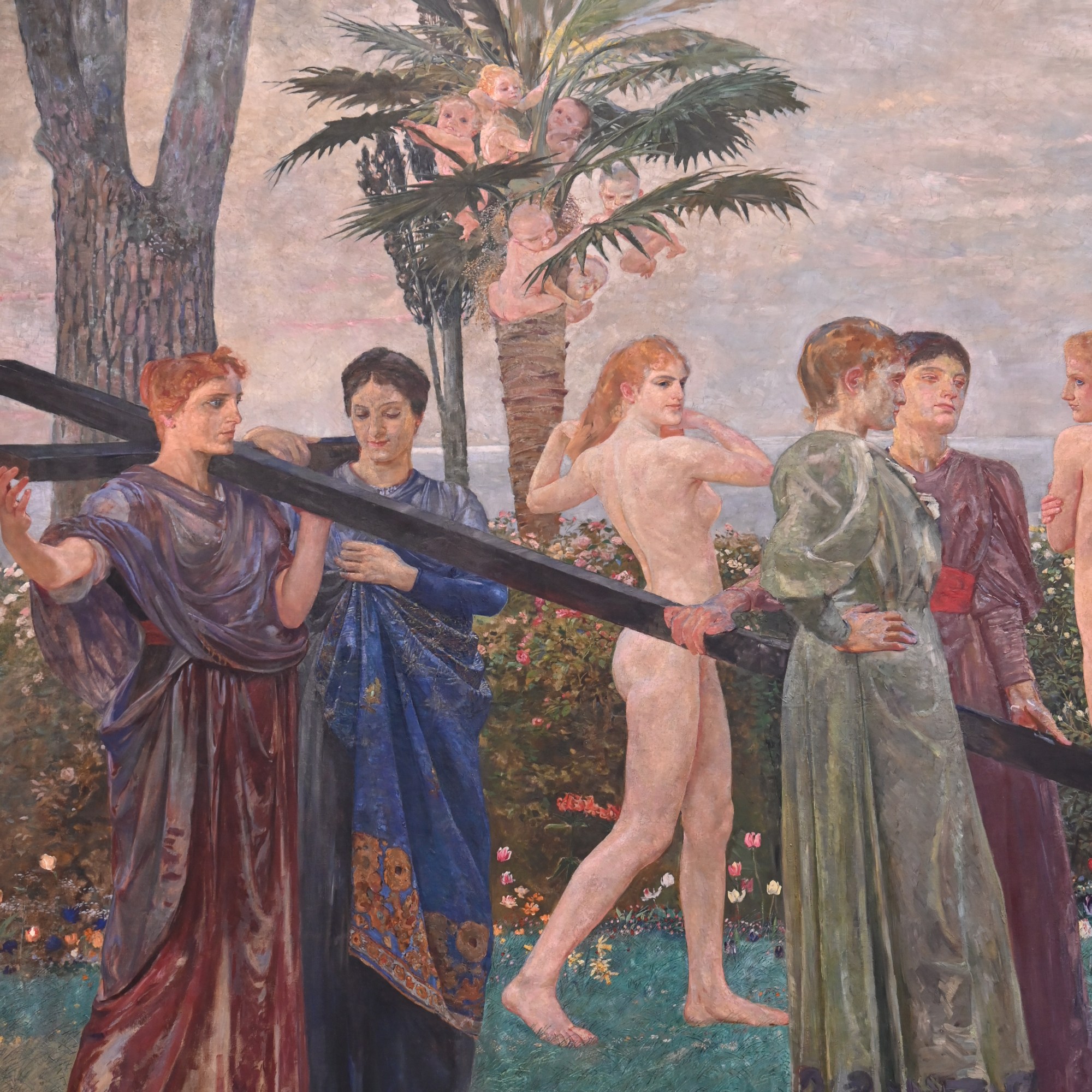
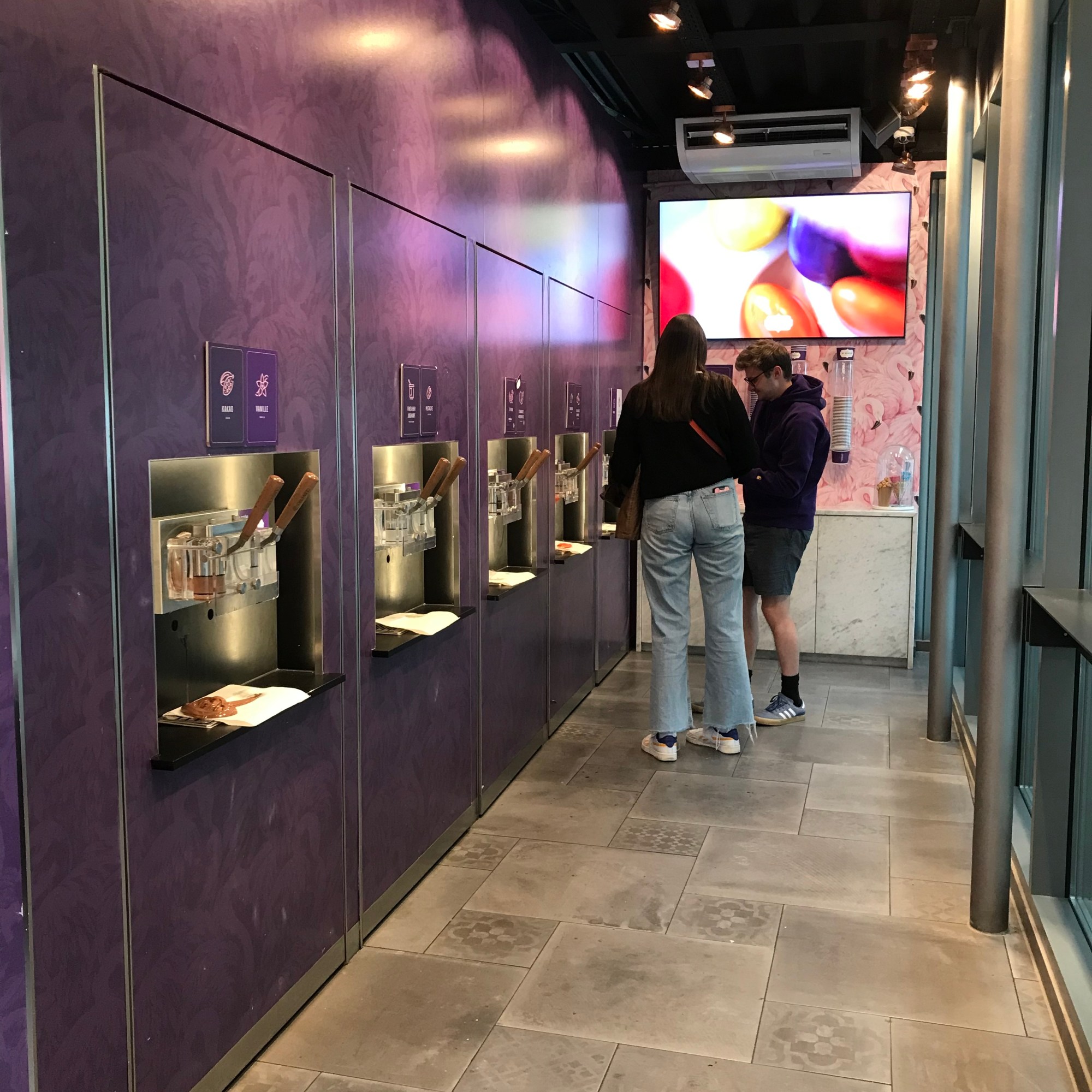
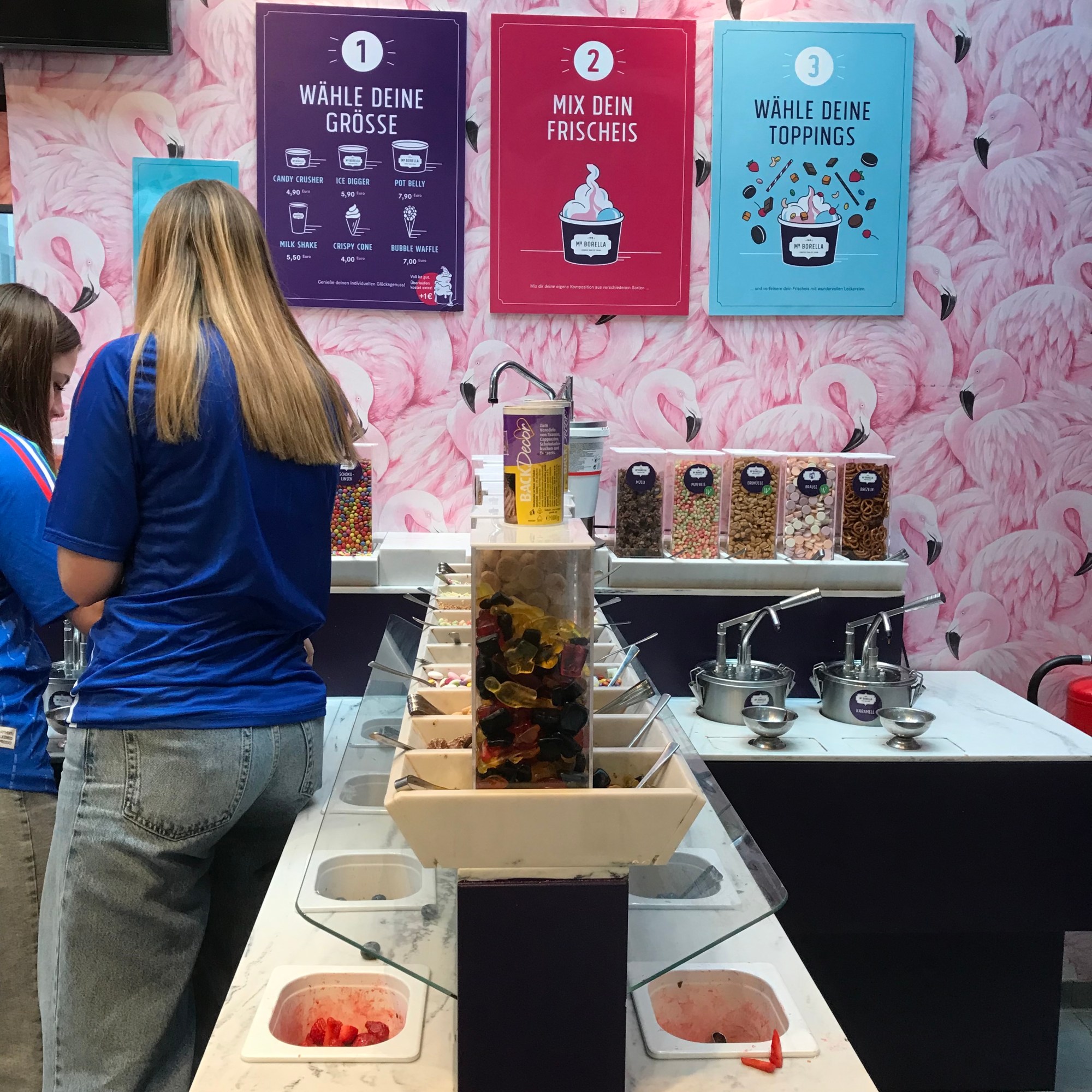
We visited the Museum der bildende Kunste in the modern concrete and glass building where you get an overview of paintings from the 15th century to the present. We were quite tired though and could not really take in that much art anymore. The entrance to the permanent collection is free of charge! To round of our afternoon we got an ice-cream at Mr. Borella where you can compose your own ice-cream is a small, medium or large cup, you choose your own fresh ice-cream flavors and decorate it with fruit, candies, cookies and sauce. They have seating outside.

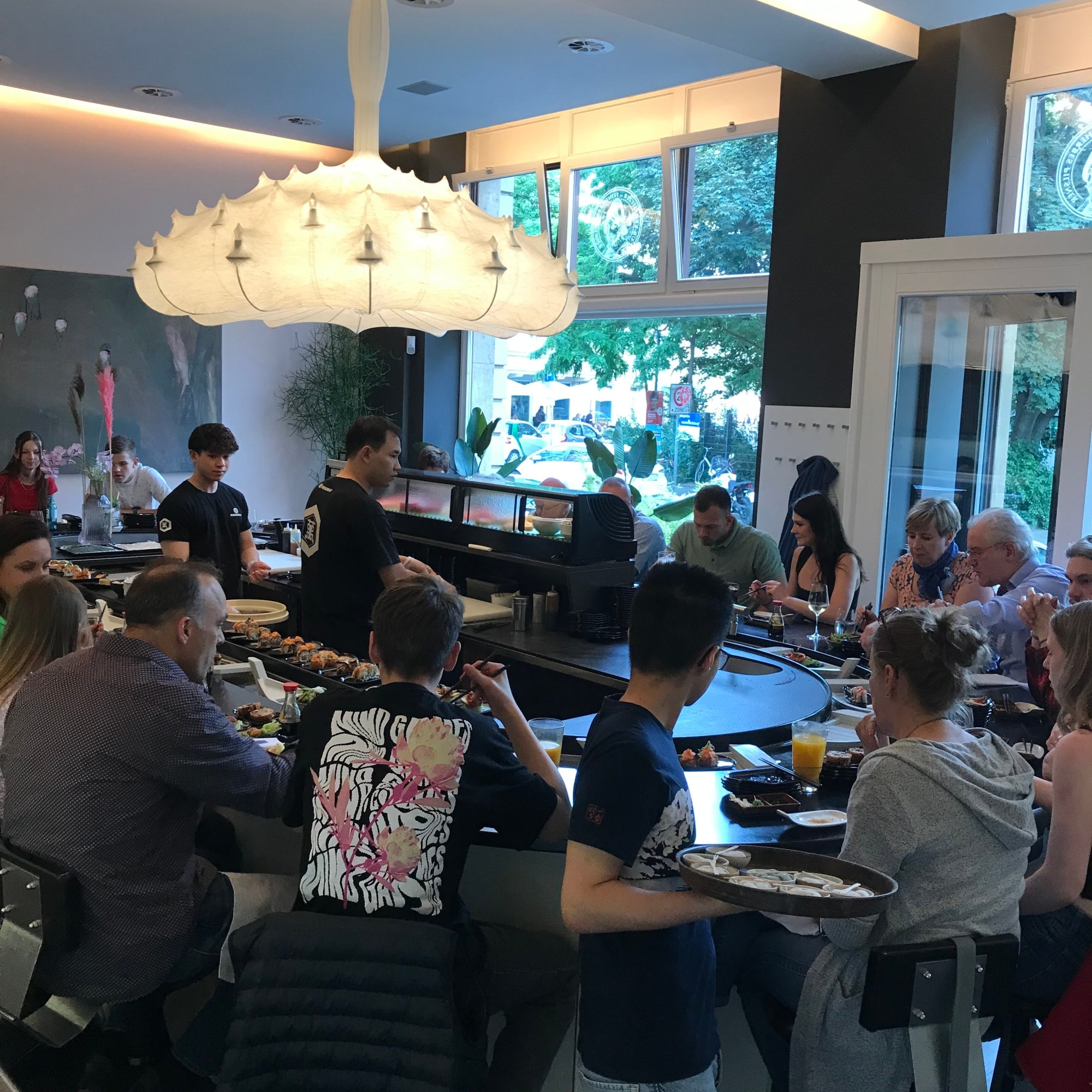

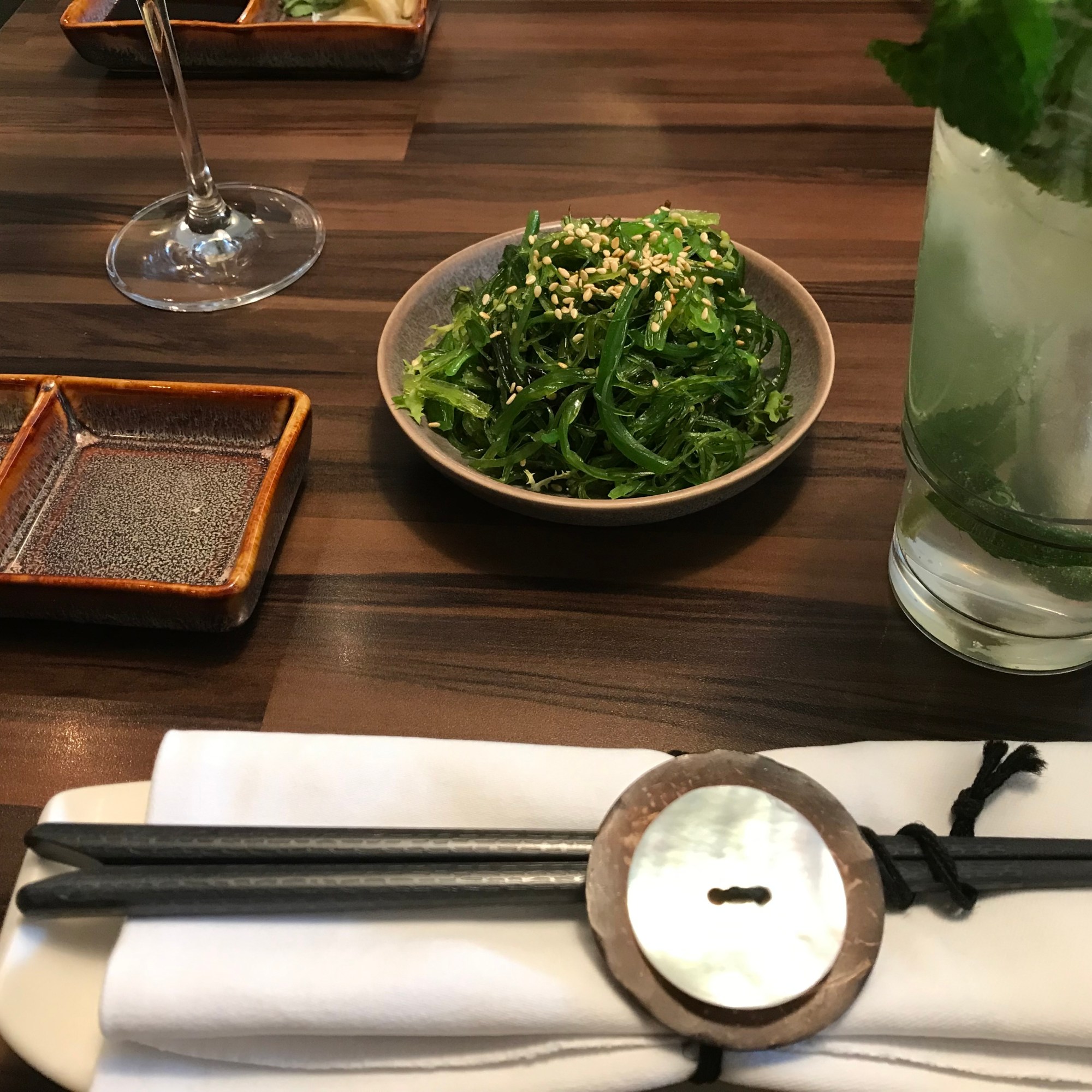
We had lunch at Sakura restaurant, a Japanese restaurant also run by Vietnamese! In the middle there is a running sushibar, but is was already fully booked so we took a regular table. The food was excellent!
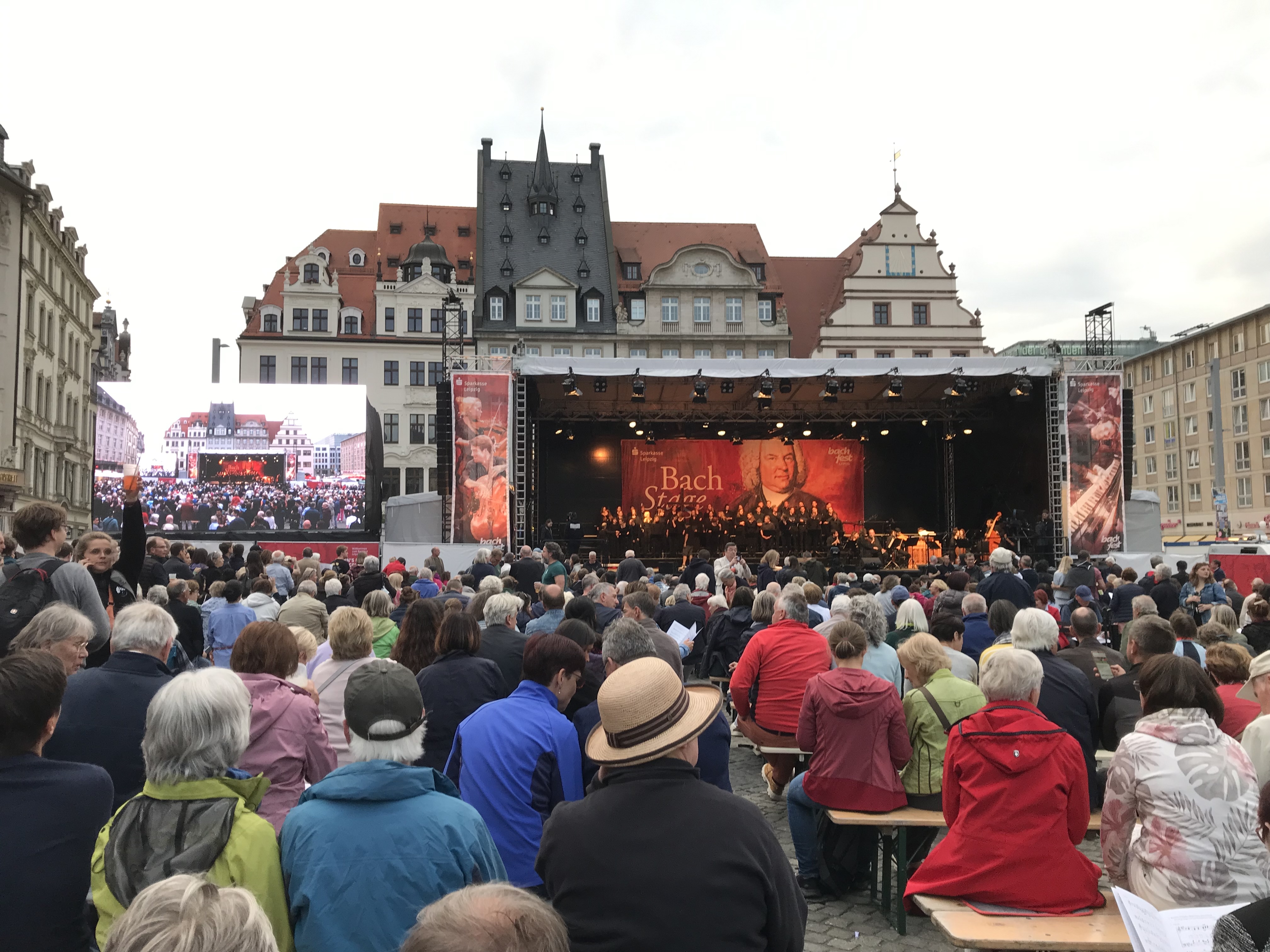


In the evening we went to the Markt and enjoyed two performances of the Bach fest. If you want to be sure of a place on one of the benches you have to arrive quite early. We were lucky when halfway the first performance some people left and we could take their spot on a bench. One the side of the Markt there are stalls where you can order food and drinks, the atmosphere is quite festival like. In front of the podium you can also sit down on the ground. Locals often bring their own foldable chairs, blankets or pillows. We saw a performance of the Babylon Orchestra from Berlin and after that the Barrier-free orchestra and choir Sing and Sign, who brought Bach’s Johannes passion integrating sign language and including performers with visual and physical impairments. The public was invited to sing along with certain parts of the concert. A great experience.
We had a refreshing night, and the next morning headed out to Riquet for breakfast. The interior is beautiful, but that is where the good experience ends. The waiters are not exactly friendly and the breakfast was utterly disappointing. My mint tea tasted of nothing but hot water, even after I asked to add more fresh mint leaves, and the two fried eggs where accompanied with two really tiny pieces of toasted hard bread… We had first contemplated ordering some pastries but we left it at that and left.
We moved to Kändler tea house in front of the Saint Thomas Kirche to have another tea and coffee and try a Leipziger Lerche pastry, which used to be pastry made from skylarks (yes the birds) but after the Saxon king banned lark hunting, was replaced by a shortbread pastry with almonds, nuts and marzipan. We also tasted the Bachtaler, a chocolate filled with ganache, fresh and butter cream around a coffee bean, they are only produced by Kändler bakery. You can buy them pre-packed to take home.
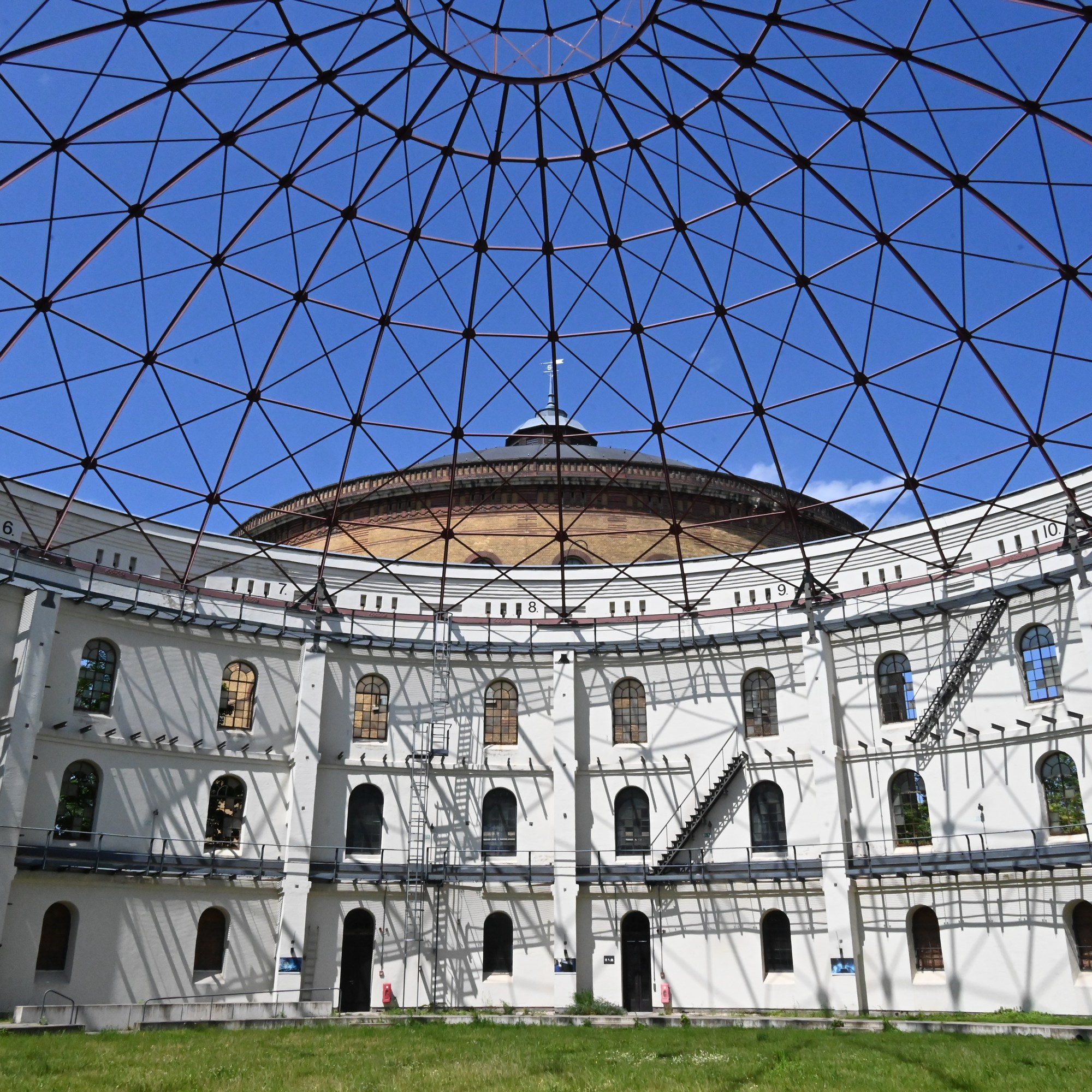


We walked back towards the Augustusplatz and took tram number 11 to the Richard Lehman Strasse and walked 10 to 15 minutes to the panometer, a former gasometer, now transformed into an art gallery with the works by Yadegar Asisi, an artist and architect born in Vienna. He is best known for his 360 degree panorama’s he realizes combining traditional drawings and paintings with computer 3D modeling which are exhibited in old gasometers. His latest work is the Cathedral of Monet, based on the impressionist paintings of the cathedral of Rouen by Monet. Asisi takes it a few steps further, not only did he train himself in impressionist painting, he recreated the square in front of the cathedral of Rouen, including the West facade of the cathedral, and the surrounding houses. He also brings several impressionist painters to life on the painting and a group of academics who used to criticize the new impressionist style of painting in the 19th century. This last group of people is not painted in an impressionist way but in a realistic way, since it was the more realistic neo-classicist style paintings that were allowed at the Salon of Paris at the time. He worked ten years on the painting for the 360 degree panorama. It is accompanied by sound and light effects and a music score composed for the work. Before entering the 360 degree panorama the exhibition shows a range of works by the multi talented and very intelligent painter Asisi. Before exiting you can see a documentary about his work where the artist himself talks about his inspiration and how he works. We were both pleasantly surprised by this exhibition and the artist.


We walked to the Karl-Liebknecht Strasse and had lunch at Forest Park, a vegan lunch spot where we both took the Pulled Mushroom burger, very delicious and a very cosy spot for breakfast or dinner, some of their desserts also looked very yummy!
We had thought to do some shopping on this street but found out it was a good place for hip places to eat or drink but not really to shop. So we returned to our hotel for a short nap and had an early dinner at Gao, that attracted a full crowd on a Saturday night. We then walked to the Markt for the Bach Fest. This time we sat on the ground in front of the podium. Halfway the first performance someone left just behind me and I could take his seat on the front bench. We really loved the jazz interpretation of Bach’s work by the LeipJazzig Orkester in combination with a choir from Paraguay. They also performed two songs from Paraguay, the whole performance was incredible, and the audience was invited to sing along during the encore. The Big band interpretation of Bach did not really impress us that much and we decided to call it a night.

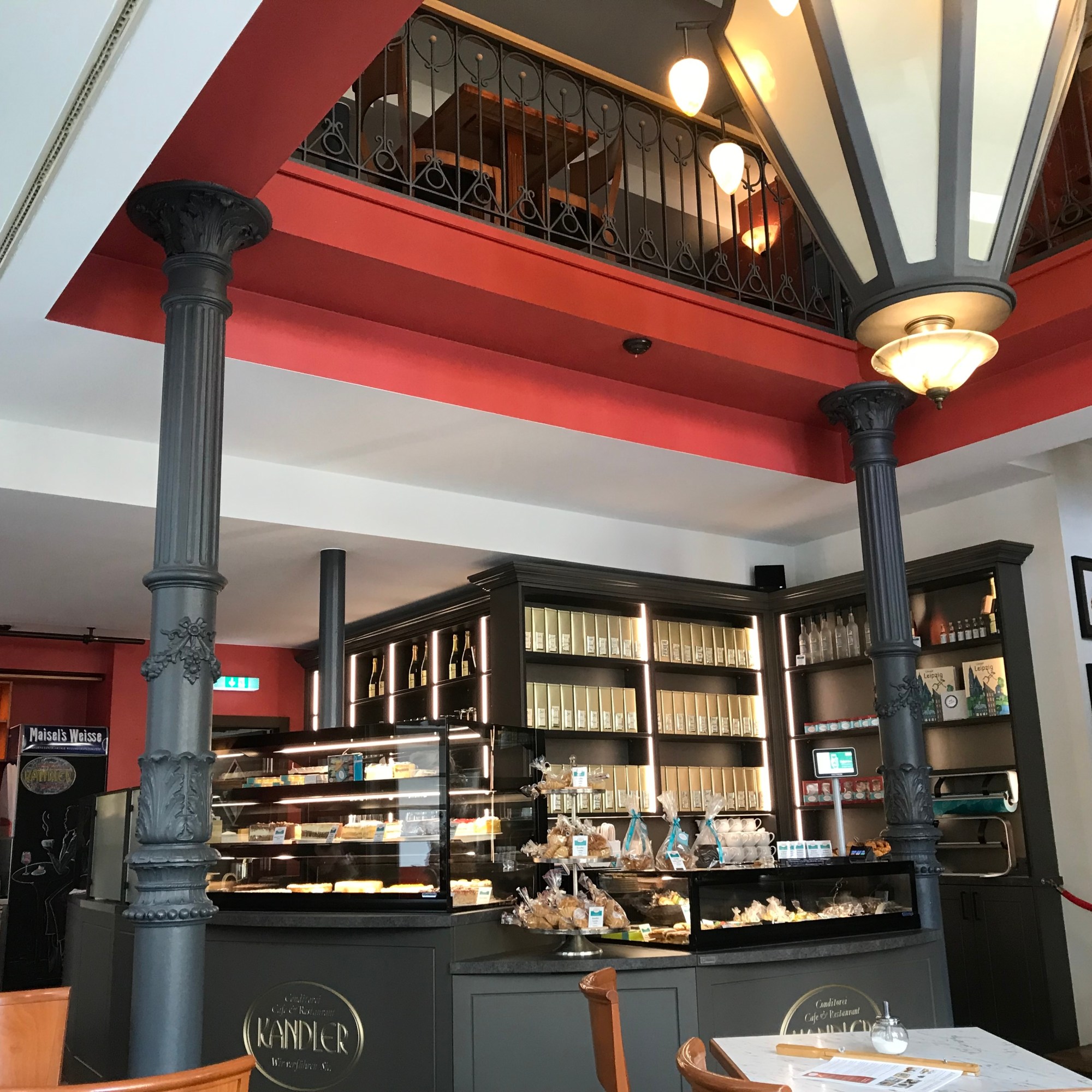


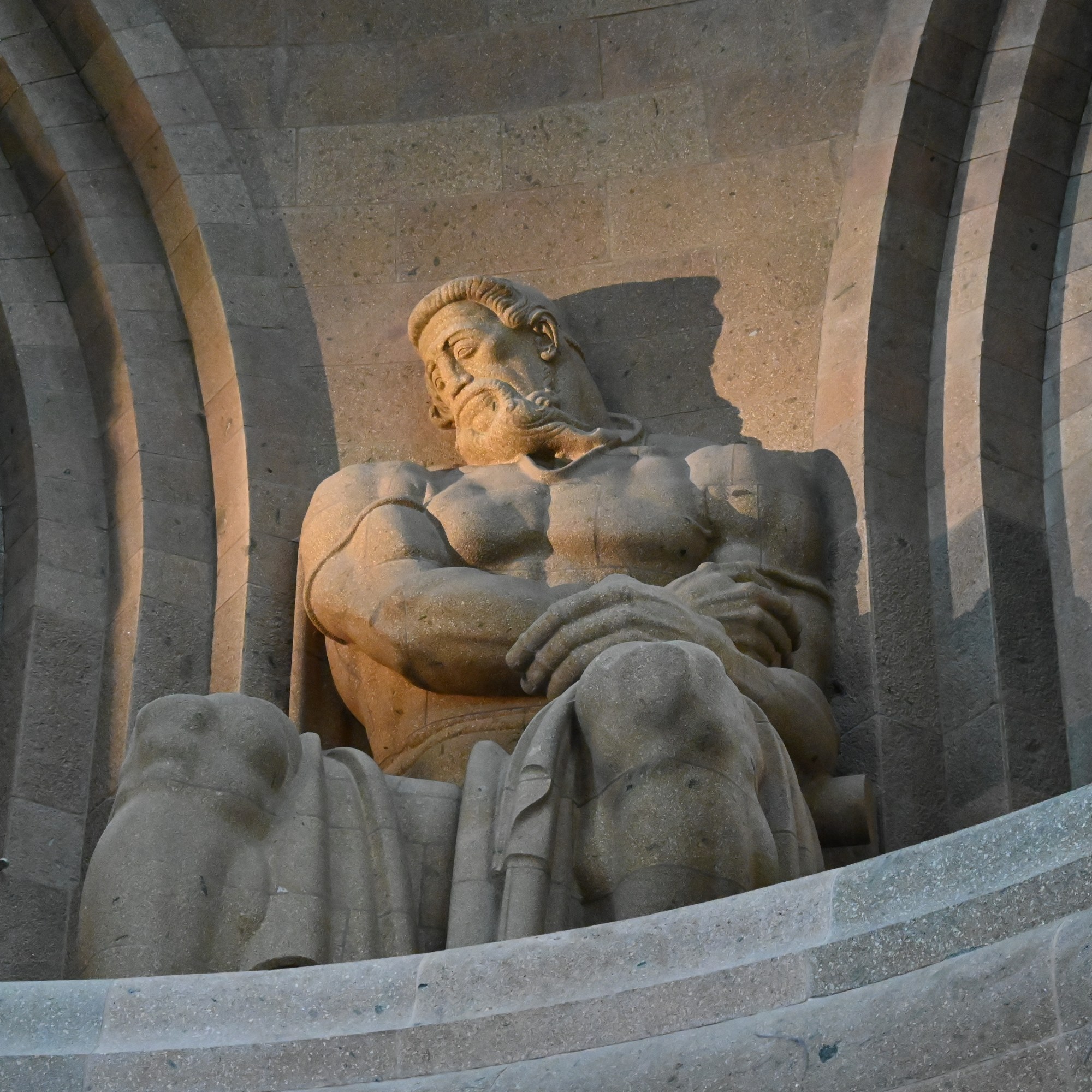
The next morning we took breakfast at 9:30 at Kändler Tea house in front of the Thomas church. We really enjoyed our breakfast this time, even though I had woken up with a kind of flu. We then walked towards Augustusplatz where we took tram 15 to the Monument of the battle of the Nations, a megaloman monument commemorating The Battle of Leipzig on October 18, 1813 between the an alliance of Prussia, Russia, Austria and Sweden, against the army of Napoleon. A battle of 320000 allied forces against 185000 French soldiers, leaving more than 90000 dead on the battlefield. The bloodiest battlefield of the Napoleonic Wars and the start of Napoleon’s downfall. The monument was completed in 1913 and restored between 2003 and 2013.
The concrete and granite monument consists of several levels which can be reached by stairs or by a lift with a viewing platform on top. It stands 91 m tall, and on the first floor a video shows the history of the site. The next floor holds the crypt with sixteen large statues of warriors, above that the hall of fame with four large sculptures, and the dome on top has great acoustics for concerts. Outside the monument is reflected in a large water pool.
We returned with tram 15 to Leipzig centre, had a short lunch at Dean and David at Speck’s Hof and a pastry to end our weekend in Leipzig in style at Kändler’s tea house. We returned to the airport with a tram from Augustusplatz to Hauptbahnhof and from there with the SX5 train to the airport. Tickets for the train can be bought on the platform where the train arrives.
The green surroundings of Leipzig are certainly worthwhile a visit with mountains, forests, picturesque villages and castles, but we’ll keep that for a next visit! We also lacked time to visit Plagwitz with its canals and its artsy Baumwollspinnerei.
 chefmaison