We flew with Vietnam airlines from Hanoi to Da Nang where a driver we had pre-arranged through our hotel An Villa at Hoi An was waiting for us. The price for the transfer was just slightly higher than that of a Grab.
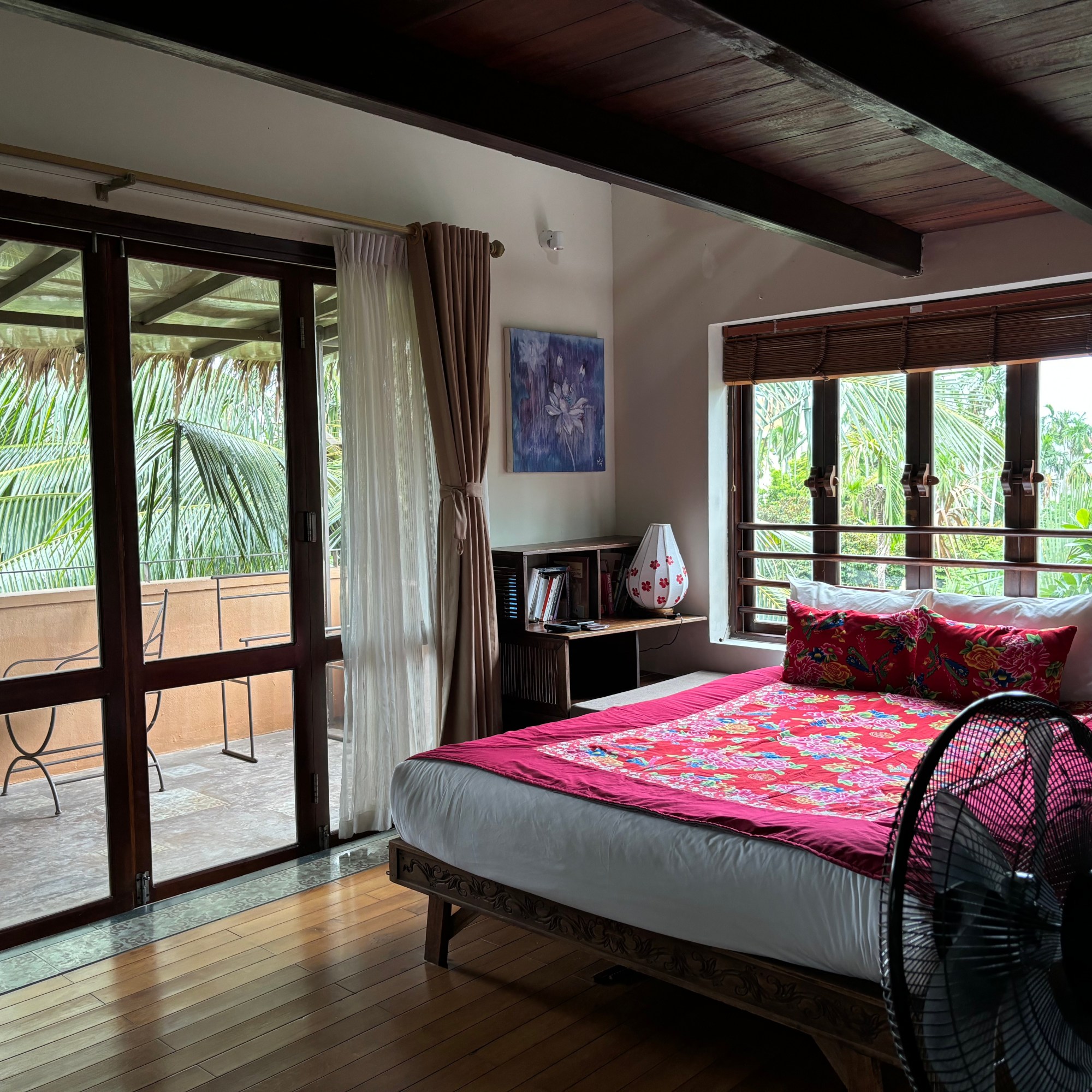
At the hotel we were welcomed with a cold towel and a welcome drink. Our room was on the second floor and there is no elevator, so if you have mobility problems ask for a room on the ground floor. The rooms ar spacious and nicely decorated, you have everything in the room, a fridge, toilet amenities, coffee and tea, drinking water, a safe box, hairdryer… and there is mosquito repellant and mosquito repellant coils for the balcony. The rooms are air-conditioned. We took a late lunch at An Villa. The food is excellent and they have plenty of vegetarian and vegan choices.
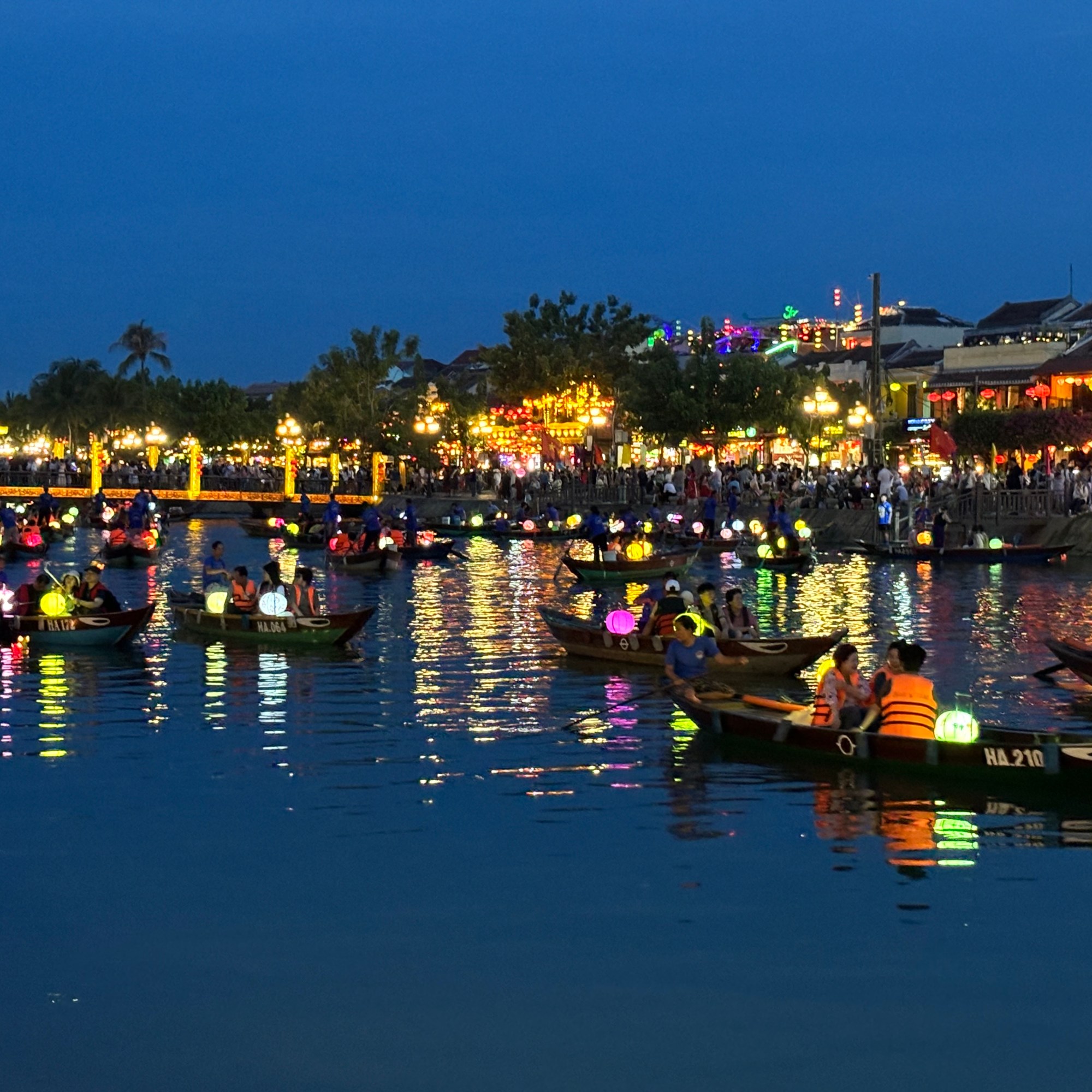

We rented a motorbike via the hotel, a full automatic scooter, for 200000 dong ( 7,60 euro) per 24 hours and drove to the old town of Hoi An. Hoi An is one of the most beautiful towns we have seen in Vietnam and it has a great history. In many ways it made me think of my hometown Bruges, that was also an important trade hub and harbor city between the 12th and 15th century, and has like Hoi An retained its old charm, its original architecture and old urban planning. Hoi An served as a major port city for more than 2000 years, growing from a small 2nd century Sa Huynh trading post into a powerful international trading center by the 16th century. It operated as the spice trading center of the Hindu Cham Kingdom, as a settling point for Ming Dynasty merchants and soldiers from China, and has hosted international trade between the Arab, European, and Asian worlds for centuries. The influx of money and goods, humans and ideas, have cooked Hoi An into a melting pot. Cham, Vietnamese, Chinese, Japanese, and European influence all bubble to the surface here. And just like Bruges, when the Thu Bon River dried up and Hoi An port was no longer suitable for large ships, the city lost its status and was forgotten for many centuries. Fortunately, this has helped Hoi An preserve its cultural and architectural heritage. There are so many beautiful old Vietnamese wooden and old brick French houses often painted yellow, with trees, flowering plants and lanterns everywhere, creating a really special atmosphere. We visited Hoi An for the first time on the evening when we arrived, and at first we were overwhelmed with the number of people on the streets of the old city. The place was terribly crowded making it difficult to really appreciate the beauty of the place. But you have to at least visit it once in the evening, because then all the lanterns are lit, and the river is filled with boats carrying lanterns. In between the boats candles float on the water. But the many sellers trying to get your attention after every step is exhausting and annoying. We passed the evening market on the other side of the river but weren’t impressed, a lot of cheap trinkets, and most stalls selling the same items. For a more authentic experience, visit the daytime fresh market in the old town. We were there in the days leading up to the full moon festival and in the evening several groups performed the lion dance in the city centre.


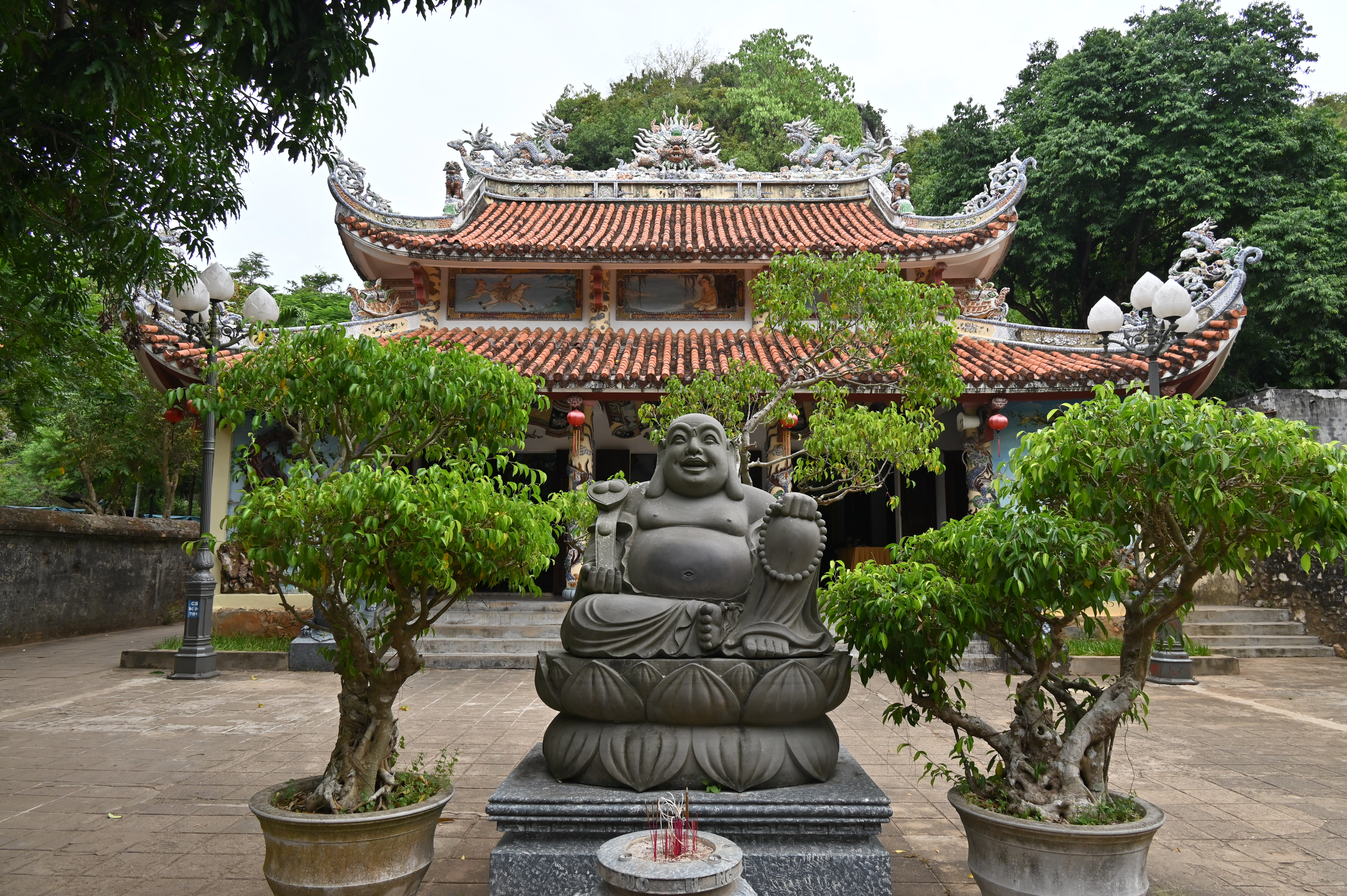
The next morning I went for a swim before breakfast in the small pool of the hotel. For breakfast you can choose between a cooked Vietnamese breakfast that changes every day or a continental breakfast of eggs, bacon and bread or yoghurt with cereal and fruit and a dessert of fresh fruit, pancakes with fruit or yoghurt with fruit. After breakfast we drove via the Hoi An beaches to Marble Mountains also known as Ngu Hanh Son. The entrance ticket costs 40000 dong and the lift is 15000 dong one way. On these mountains you visit Buddhist caves on five mountains who are named after the five elements. The lift brings you up the largest mountain, Thuy Son. During the Champa era the caves were Hindu temples. Later the Vietnamese transformed them into Buddhist temples. The temples you see now date back to the 19th century. The marble mountains contain white, red and green marble and at the foot of the mountains you find numerous marble carving shops. The largest cave on Thuy Son mountain is the Huyen Knong cave, where natural light falls in via large openings in the roof on a huge Buddha statue at the rear. During the Vietnam war the cave doubled as a hospital and hiding place for the Viet Cong.
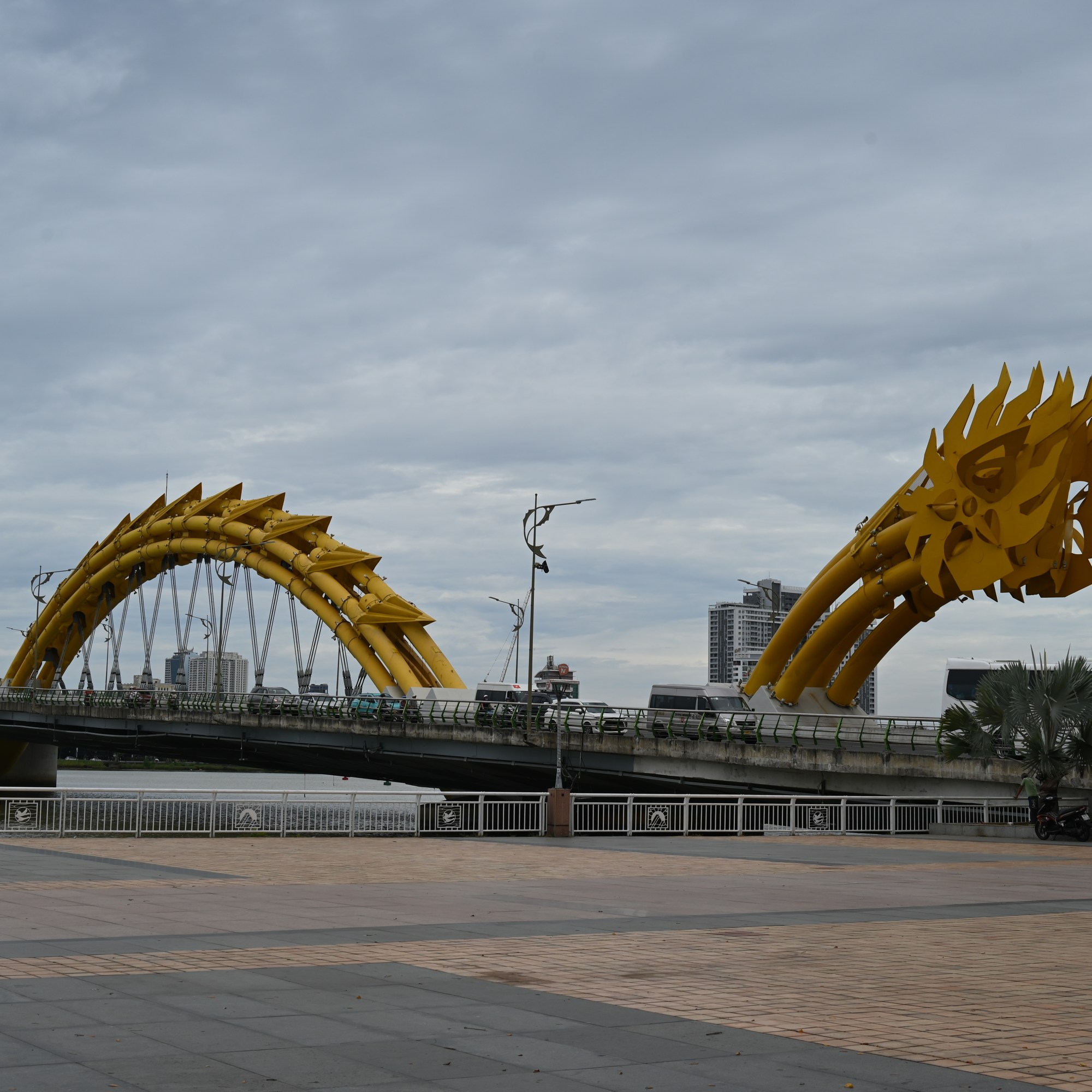
From there we drove to Danang, first had a drink at the beach and then took lunch at Madame Lan, a large eatery where you can eat typical central Vietnamese dishes. The food here is really good.


We then set out to the Hai Van pass, one of the most beautiful roads of Vietnam, that connects Da Nang with Hue. The Hai Van pass consist of the first 40 km after you leave Da Nang. It is a green pass, with wonderful views of the bays underneath. The highest point of the pass is often covered in clouds. Here you can visit the Hai Van gate, a defensive construction of the Nguyen dynasty.
On our way back to Hoi An, we stopped for a light dinner at The Fisherman, a vegan restaurant at An Bang beach. The place serves really delicious foods and drinks for very reasonable prices. We arrived exhausted at our room in An Villa, where they suggested us a take away breakfast for the next day when we wanted to leave at 6 AM to go to My Son.
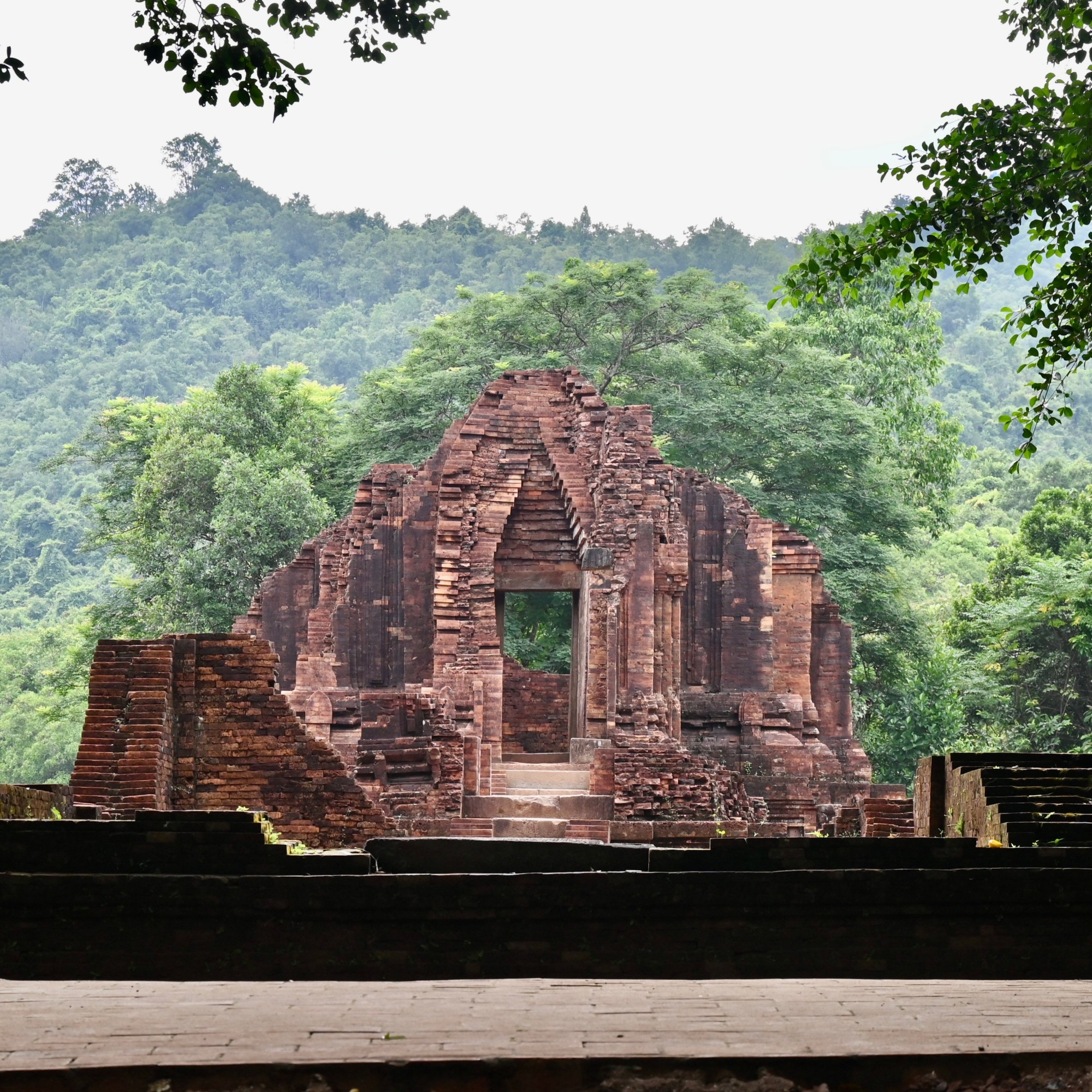

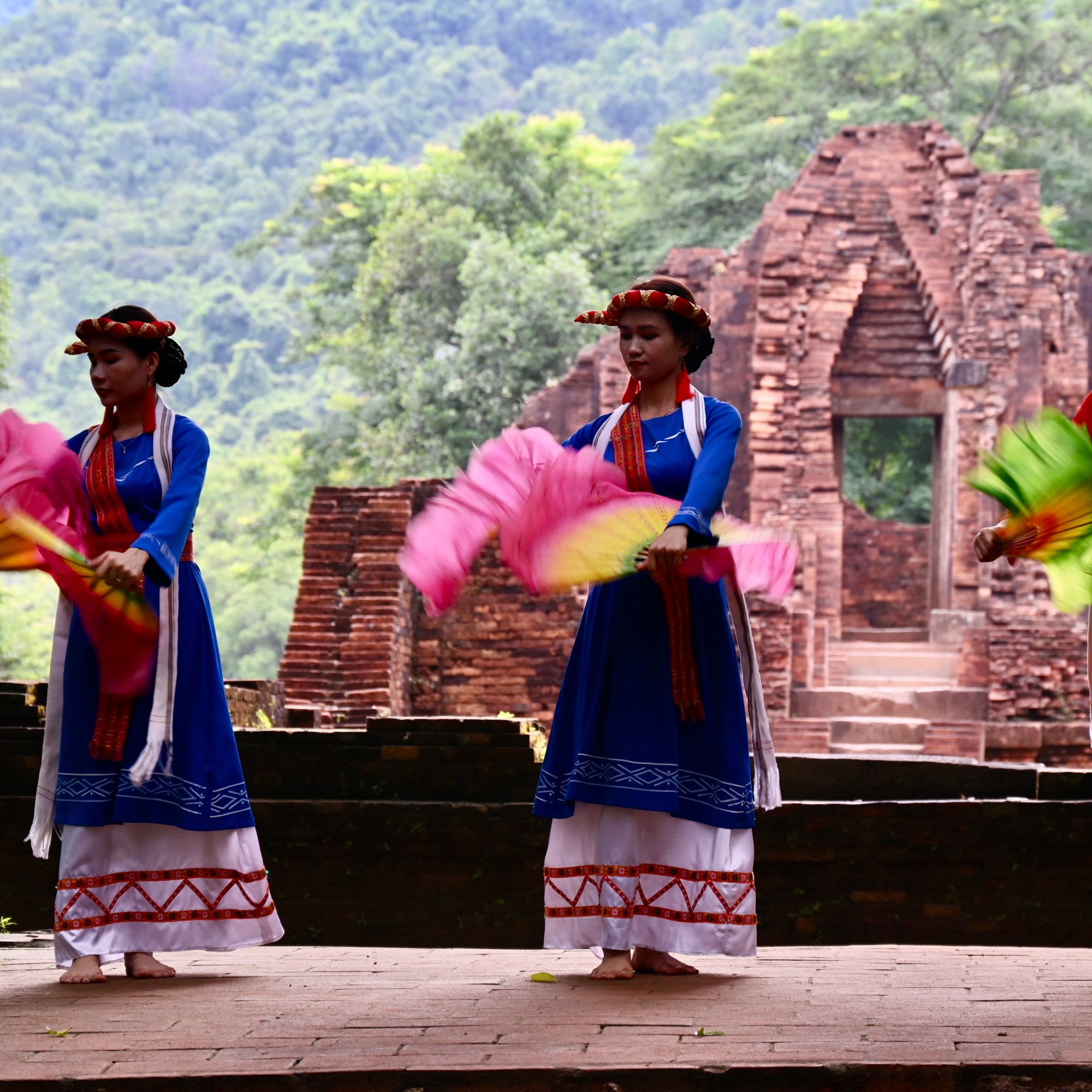
We left An Villa around 6 AM, took the road South of the river and arrived 1,5 hour later at the entrance of My Son. We parked our motorbike and there were only a handful of minibuses in the parking lot. We paid the entrance ticket, 150000 dong ( 5,70 euro) per person, entered, used the toilet and were taken to the temple area with an electric shuttle bus. We were the only ones on the bus. We started the walking path in counterclockwise direction. That way you start with the oldest complexes dating back as far as the 7th century, walking up to the younger and more impressive structures from the 11th and 12th century. We met only a handful of people coming towards us while visiting the Cham temples. You cannot underestimate the importance of these structures, unfortunately many have been severely damaged during the American – Vietnam war. Just after the first temples, namely the K group, each group of temples are nominated with a letter from A to K, we ate our very tasty breakfast of Banh Mi ( baguette with meat) and fresh fruit on a little picnic bench and table with traditional music playing in the back. They were rehearsing for the music performances of the day. The 9 AM the music performance took place in front of the G temple group, and we were lucky to watch it with just a handful of other people with the temple as a backdrop. All the later performances take place at the performance hall between temple group A/B and H. We had an ice-cream to cool down because, even though it was clouded and still early, it was already very hot and humid. We then visited the H temple group. A bit further you get a nice view of the mountain called a Cat’s tooth with some beautiful lotus ponds in front. Unfortunately, this time of year they were not in bloom. The shuttle took us back, and while tour groups started the arrive from around 9:30, we were the only ones going back on the shuttle. We visited the museum at the entrance and took the road North of the river to go back to Hoi An. On the way back we stumbled upon another Cham temple, which was almost intact. Of you want to visit My Son without the crowds you better get there as early as possible, the site opens at 6 AM, we arrived at around 7:3 AM and it was a perfect time to visit everything before the tour groups arrive.

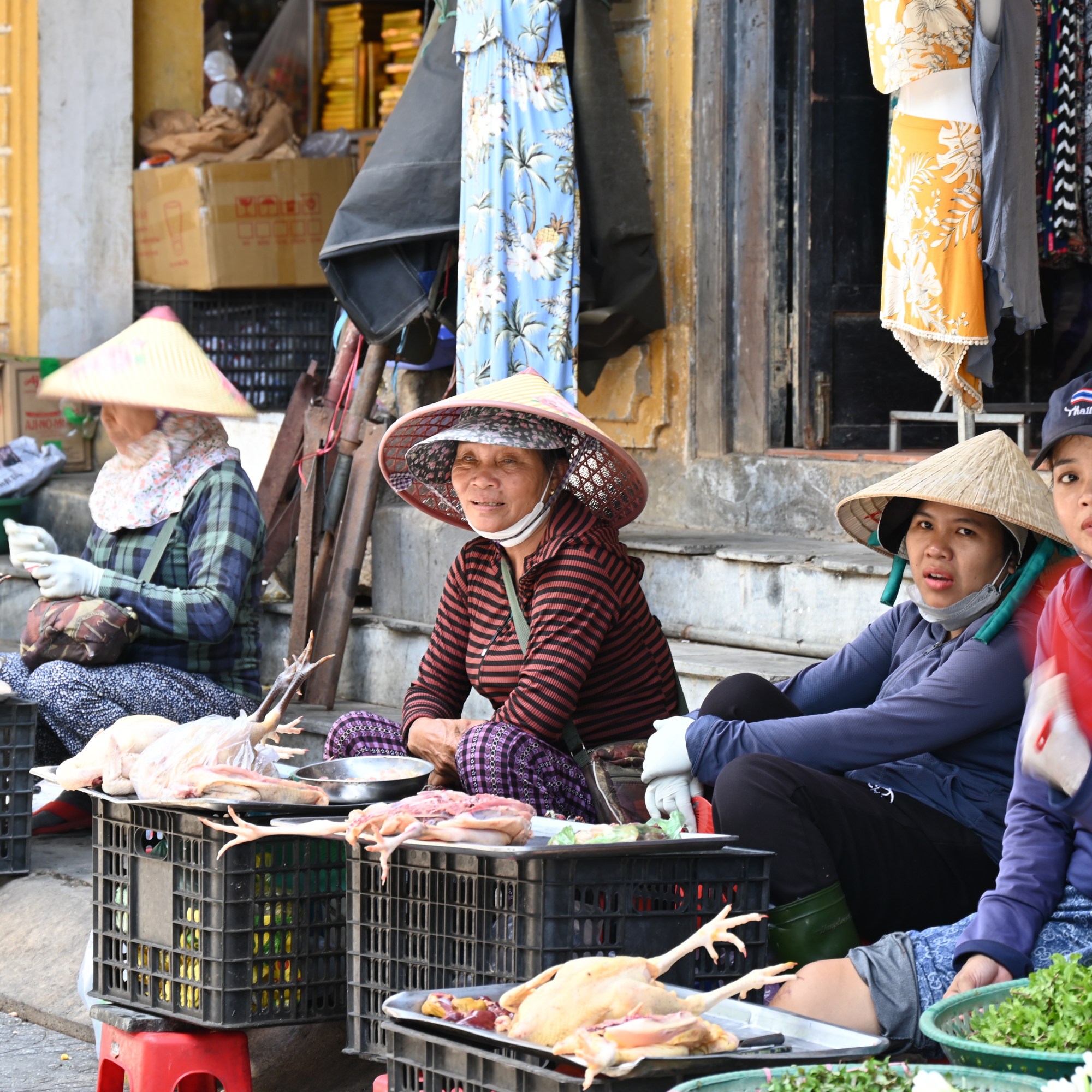

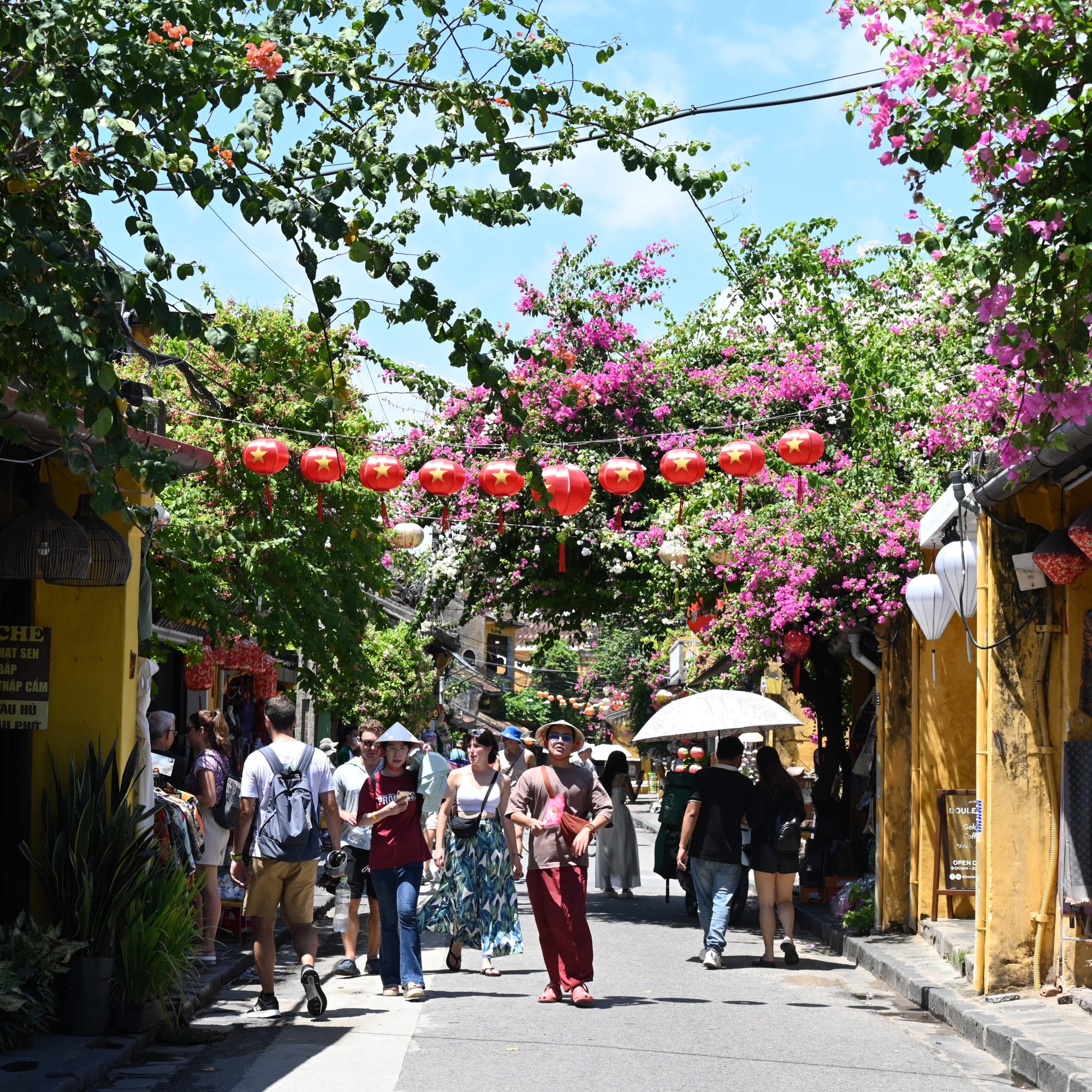
We then visited Hoi An town during the day, and even although the heat really gets to you, I liked the place much more during the day. There are several little temples and assembly halls in between the shops you can visit, most of them ask for your ticket, but you can often see the entrance, or even peek inside and take pictures without paying for the ticket. We visited the Assembly Hall of Hoi An, there was a ticket table at the entrance but no one attending to it, so we just walked in. Most of these places can be visited on the Hoi An entrance ticket that costs 120000 dong and is valid for the duration of your stay and gives you free entrance to five heritage houses and museums in Hoi An old town. Officially you need this entrance ticket for a visit of the old town of Hoi An. There are ticket boots at the far ends of most streets that are pedestrian only. A sign says that the tickets helps preserve the town of Hoi An. In practice no one buys a ticket ( tour groups buy their tickets for their travelers), and ticket control is non existing. In principle you need a ticket for the Japanese bridge but in practice they never actually check the tickets. So it is up to you if you buy a ticket for Hoi An or not… The Japanese bridge is the only covered bridge in the world that also holds a Buddhist temple. For some sites like the Chinese temple and some old traditional houses you have to get a ticket to get in which you can just buy it at the site’s entrance. Since you might want to enter some of the Buddhist temples, dress modestly and cover shoulders, chest, stomach and knees. So do not walk around in your bikini in the old town, like I saw one tourist do.
We decided to have lunch at the restaurant Morning Glory original, a traditional eatery run by the famous Vietnamese chef Trinh Diem Vy who also owns the Cargo Club. Only downside is they have no vegetarian choices. But just next door you have the V Vegan cafe and restaurant. At the other side of the river you find the second branch, Morning Glory signature, which serves more eclectic and fusion style dishes.
I also made a quick visit to Be Be tailors to see if maybe I wanted to have something made to fit, but found the designs quite old-fashioned. I really would like to have an Ao Dai made here in Vietnam, but one that is modern and loosely fitted. I decided I would first research what I really wanted for my Ao Dai and have it made on my next visit to Vietnam.
We returned to An Villa, had a nap, then a swim and watched a Lion Dance that was being performed for a group doing a yoga retreat at the hotel. We had a light dinner and called it a night, since there was a huge downpour in the evening that kept us in the hotel. It was rainy season, and this was our first rain in Hoi An!
We had a relaxed breakfast at An Villa, and around 10 AM decided to go to Hoi An since I wanted to do some more shopping and try the famous Banh Mi. We visited some of the temples we passed and wandered along some of the small and quiet alleys in between the main streets of the old town where you find some nice cafés and restaurants. We bought some delicious Lotus leaf tea at Master Tam. One thing the French left behind is the baguette, you find them all over Vietnam and are often eaten for breakfast or lunch. They are filled with meat and vegetables, and Hoi An is one of the places where you can find delicious Banh Mi.


If you want to eat Banh Mi, do it at the best place in Hoi An, at Madam Khanh’s shop, also known as the Queen of Banh Mi. So we walked to Madam Khanh’s Banh Mi shop where we were happy to cool down in the upstairs air-conditioned room. Here you get a crispy baguette, and you can choose between a mix, vegetarian, pork, chicken or barbecue pork baguette, with vegetables, papaya and cucumber, paté and egg sauce ( kind of mayo). All fillings are really tasty and juicy and downright delicious. Downstairs you can sit under whirling fans, upstairs is an airconditioned room. They have a large choice of drinks, and they even serve kombucha in different flavors. We both chose the vegetarian with cheese first and then shared one with BBQ pork, but without the paté.
If you are into shopping, Hoi An is a shoppers paradise. You have off course loads of little shops all selling the same stuff like lantarns, small souvenirs, Vietnamese hats, clothes, coffee and tea…. But there are some really nice shops to find in Hoi An: One shop that really impressed me was a little silversmith shop that sells jewelry and local ceramics with and without brass or copper finishing. Their products are really beautiful and if you do not want to take the ceramics in your luggage they can ship it for you. You find their store Den Long Bac or Silver Lanterns at the riverside, 120 Nguyen Thai Hoc. There are many stores to buy coffee and tea, but the lotus leaf tea at Master Tan was an immediate hit with me, you find the store at 105 Tran Phu. You also have the Ginkgo stores where you find original tees, at 115 Tran Phu. Reaching out Teahouse at 131 Tran Phu is a project that employs speech and hearing impaired staff, there is a tea and coffee house and an arts and crafts shop on number 3 Nguyen Thai Hoc street with products made by people with disabilities. If you are looking for really beautiful designed clothes in silk or organic cotton you have to go to Metiseko in 140 Tran Phu. For a refreshing drink to take away make a stop at Mot Hoi An and get a cup of their herbal drink. The drink is decorated with lotus petals and tea leaves. The drink is made of several herbs like lemon, ginger, lemongrass, chrysanthemum, lotus leaves, green tea and honey. Sunday in Hoi An, next to the Japanese bridge has exquisite lacquer gifts, bamboo and mulberry bedding, original bags ans other small items. And of course you could on a separate temporary market buy the lanterns, kids toys and the different mooncakes or Banh Nuong and Banh Deo.
The sun was really burning down on us, so we decided to go back to An Villa and take some rest. We wanted to go for a swim later that afternoon, but gt surprised by a torential downpour at 4 PM. Just before it started raining we quickly drove to a gas station to fill up the motorbike before returning it at the hotel. We stayed in the hotel for the evening and booked a transfer to the airport for the next morning after checking in for our flight. We had dinner in the hotel and packed our bags before turning in.
 chefmaison