After a lazy breakfast at our hotel the Secret Con Dao resort we checked out and took the 12AM complementary shuttle bus to the airport to catch our 1:35 PM flight to Ho Chi Minh City, aka Saigon. One hour before your flight at the airport is early enough, it is only a very small airport with not much to do or see. The plane takes you in one hour from Con Dao to Ho Chi Minh City in a small and a bit outdated aircraft. From the airport we booked a Grab. It was a bit of a search to find the pick-up point, but you have to go in de direction of D1, cross the street to the taxi stands, and look for Pilar K5 on your right. It takes between 20 and 30 minutes to go to district one in the centre. Our Hotel, Fusion Suites Saigon was located in a rather quiet street lined with massive trees that reached up to the 10th floor where we had our room, quite impressive. Just opposite the hotel a famous Vietnamese singer Ngoc Son owned an impressive house.
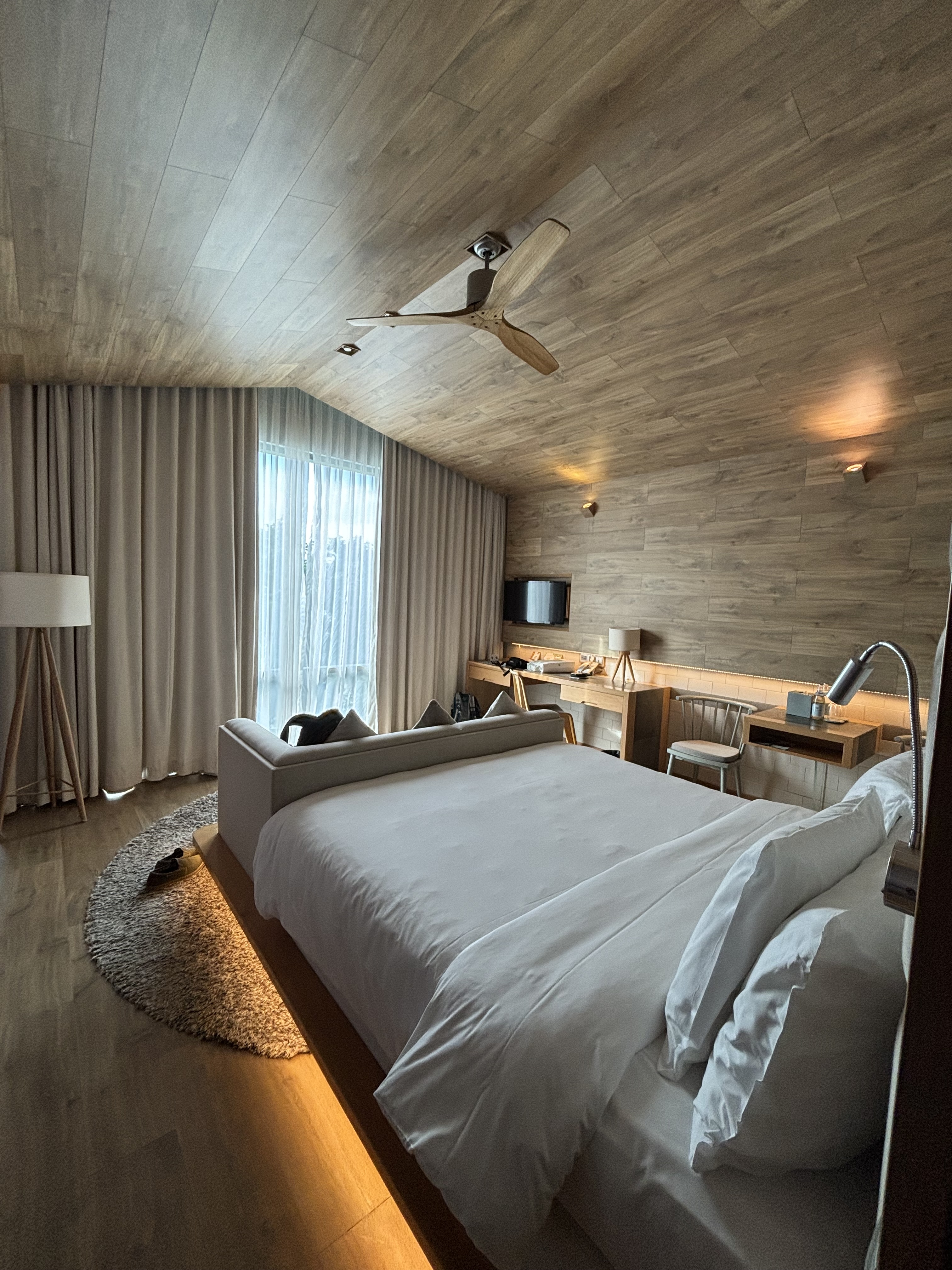

After checking in and settling into our very beautiful room, looking out over the trees, we went out for a walk. We walked through the Tao Dan park where locals were working out while other were playing foot badminton.
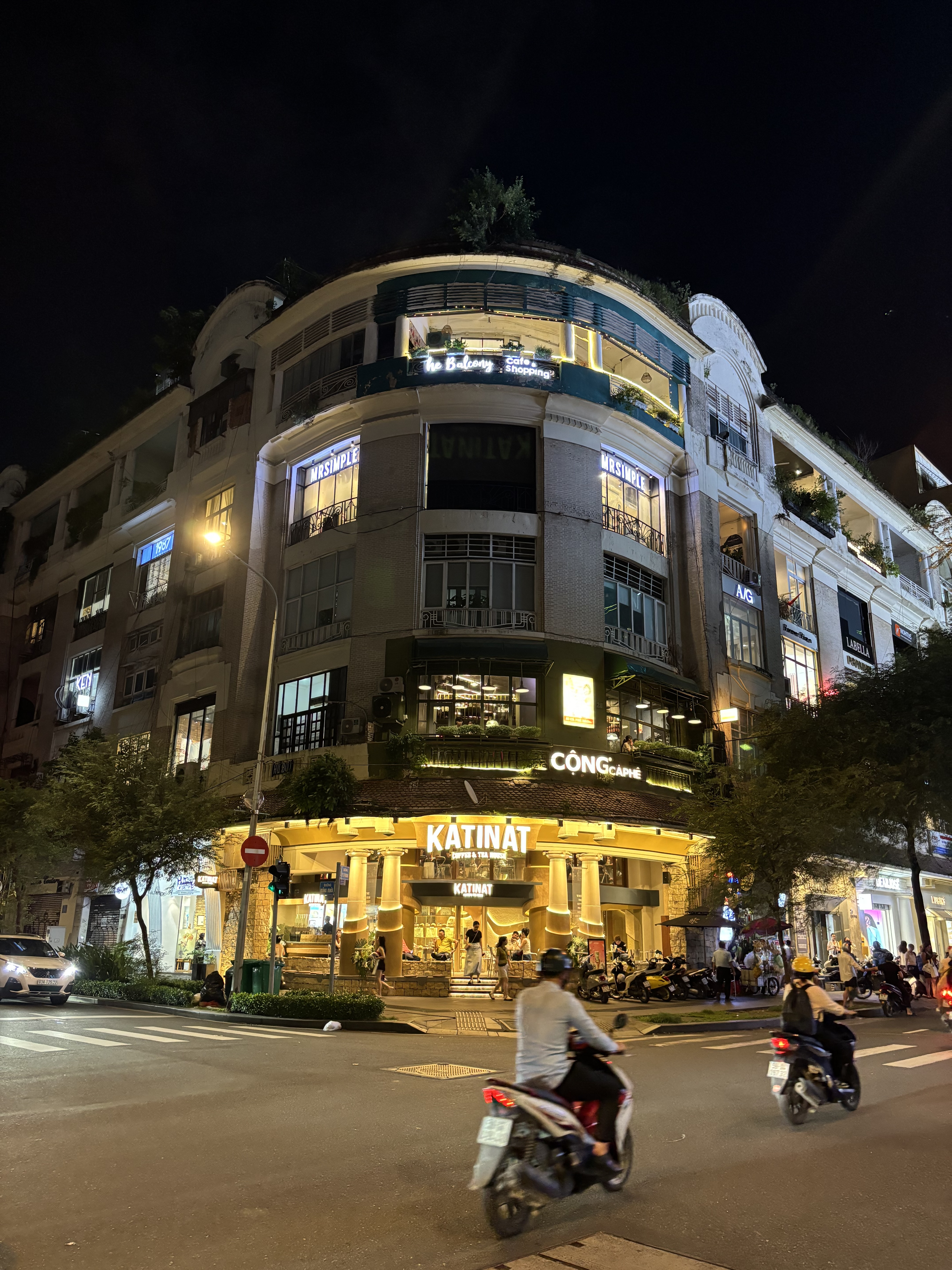
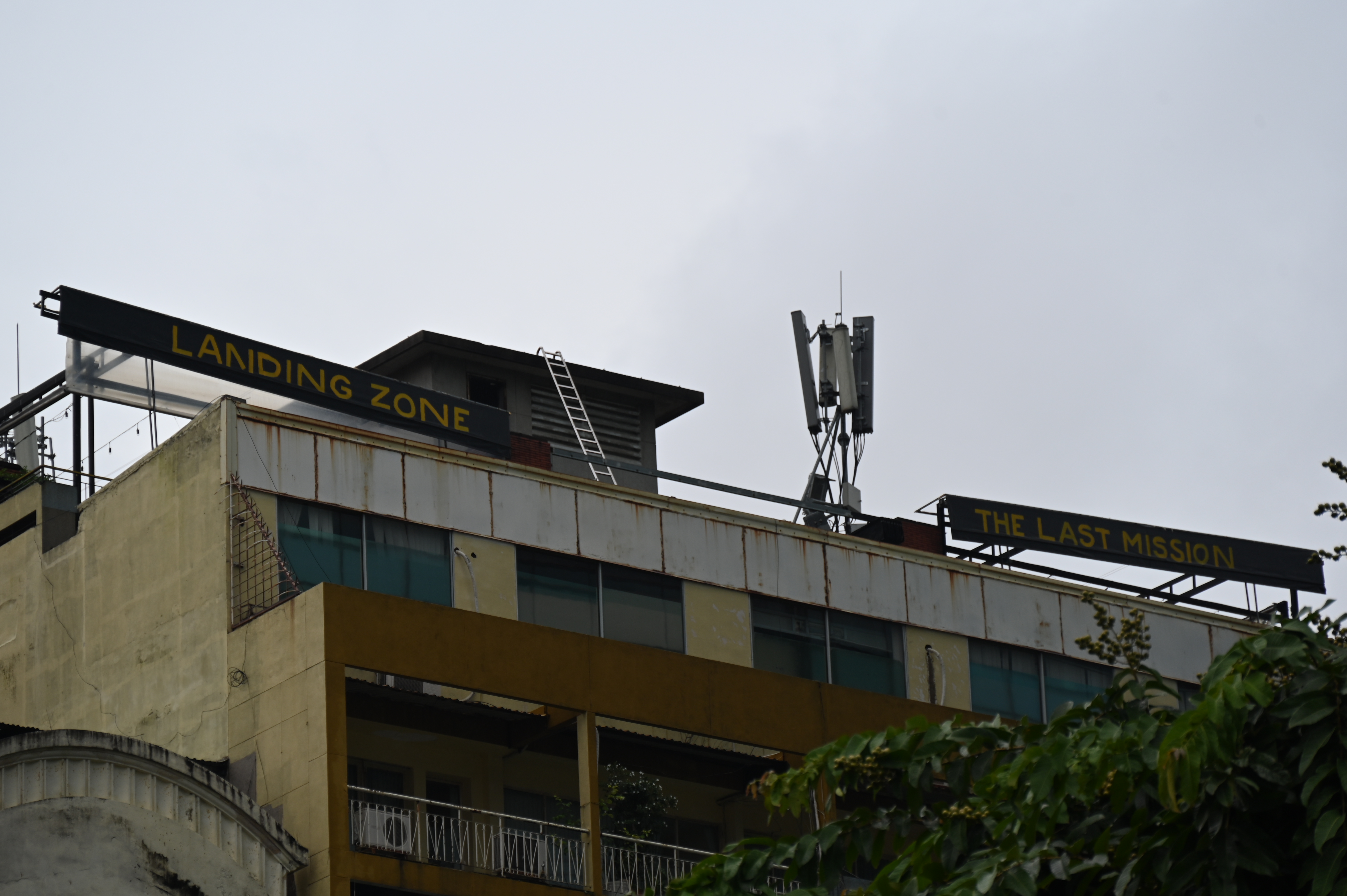
We walked to 26 Ly Tu Trong street, which from 1930, used to be the American consulate. It is also known as the art deco Katinat building which was car bombed by “Japanese gendarmerie” on 23 November 1941. The iconic image by Dutch photographer Hubert van Es of people scrambling up a rooftop ladder to a helicopter was taken not of the Embassy, but from the building next door, the CIA’s “Pittman Apartments” at 22 Lý Tự Trọng street. The aged Catinat building now houses hip café’s, restaurants and boutique shops attracting a young crowd. Not sure for how much longer because it is earmarked for redevelopment.
We were hungry and found La Moi, a plant-based restaurant on 84 Nguyen Du street where the food is very good!

We then walked back into Dong Khoi street, and took a right into Le Thanh Ton street, where you find the Ho Chi Minh City People’s Committee, one of the city’s most prominent landmarks. Built between 1901 and 1908, the former Hôtel de Ville (city hall) decorates the northwestern end of ÐL Nguyen Hue, but unfortunately the ornate interior is not open to the public. On the square in front of it, a statue of Ho Cho Minh, and on the right the state-owned Rex hotel, a famous luxury and business hotel first built during the French colonial time as an autodealer showroom. It was later enlarged as a hotel which served as the American military command site during the Vietnam war where the daily U.S. briefings were held which got named The Five O’Clock Follies by cynical journalists who found the optimism of the American officers misguided.
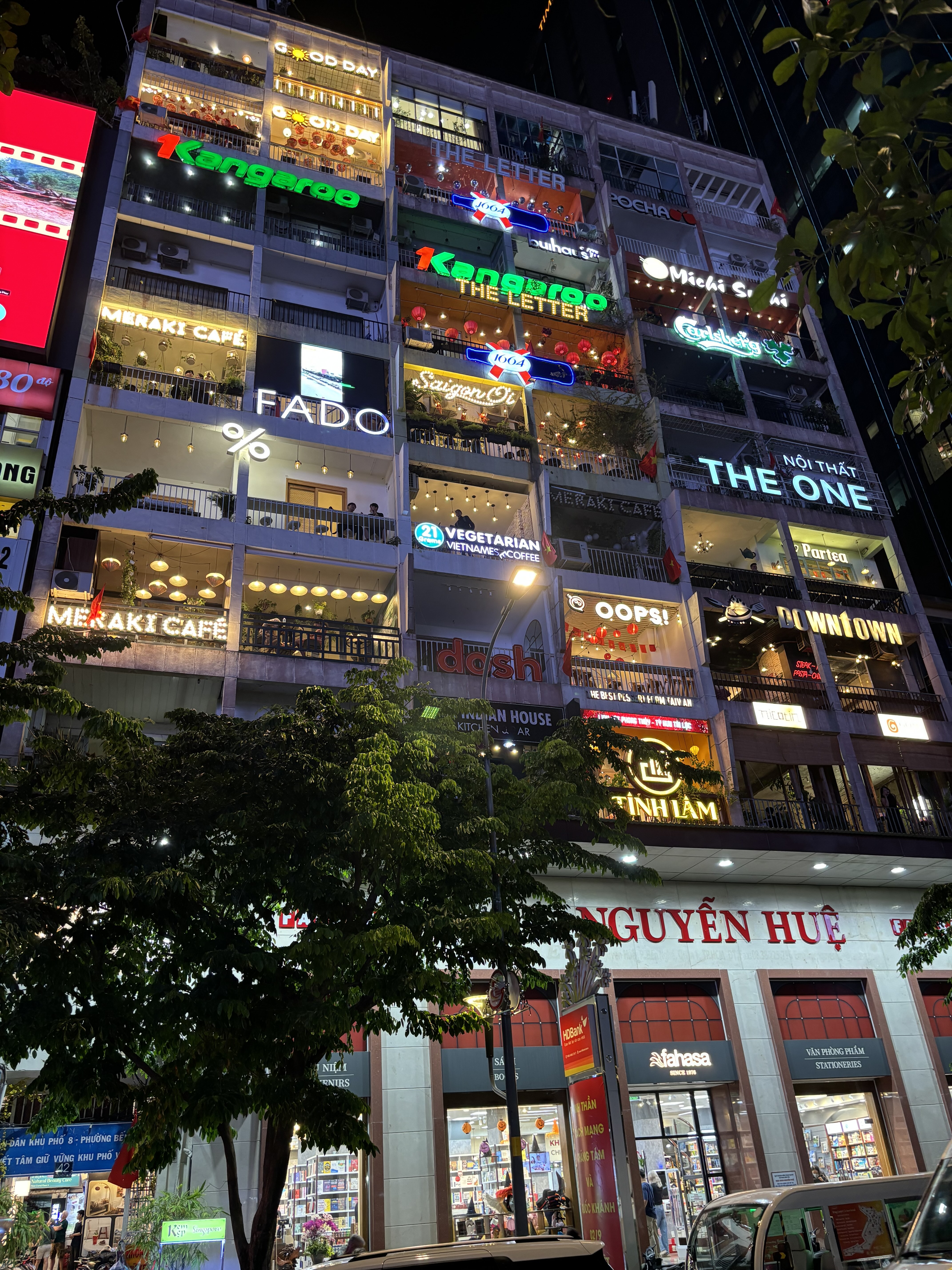
We continued down the wide Nguyen Hue street to number 42 known as one of the Café Appartements, constructed in the sixties, a nine stories appartement block that today houses a vibrant array of independent cafes, workshops, boutique fashion stores, and co-working spaces. You can access it through number 42, just left of the bookstore, and either use the staircase or the lift for 3000 dong.
We walked back to our hotel and walked through Ben Thanh market where sellers were slowly wrapping up their stores.
The next morning we took a leisurely breakfast, the buffet is quite extensive, and you can also order some warm dishes like eggs or pho.
We then took a Grab to go to Cholon, or China town of Saigon, is where Chinese settled in the 17th century. The influence of the original Hoa people is visible in the many pagodas and assembly halls, even though today only 5 % of the people in Cholon are Hoa people, after being persecuted after the Fall of Saigon in 1975 and the 1979 Sino-Vietnamese war. Cholon attracted mostly Cantonese and Teochow people and nearly every temple here began as a guildhall built to serve migrants from specific parts of China. These temples blend Taoism, Buddhism and Chinese Folk religion without much concern for boundaries. The oldest pagodas date back to the early 18th century.

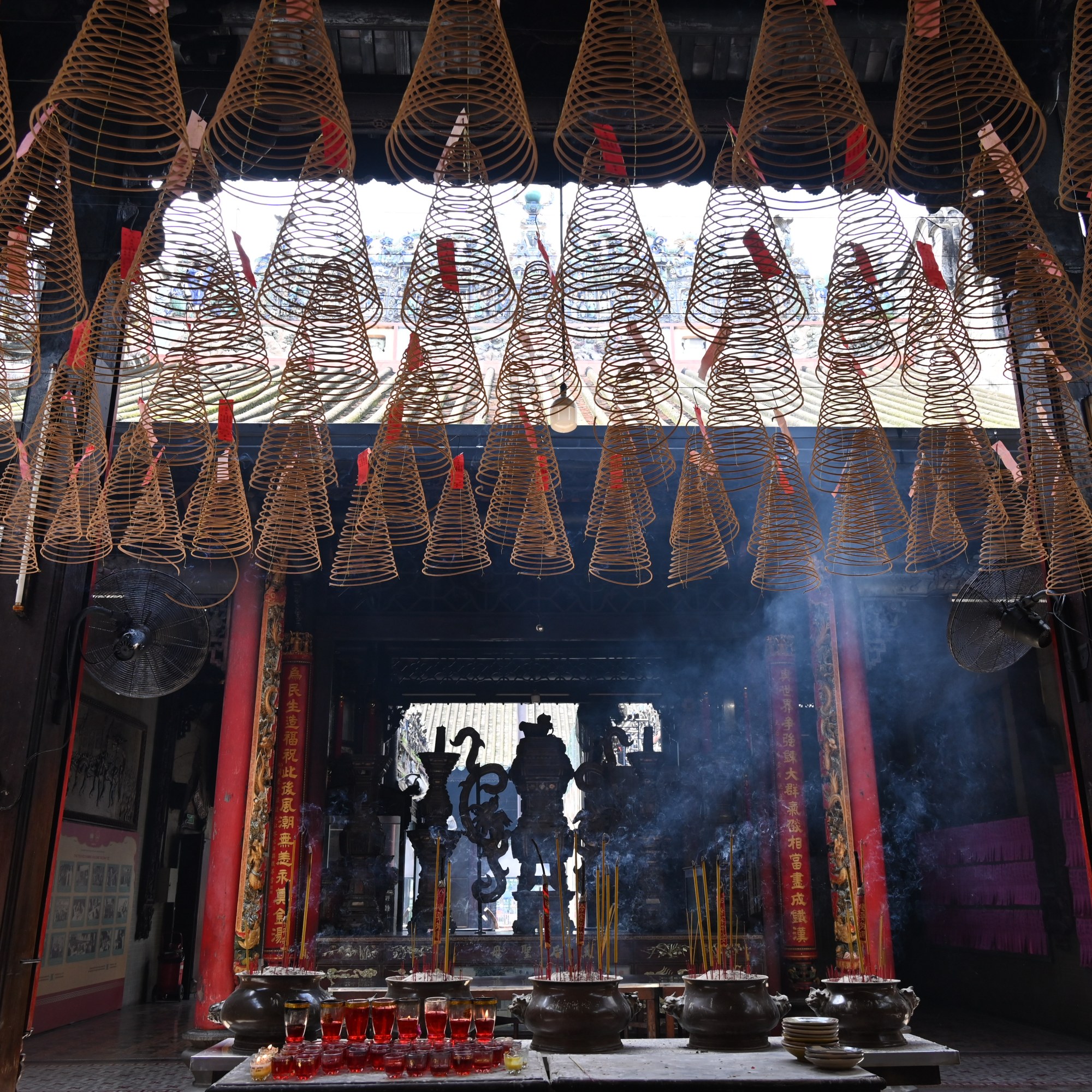
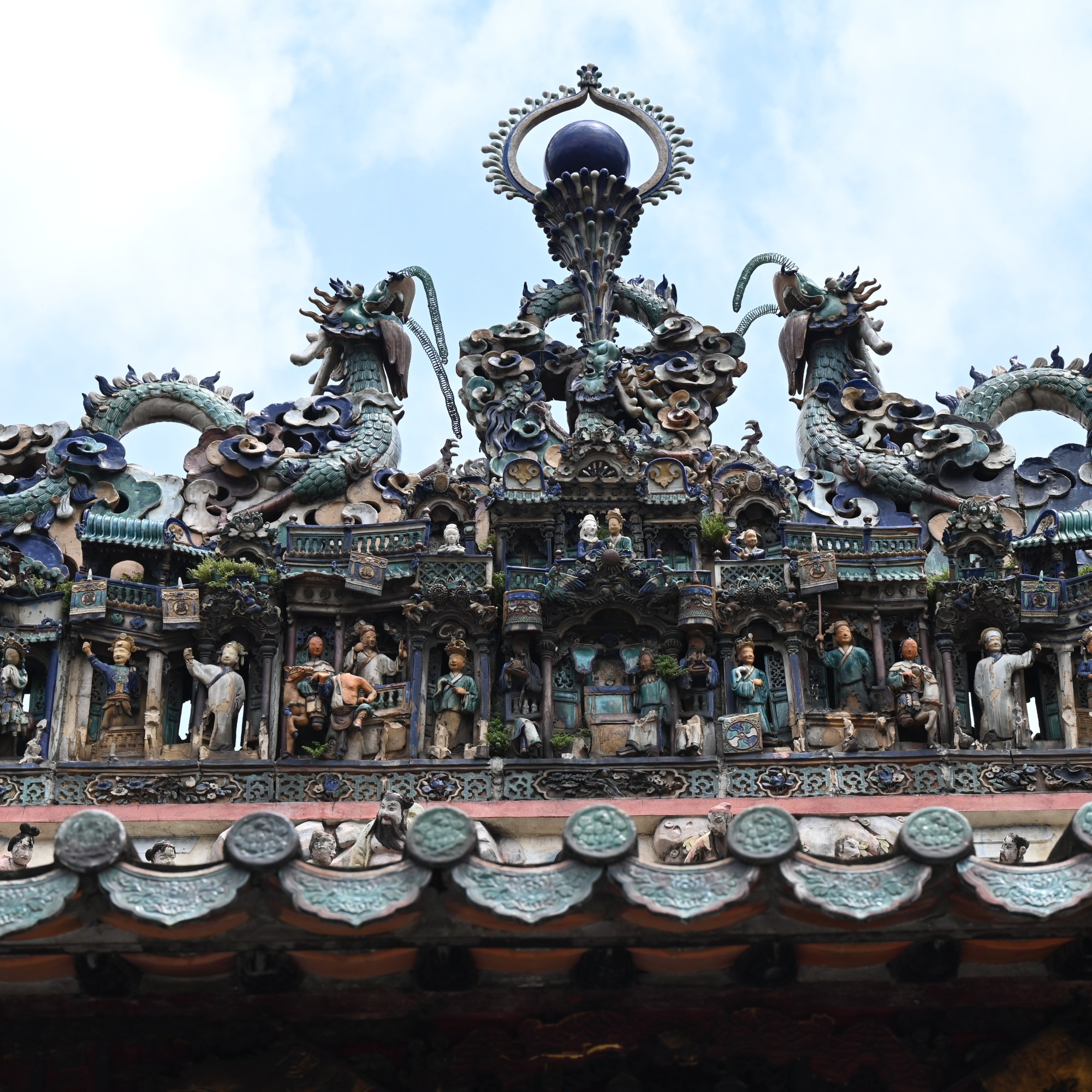
We were dropped by our Grab ride in front of Thien Hau Temple, without a doubt the most famous temple of Cholon. The temple like many other temples here venerate Mazu, goddess of the sea and protector of seafarers and fisherfolk. Mazu worship is common among pre-modern diasporic Chinese communities—migrants prayed for safe passage through treacherous waters and built temples in het honor after establishing themselves abroad. Impressive are the huge spiral incense coils burning while dangling from the ceiling. Pink slips with good luck wishes hang on the walls. The wooden carved Mazu statue is said to be even older than the temple which was founded in 1760.
We continued to the Tam Son guildhall or Hoi Quan pagoda built by settlers from Fuzhou in Fujian province, very close to the birthplace of Mazu, founded in 1839. Mazu is worshipped here, as you might expect, but the main shrine venerates Mẹ Sanh, a fertility goddess. On the other side of the street is a small shrine in an open shophouse that features Chì Tù Mǎ, the warhorse belonging to famous general Guan Yu.


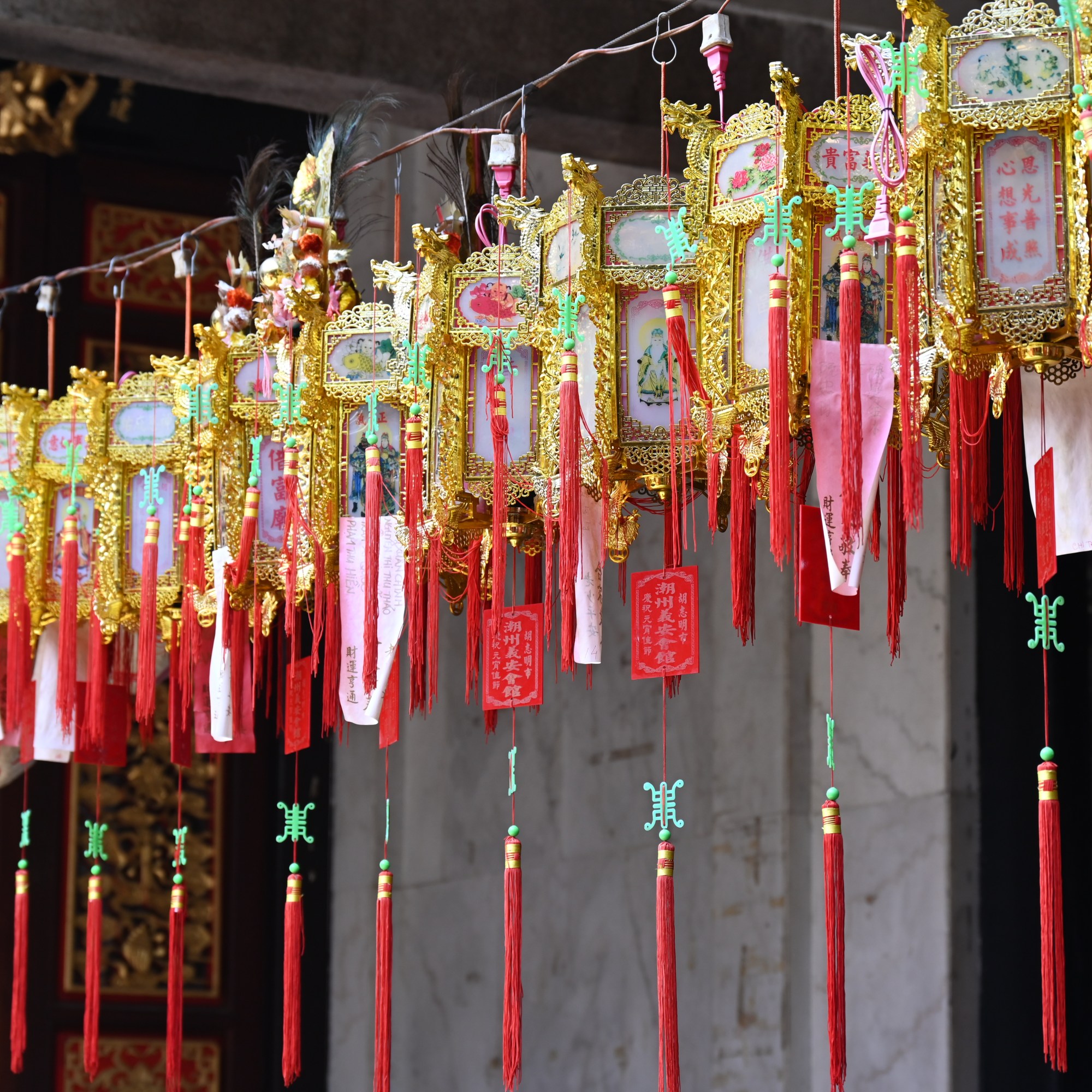
Back on Nguyen Trai street you find the temple Hoi Quan Nghia An or the Nghia An Guildhall, dates back to 1819 built by people from Chaozhou or Teachew. This temple is known for its gorgeous woodcarvings and dedicated to Guan Yu, not only a god of war but also trade and commerce.
We visited a small pagoda behing a school on Tran Hung Dao, named Hội Quán Quỳnh Phủ, or the Quynh Phu Guildhall, founded in 1824 to serve the immigrant form Hainan, but is was a bit dissapointing. We were quite hot and stopped at Phuc Long Tea and Coffee for a drink and a mooncake with milk and coconut to cool down.
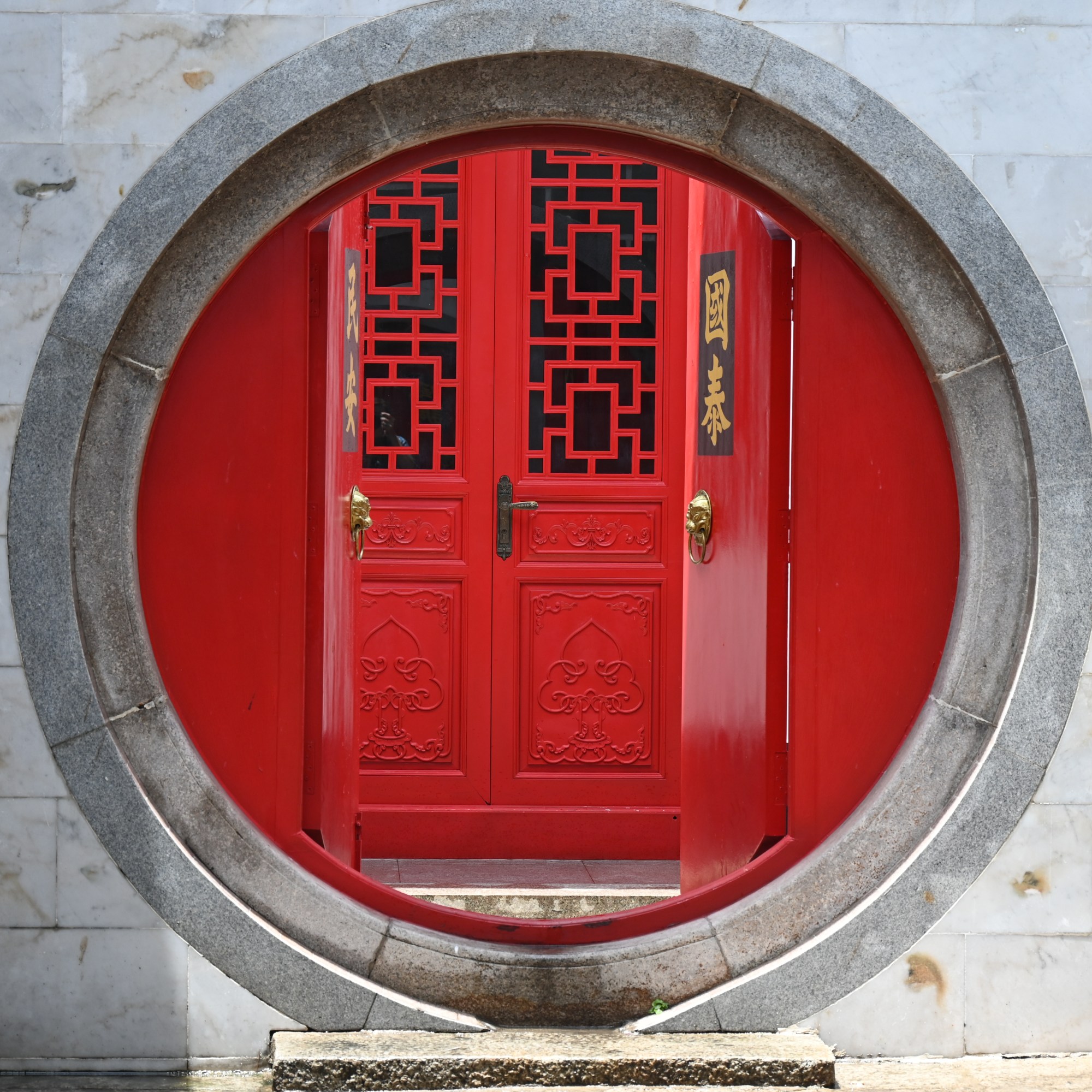

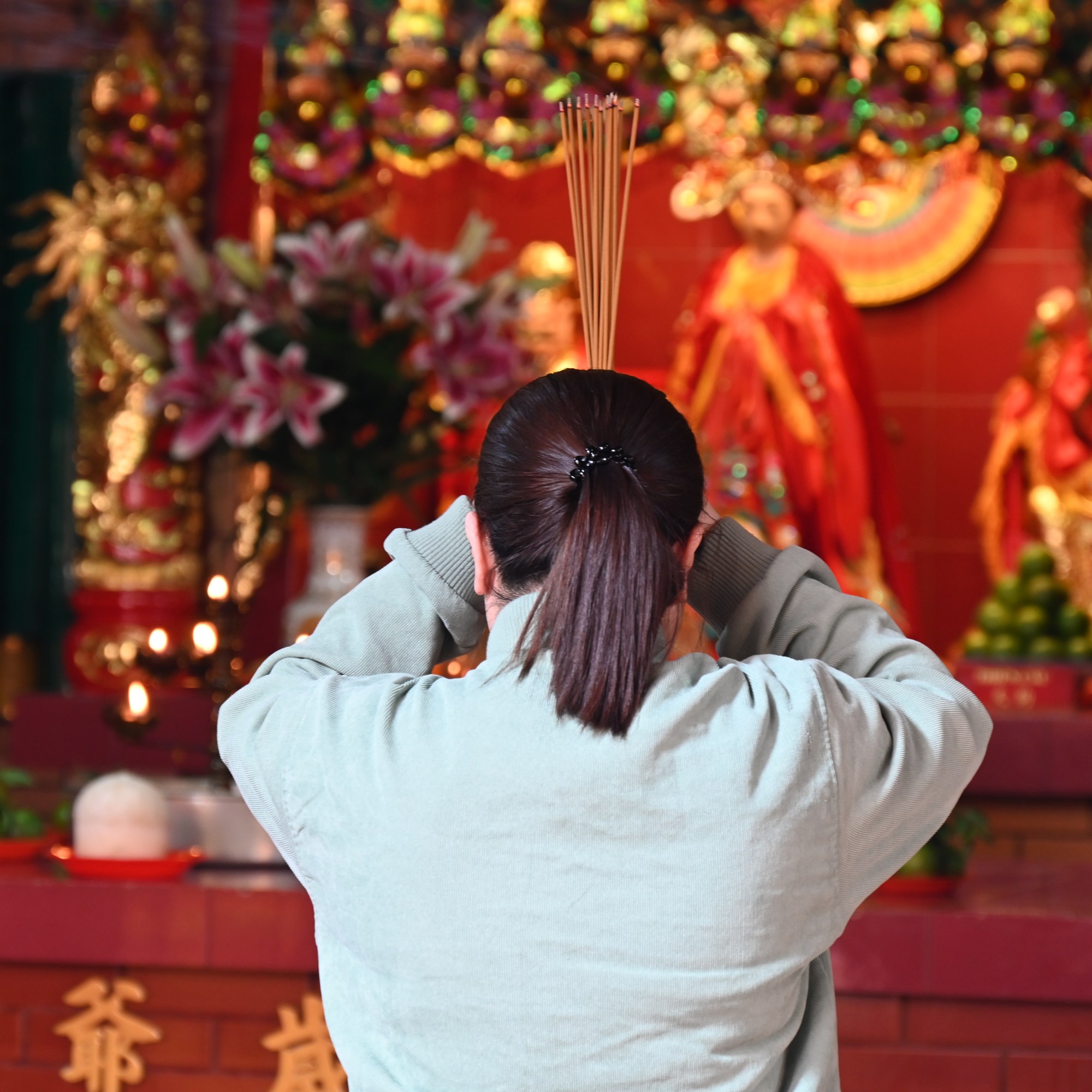
The next temple was Quan Am pagoda, this guildhall traces its history back to 1740 and has much more of a Buddhist focus than the others. The primary object of worship in this temple is Guan Yin, an Bodhisattva known as the Goddess of Mercy in English.
Our last stop was the Phuoc An Guildhall, constructed in 1902 to serve the immigrant community from Fu’an in northeast Fujian. The primary deity worshipped here is the red-faced general Guan Yu. We could only visit the front part, the rest of the temple was being restored and not accessible.
We actually missed out on the oldest pagoda, Nhi Phu Hoi Quan or Ong Bong pagoda on 264 Hải Thượng Lãn Ông street, dating back to 1730 revering Ong Bon or the god of “wealth and happiness.
After visiting five pagodas we took a Grab back to the hotel to take some rest while outside the rain poured down.
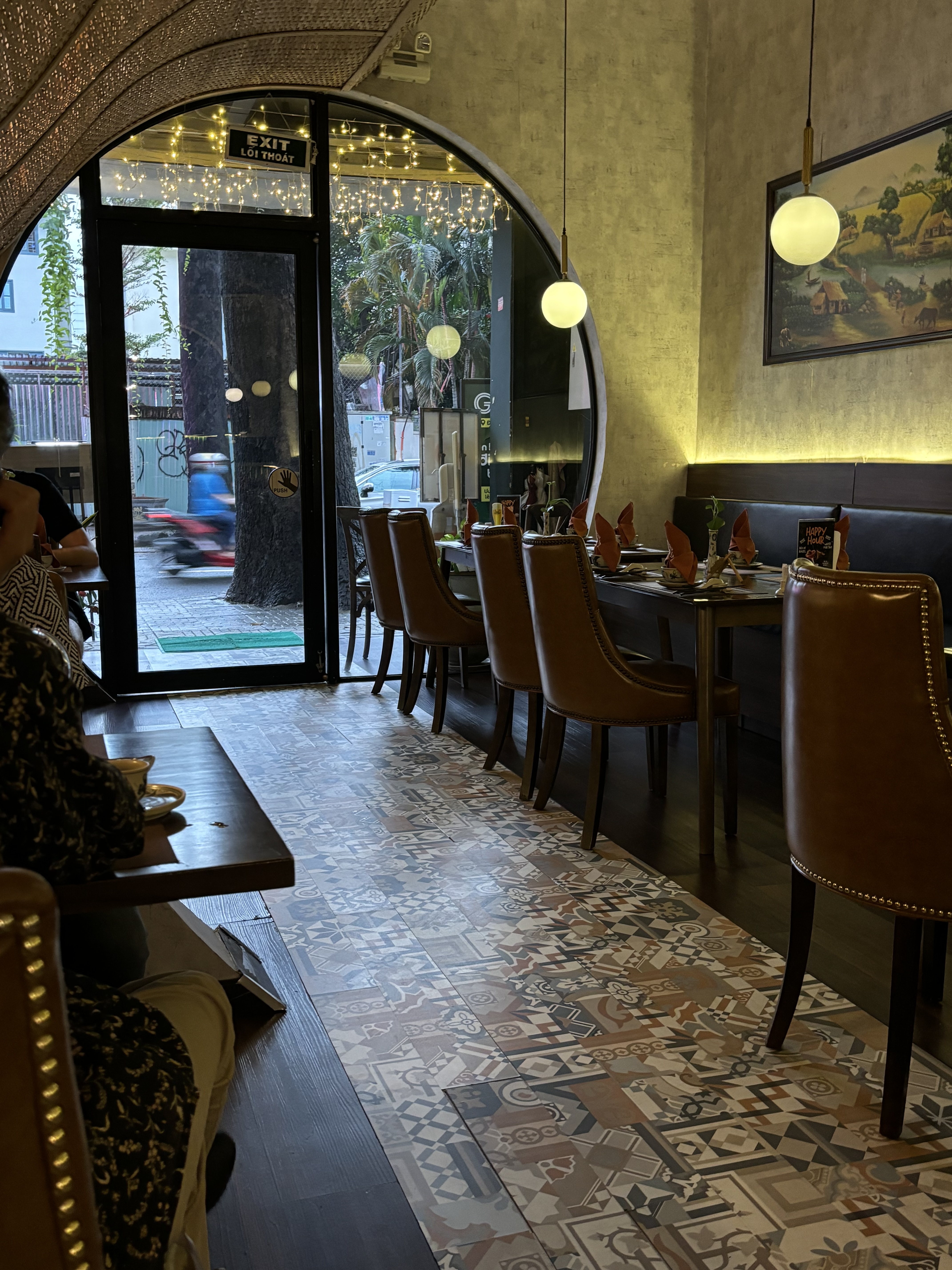

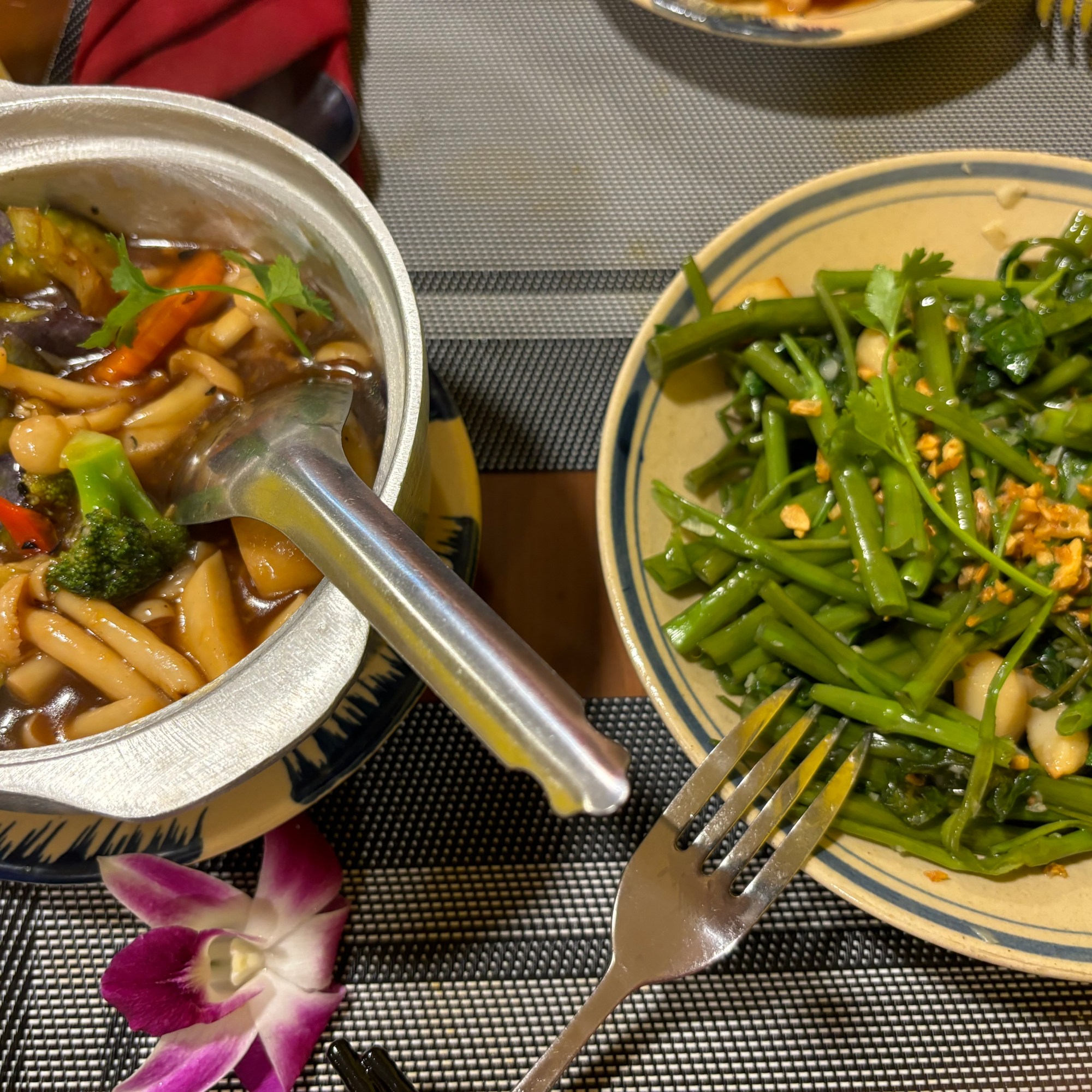
In the early evening we went to check out the shops on the Nguyen Trai street, but I did not find anything to my liking. We chose Vi Que Kithchen, a vegan restaurant in the street of our hotel, serving fantastic vegan dishes in a beautiful decor.


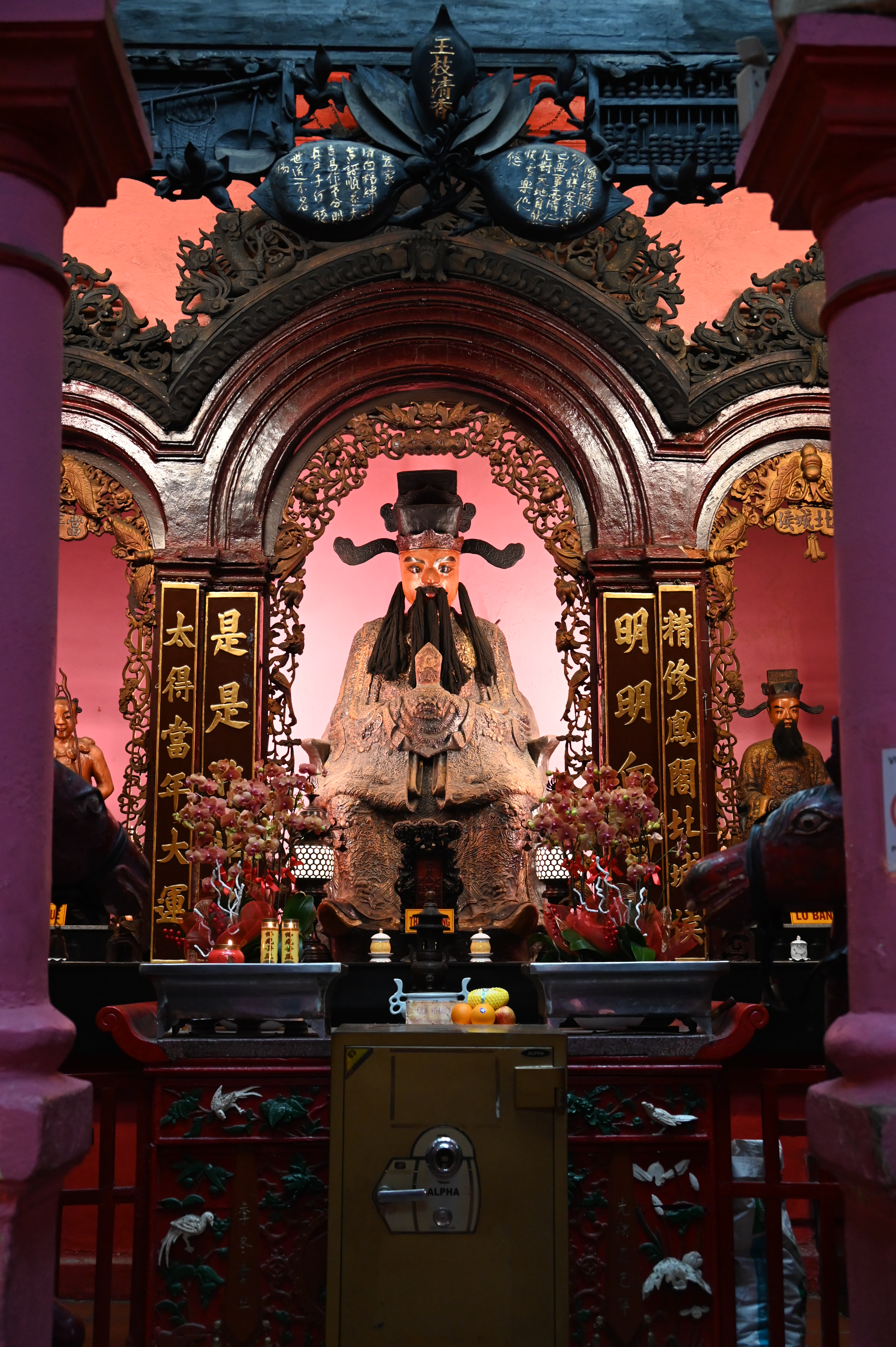
The next morning it looked as thought the weather would be good, so we took a Grab after breakfast to the Emperor Jade pagoda. It started raining while we were in the car and it didn’t stop raining for the rest of the day. The pagoda was built in 1892 by a Chinese man who wanted a place to pray for luck in his business. The pagoda is now assigned to the Vietnam Buddhist Association. The pagoda is famous for its more than 300 old statues of which 100 statues of the Jade Emperor meeting with the genies are made out of cardboard. People buy a bottles of oil to be poured over the candle holders in front of Jade Emperor while whispering their wishes or names of their loved ones for good luck. The ceremony of pouring oil into lamps is a Chinese customs asking for good luck, for longevity and good health. In one of the side halls woman come to worship Kim Hoa Thanh Mau and her 12 midwives, in the hope to become pregnant.
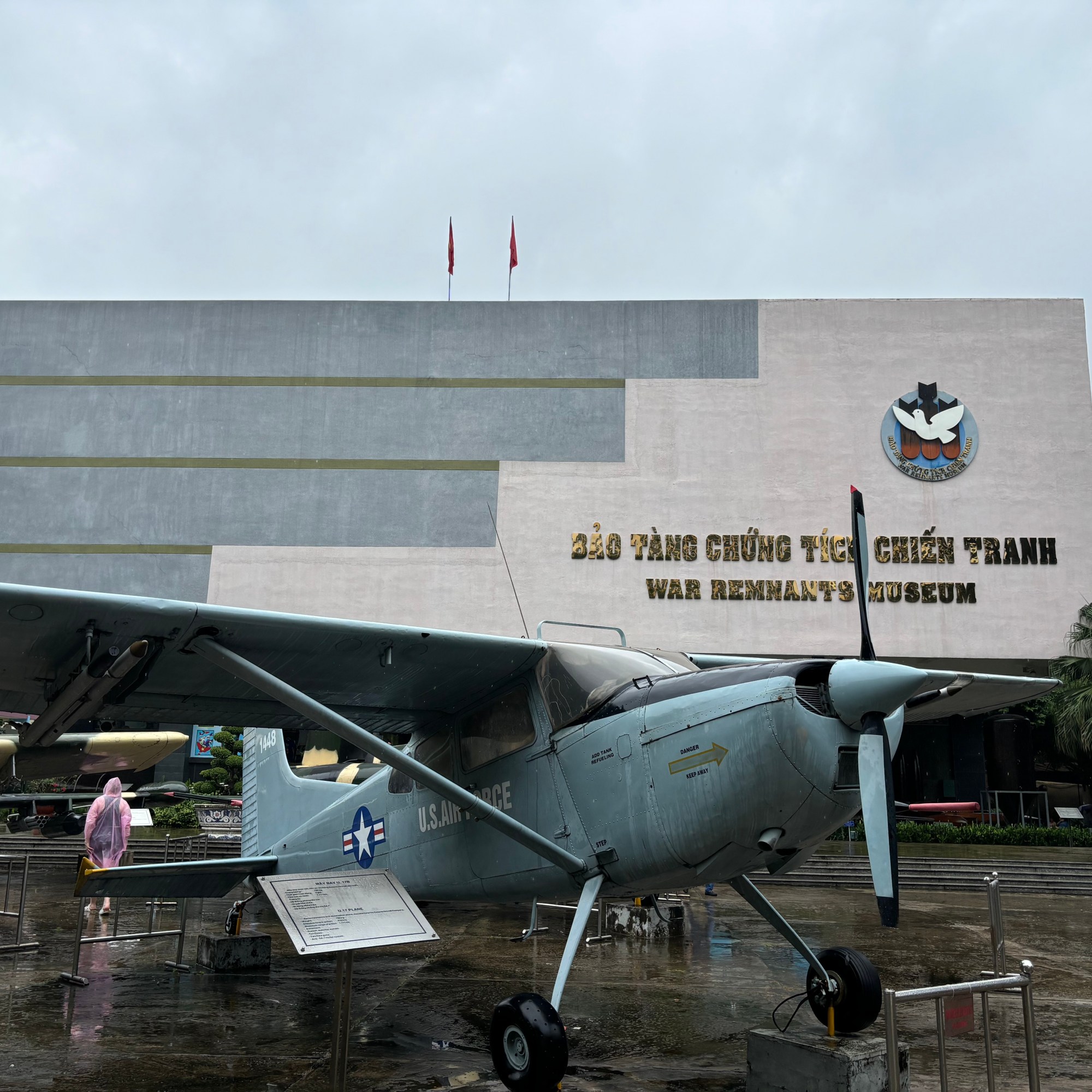
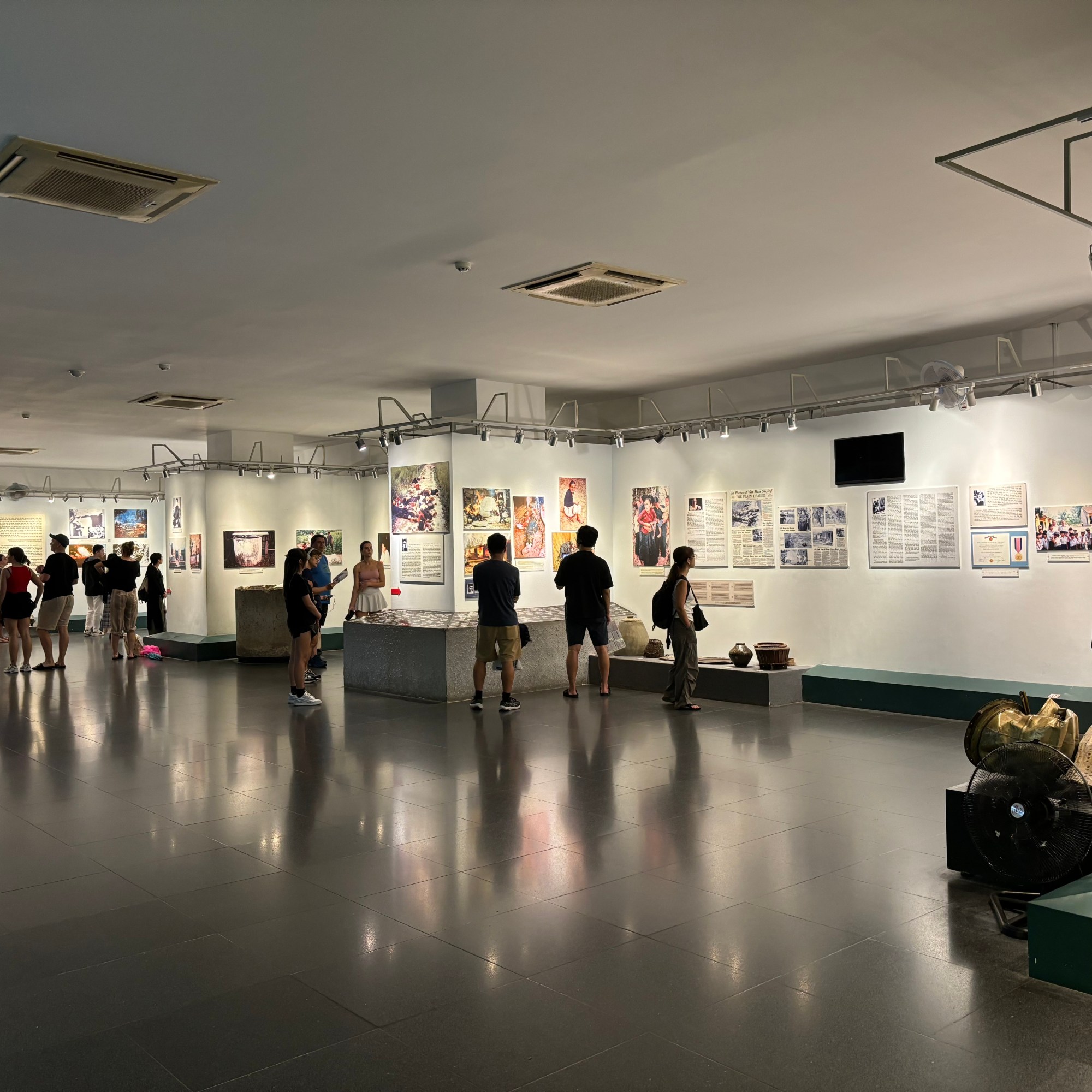
Since it was still raining we decided to visit the War Remnants museum. It tells the story of the Vietnam-American war, and the Dien Bien Phu siege where the French lost and gave up their colony. The exhibition often grabs you by the throat. Especially the section about the many disabilities caused by the use of agent orange during the war. It is very difficult to get rid of the pollution, so even today babies are born with abnormalities because of it.
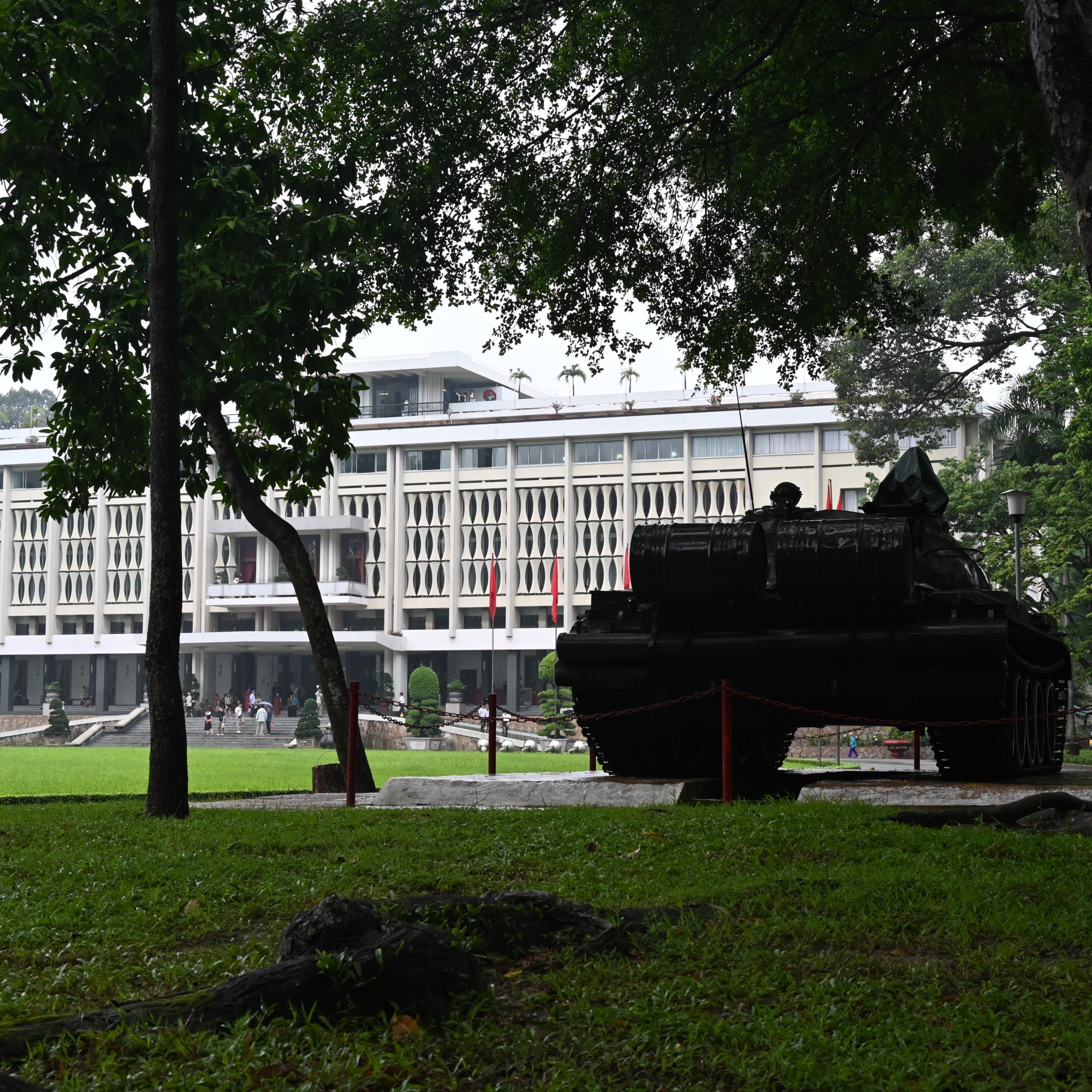
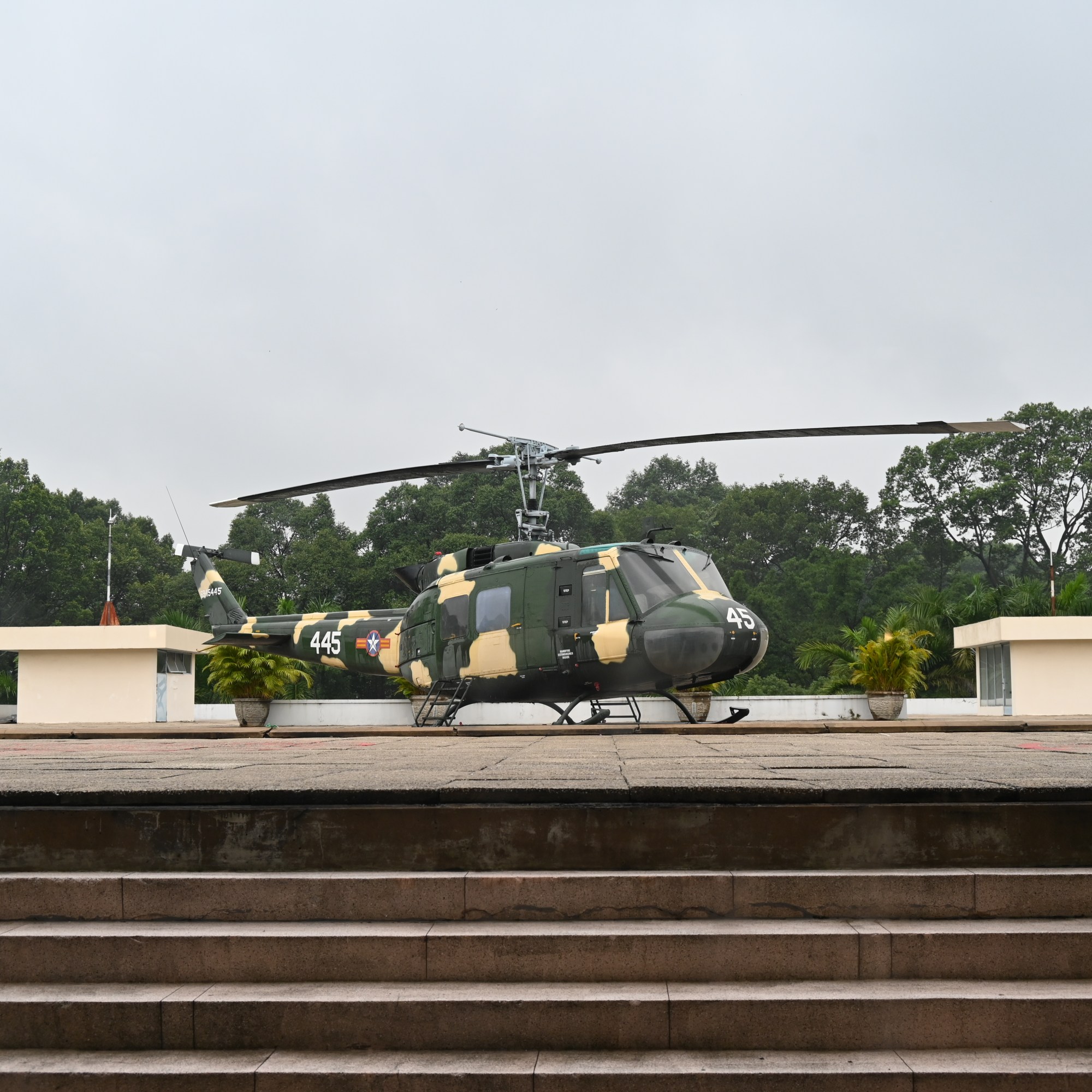
We walked in the direction of the centre, and decided to visit the Reunification palace also known as the Independence palace since it was still raining. We first took a drink in the little coffeeshop next to the ticket booth. We did not know what to expect, but the place is very interesting. It used to be the home and workplace of the president of the Republic of Vietnam, till the end of the American war in 1975. And it was where Saigon fell when tanks crashed though the gate on April 30th 1975. The architecture of the place is very modern and innovative. Inside you see the many meeting rooms, the president’s office and the war room, the residence of the president and the bunkers under the palace. In the garden replica’s of the tanks and on the roof a helicopter used by president Nguyen Van Thieu.


We walked to the cathedral which we couldn’t visit since it is being restored. Next to the cathedral the striking old post office in neo-classical European architecture with Asian decorations designed by the French is still in use. We also walked to the opera building, standing as a lonely edifice of old times surrounded by skyscrapers. The facade of the opera house is inspired by the Petit Palais in Paris.
That evening we had dinner at Vhi Que again, since we had liked it so much the previous evening. They have a happy hour till 7 PM, one alcoholic drink will get you a second one for free.
The next morning we checked out at noon, and took a Grab to the Rex hotel where my husband would stay for the next two days, since he was staying for work while I was flying home that evening.
We went for a walk around the hotel, took a picture of the statue of Ho Chi Minh in front of the hotel and the former city hall which is now the the People’s committee head office. We walked into Kito, a small shop selling local style clothes and rattan bags and some ceramics. They also have a tailoring service. We continued to Saigon centre for some mall shopping and ate some snacks at the food market in the middle of Le Loi boulevard.
We then took a drink at the rooftop bar of the Rex hotel, where we had a drink just like some 30 years ago. We rounded our Vietnam holiday of with a dinner at A taste of Saigon, a little restaurant at the back of the café appartement at Ton That Thiep street, you have to enter at number 42, walk through the motorcycle parking area to the end and turn left. The restaurant has a friendly and engaging service, the place is cosy, the food is OK, nothing spectacular, just decent Vietnamese food and they have some vegetarian options. It attracts a lot of tourists and large groups. When we arrived the restaurant was actually fully booked as they were expecting a group of 31 German tourists. They offered us a small table at the side since the group wasn’t expected for another hour, so we could have a quiet dinner before they arrived.
We also had a look at the shop Saigon Kitsch in the same street where you find original and hip souvenirs. All in all I found the shopping in Hanoi better than in Saigon, probably because the shops are closer together, and the old quarter is a lot more pleasant than the centre of Saigon, which is extended and shops tend to be far apart. In both cities shops stay open quite late, in HCMC they stay open even later than in Hanoi, often till 9 or 10 PM
I freshened up at the hotel, and took a Grab in front of the former city hall of Saigon, because Le Loi street is car free every Friday, Saturday and Sunday from 6 till 10:30 PM. It is a great time to make a stroll along this boulevard. On a Sunday evening the ride to the airport took barely 20 min. I could check in immediately since there was no queue for passengers who had checked in online.
 chefmaison