It had been a few years since we had visited Barcelona, on our first trip we had visited all the highlights of Barcelona, and on a second trip we had traveled along the coast of the Costa Brava all the way up to Cadaques. This fall my husband had a week of meetings in Gava, in a hotel on Platja de Gava, a beach resort area south of Barcelona. We stayed at AC Hotel Gava Mar, right on the beach of Gava. We decided to discover the area around and South of Barcelona, and to our surprise there was a lot worth visiting!
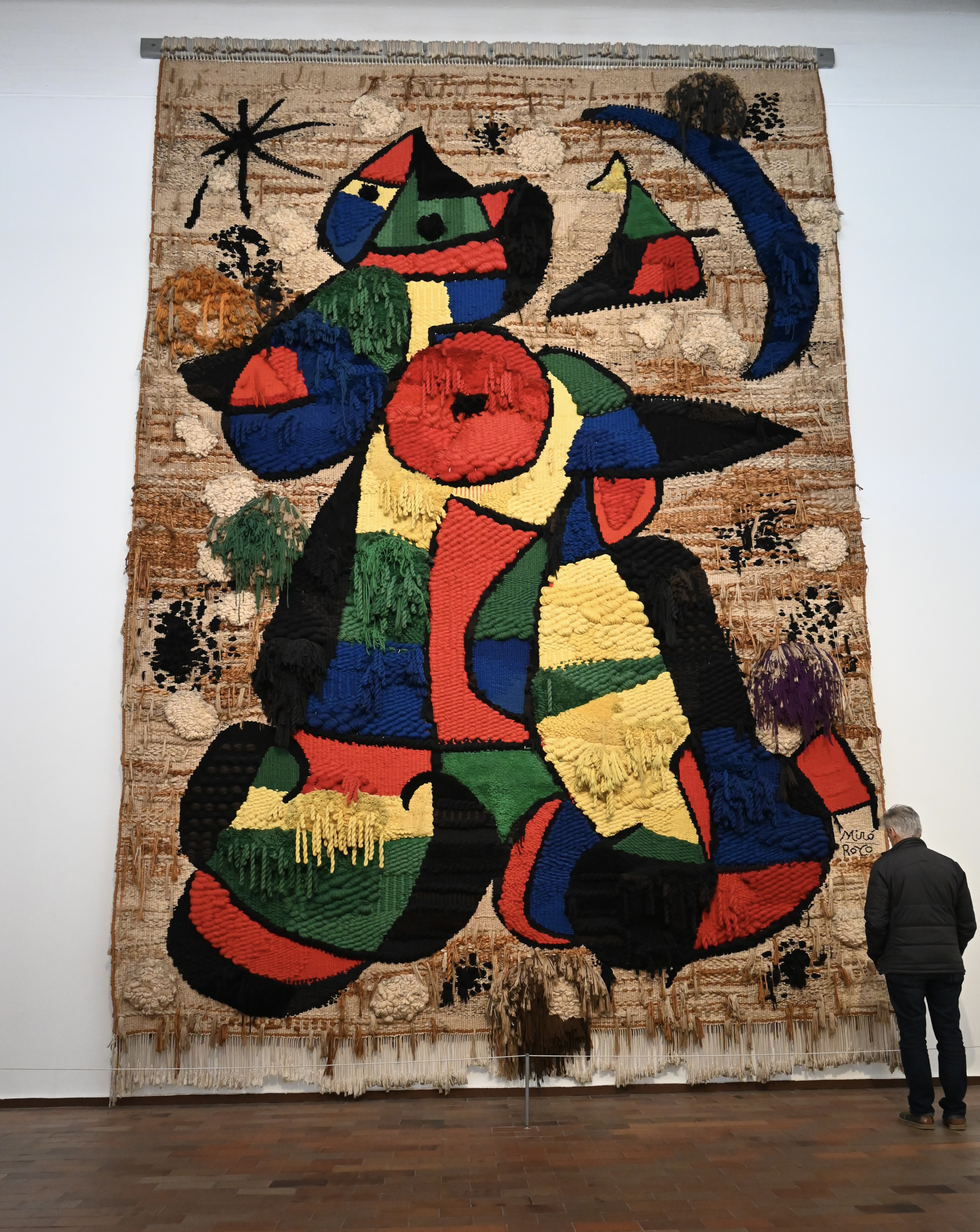
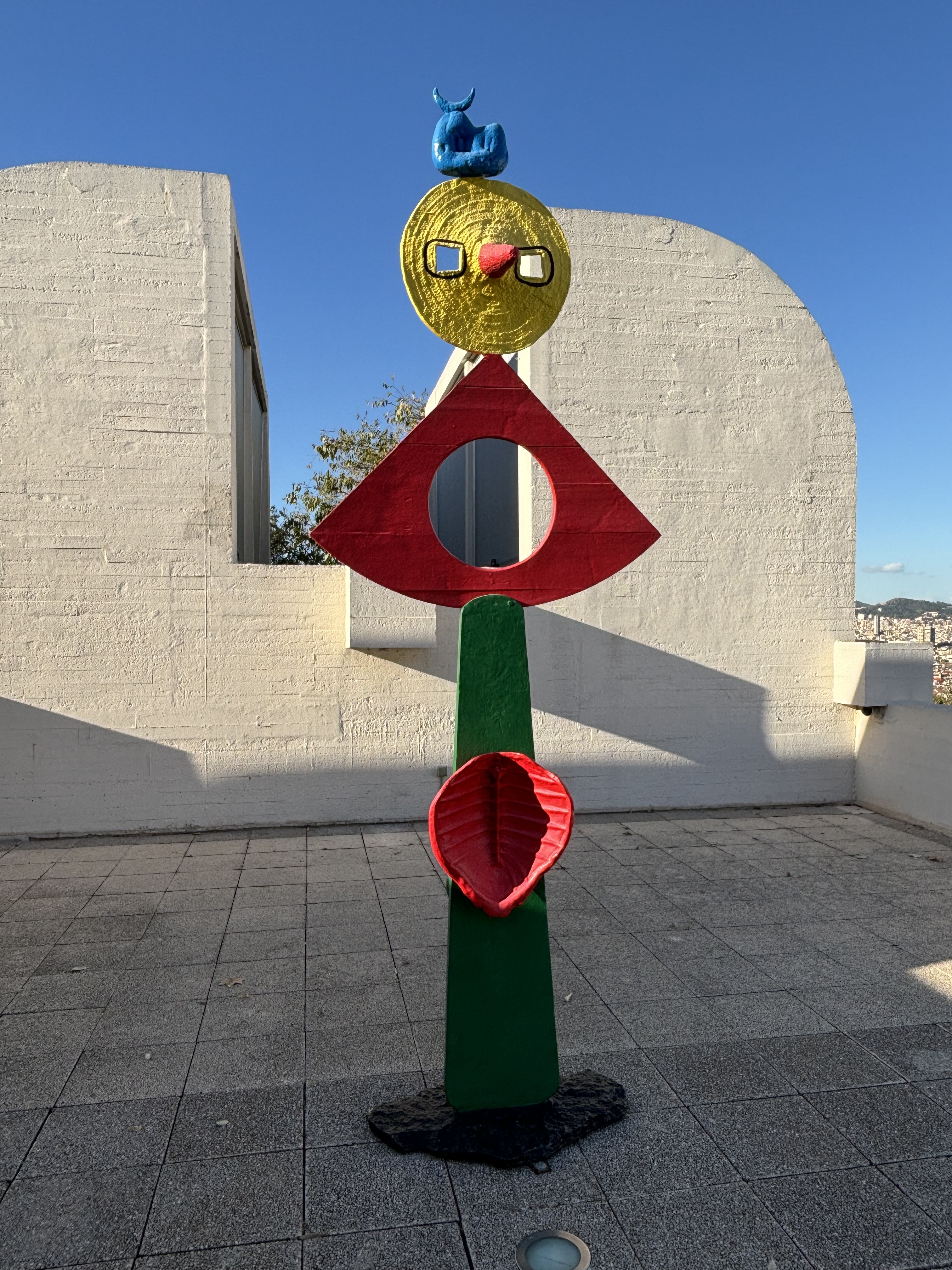
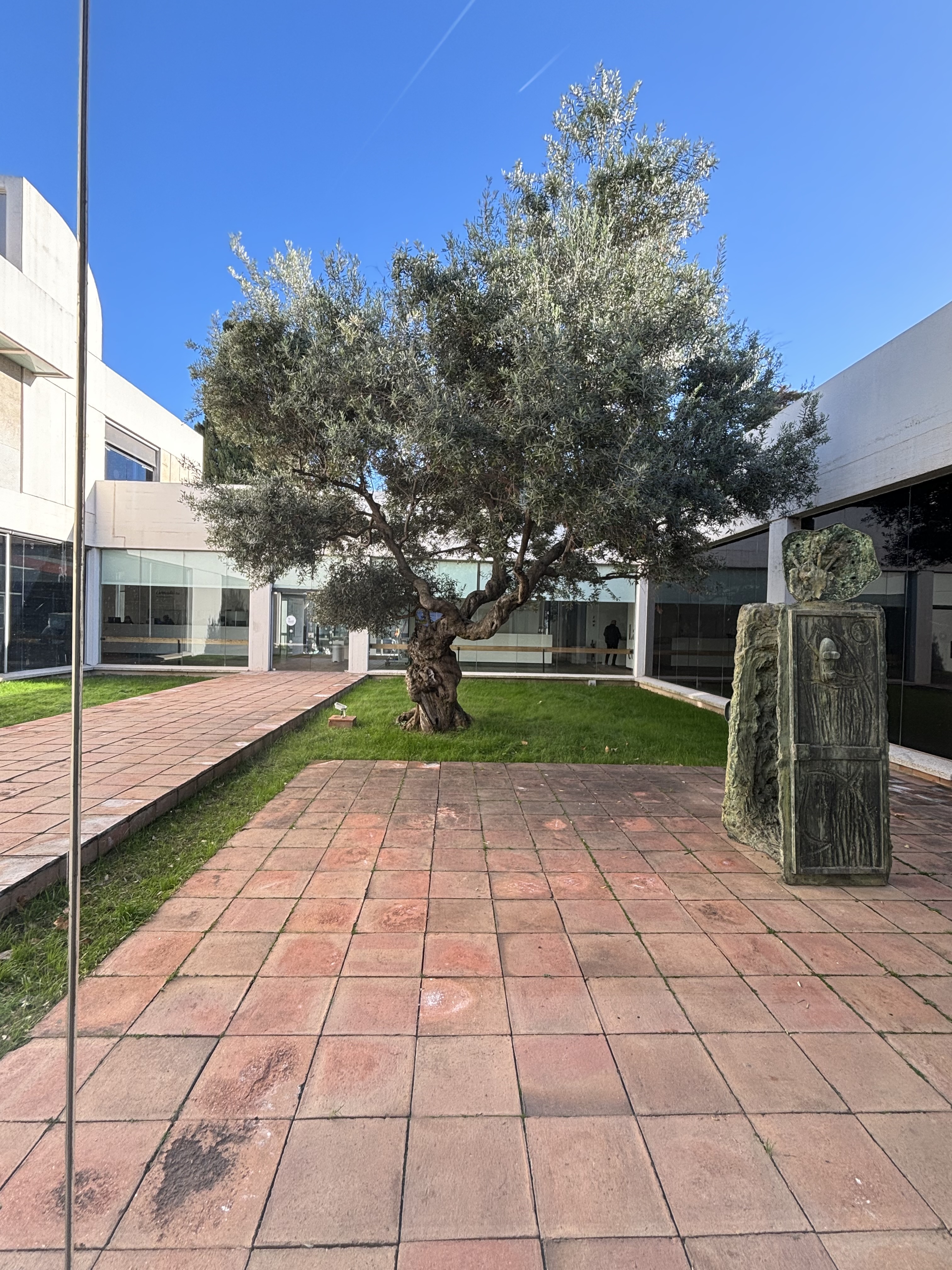
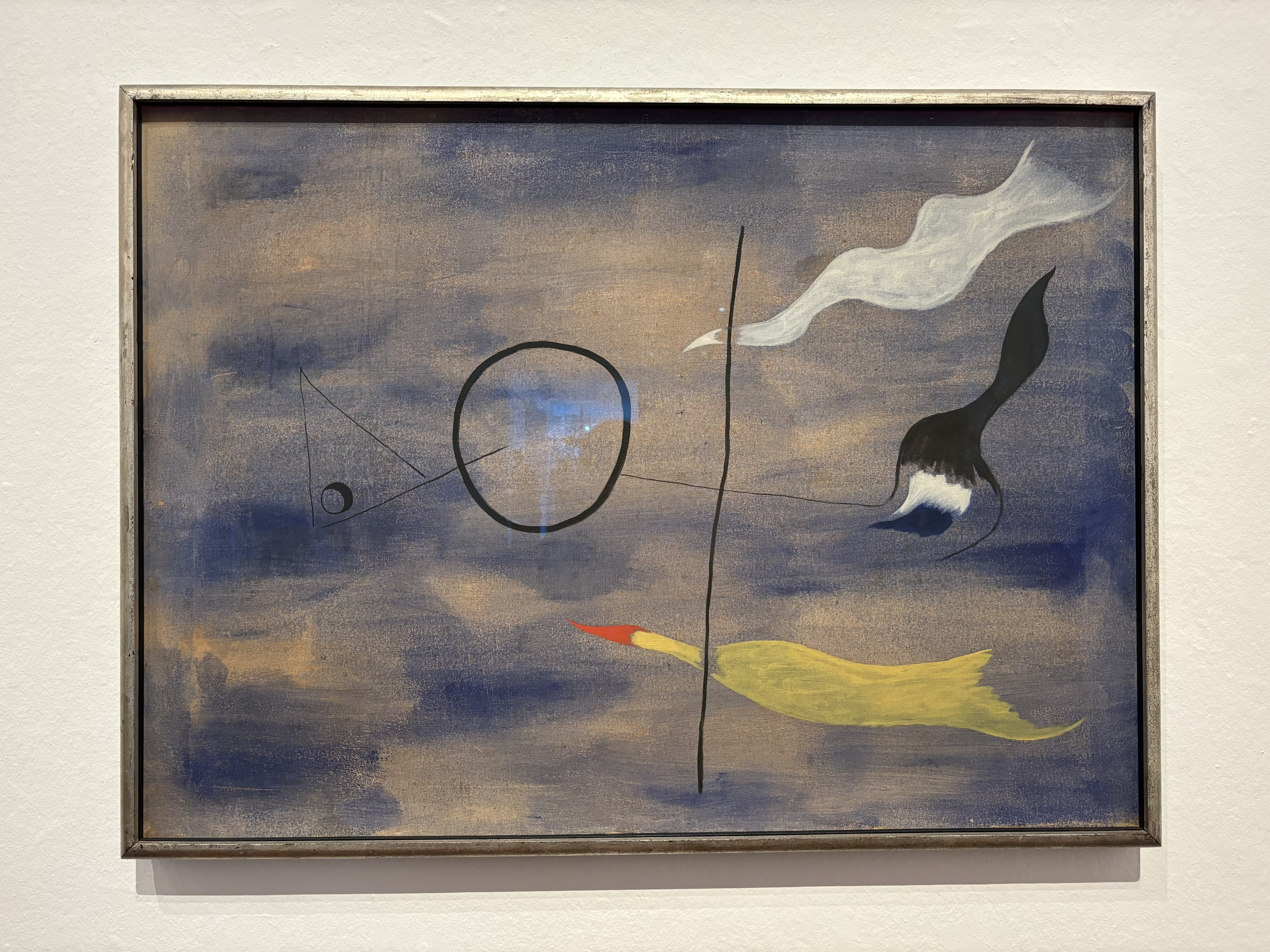
On the first afternoon we visited the Fundacio Joan Miro, a museum we had missed on our previous trips as it was closed at the time. It is located on Montjuïc, or the Jewish hill. The Fundacio was created by Miro himself, with works from his own private collection. It opened to the public in 1975 and is today a dynamic place where Miro’s work is exhibited with other contemporary art. It is located in a building that was designed by architect and friend Josep Lluis Sert, where the building is in perfect relation to the art its exhibits. When we visited there was a temporary exhibition of Matisse’s work in dialogue with that of Miro. Both artists where friends despite their differences in age and style. We took a taxi via Uber to the museum and back to the hotel.
In the evening we went out for dinner in a restaurant just 50 m away from the hotel. Restaurant Torreón is known for its paella, but we both went for the fish and a dessert. It is a large restaurant, with a pleasant decor, the service is rather traditional, but he dishes are really tasty.
We rented a car for three days at the airport of Barcelona with Budget, a subsidiary of Avis. We took an extra insurance for our own peace of mind, but it made the price of the rental a lot less attractive. Also when returning the car we noticed that there were taxes on top of the extra insurance, which they hadn’t mentioned when they added the extra insurance. The car was in good condition though, so no complaints there.

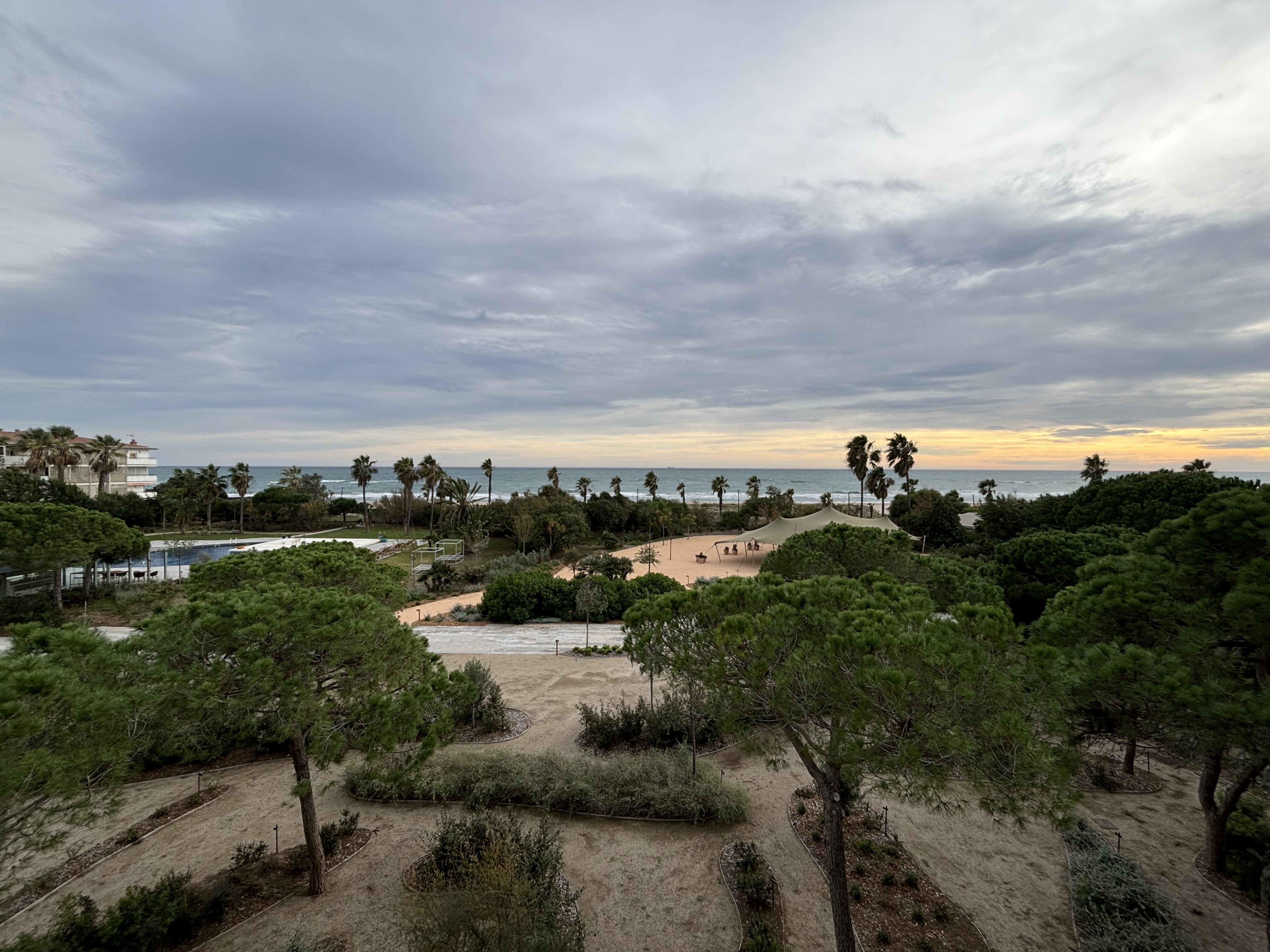
Our hotel AC Gave Mar offered a nice and diverse breakfast buffet with a choice of freshly made eggs. The rooms are spacious enough with a nice bathroom (bath and shower) and all room have seaside views. There is an outdoor pool, but since it was unheated, the water was too cold to swim in November.

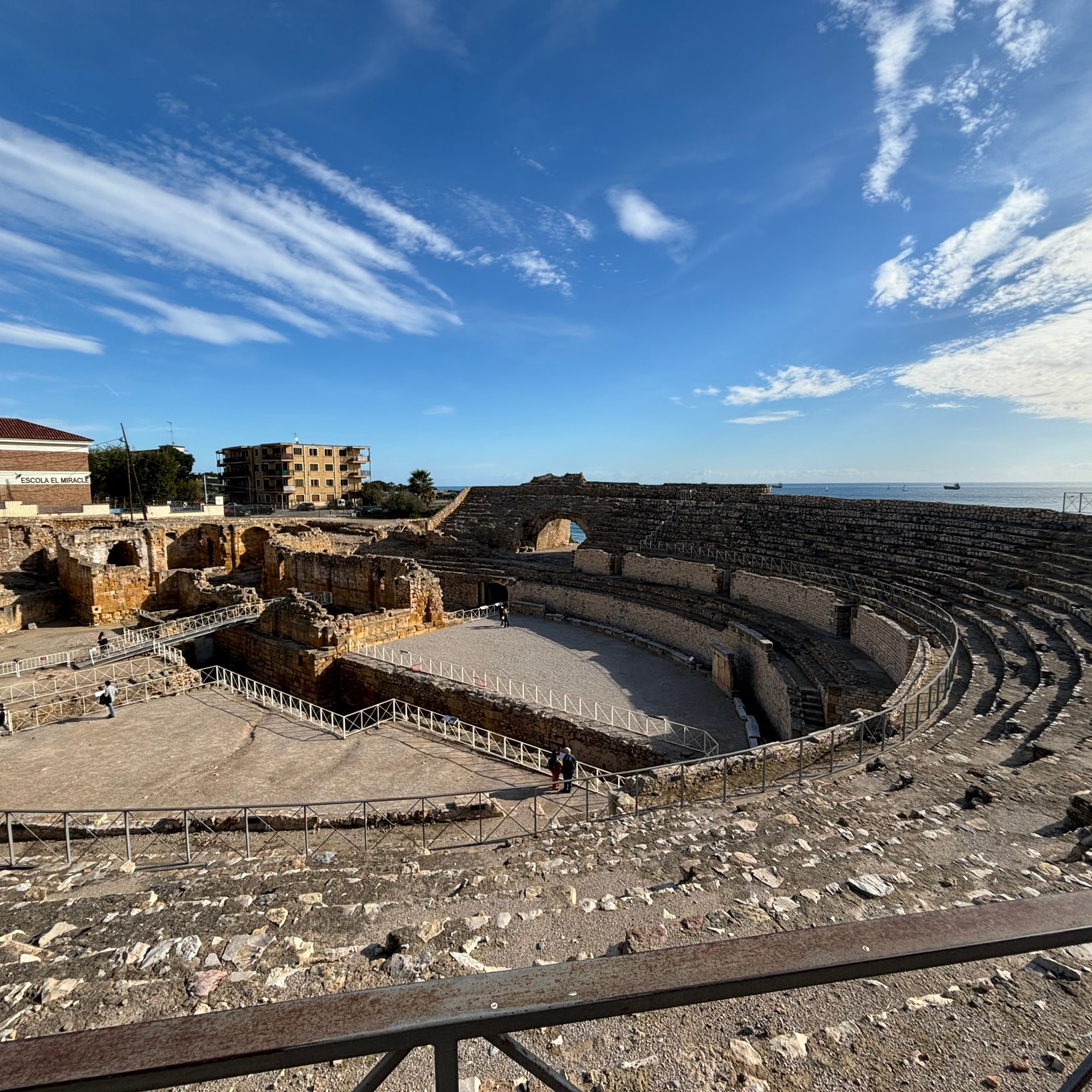

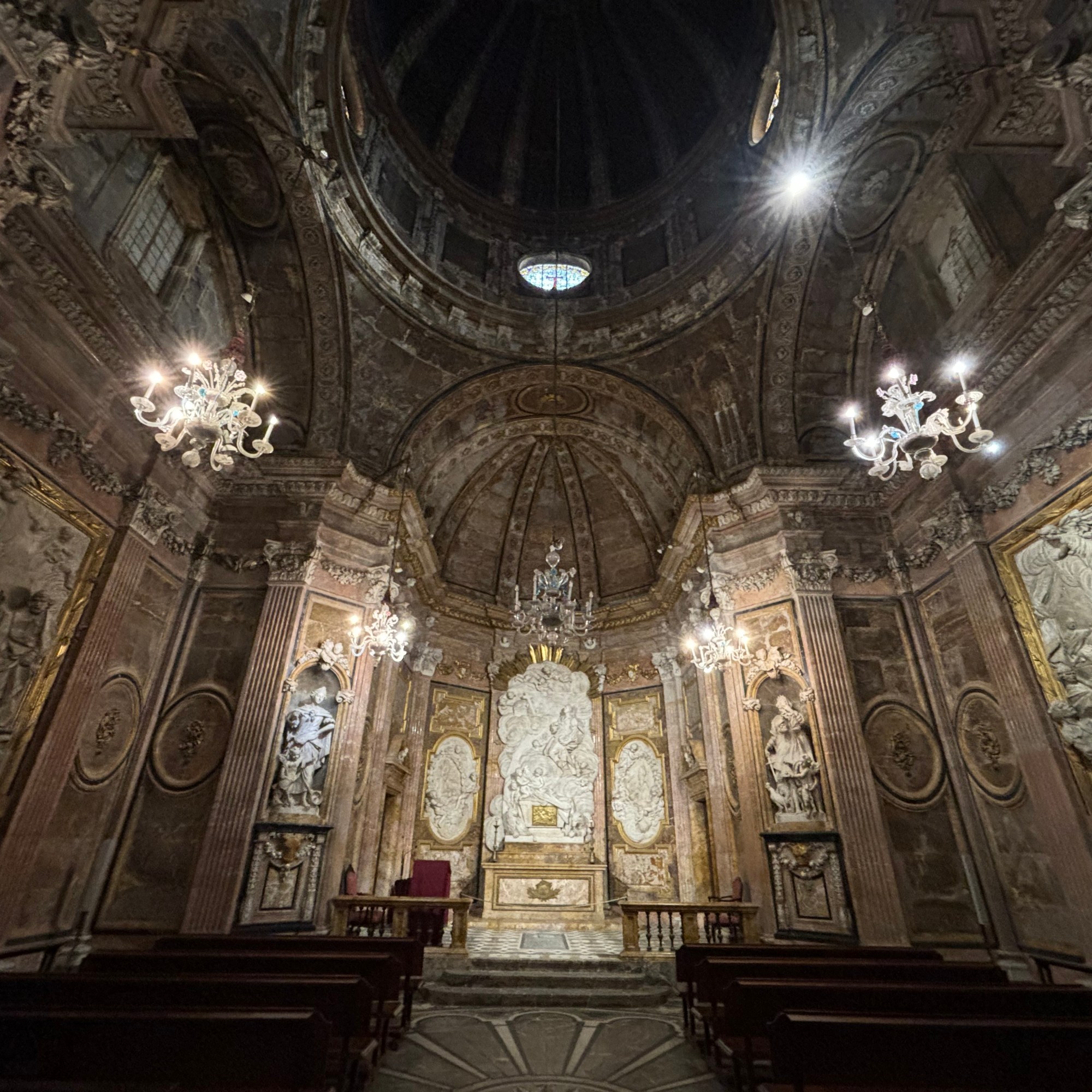
After picking up our car at the airport, we drove to Tarragona, about one hour by car from Gava. Tarragona goes back 2000 years and used to be the most important Roman provincial capital in Hispania. You can visit the Roman amphitheater and circus, and even though it was partly demolished to make way for a church and abbey and later a prison, it is still quite impressive to visit. The city also boasts a nice medieval centre of which the gothic cathedral and convent iare definitely the highlights. The weather was really nice so we took a lunch on a terrace just in front of the cathedral. We were just in time to still have a table for us two. We shared some tapas for lunch. We then visited the cathedral of Tarragona were almost alone in the 12th century church and adjoining cloister, both are really worth the visit, there are some impressive chapels, one is dedicated to Saint Tecla, patron saint of Tarragona and the saint to whom the cathedral is dedicated. The chapel is sumptuously decorated in marble in baroque style. The main altarpiece, a retable is alabaster is a masterpiece of 15th century carving. We were also impressed with the small museum that boasts some wonderful medieval pre-Eyckian Spanish paintings. We bought some nougat, which is a typical Catalonian delicacy for Christmas. They sell it in almost any possible taste.



We took the car and drove to the Aquaduct de les Ferreres outside the city. There is a small parking lot, and the aquaduct lies just next to a highway so the surroundings are not really idyllic. You can walk under and on the aquaduct which is very well preserved. We drove back to our hotel and had just some fruit and yoghurt in our room as a light dinner.

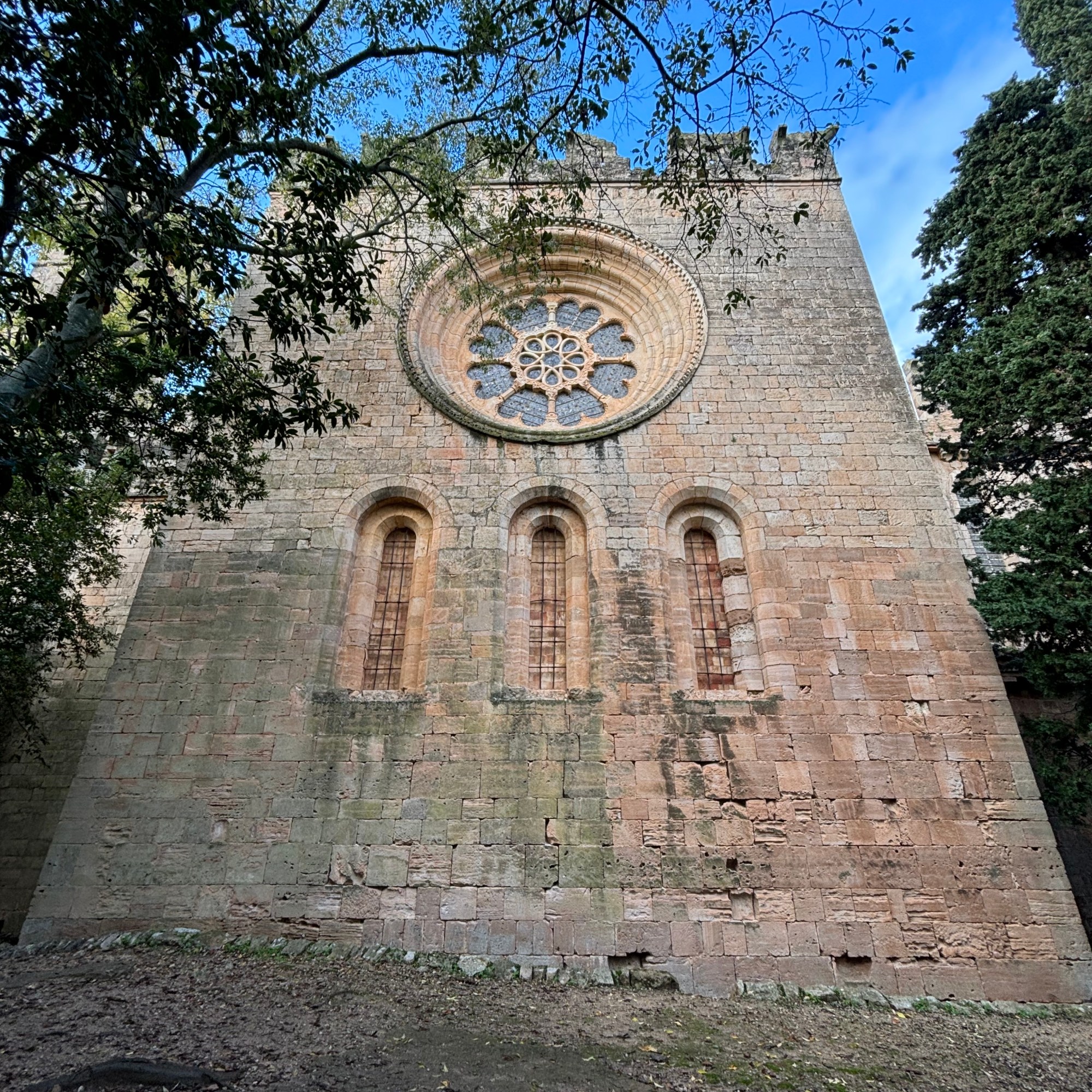

The next morning we set out to see two of three Cistercian monasteries on the Cistercian triangle which links the three most iconic monasteries (the Holy Cross or Santa Creus, Santa Maria de Poblet and Vallbona). Poblet Monastery was declared a heritage site in 1991 and is the largest inhabited Cistercian monastery in Europe in the province of Tarragona. The first one we visited was the Santa Creus monastery, considered one of the best preserved Cistercian monastic complexes in Spain. It was founded in 1150 but has no monastic life anymore since 1835, so you can visit every corner of the place. They were doing restorations in the inner courtyard of the gothic monastic part. In the 13th and 14th century the kings of Aragon chose the monastery as a royal pantheon. In the church you find the royal tombs of King Peter III and of his son and his son’s wife.
On our way to Poblet monastery we stopped in L’Espluga di Francoli for lunch. We chose bar-restaurant Prestige, where you can eat a 3 course set lunch. The place attracts mostly locals, the service is super friendly and the food all freshly home made. You can choose between several dishes for each course. We took a salad with goat cheese as a starter, a stew as main dish and Catalan crème brûlée. We really enjoyed our lunch here.
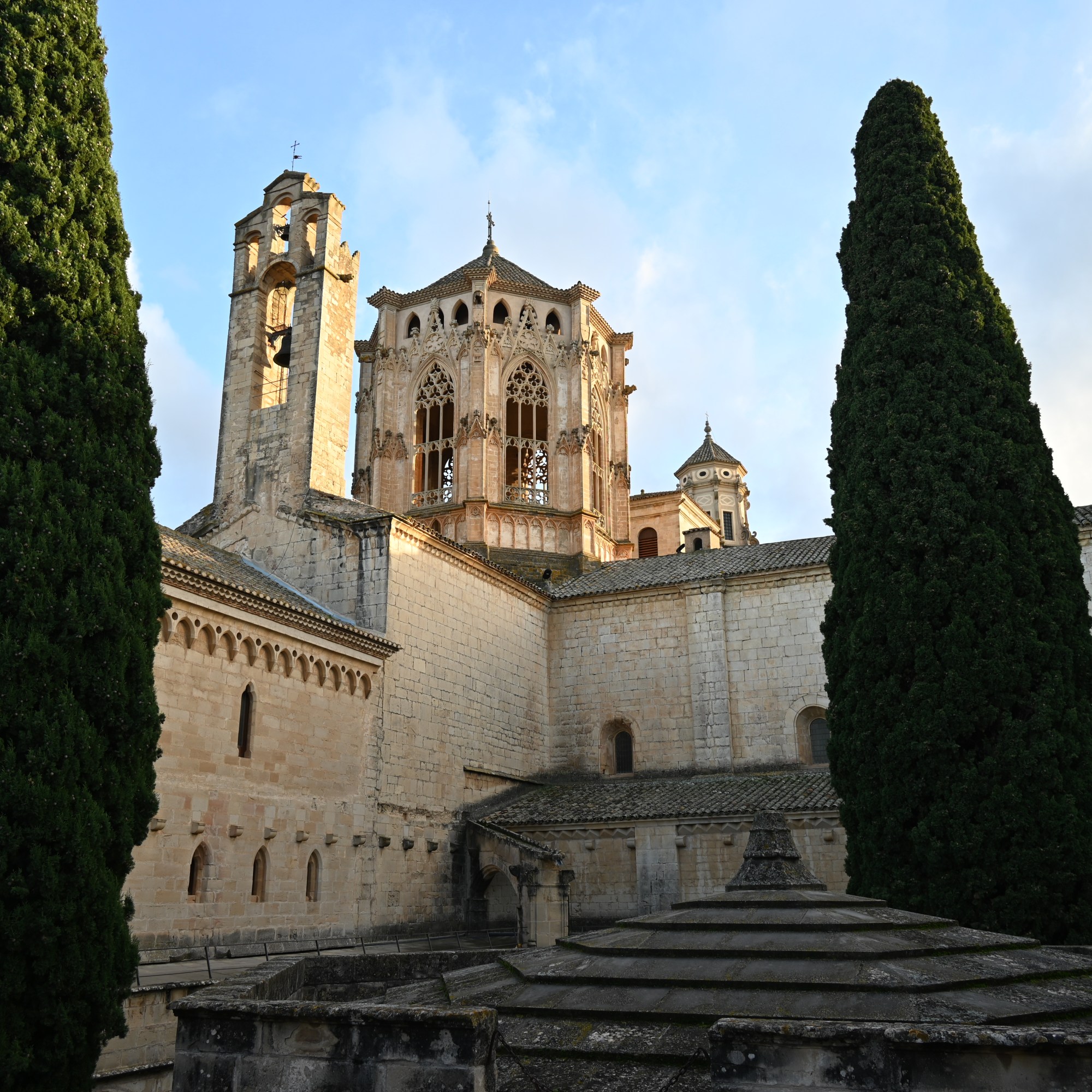
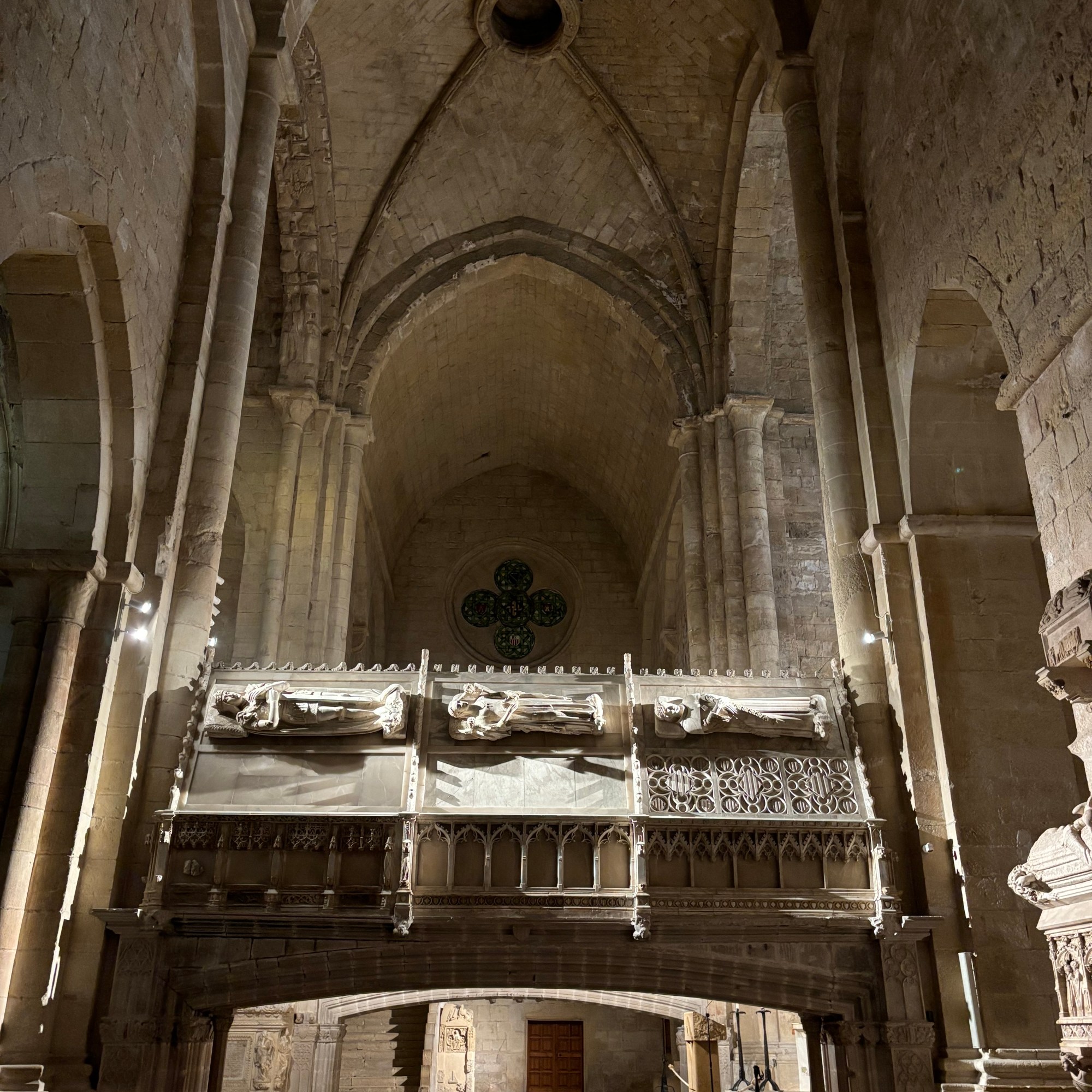
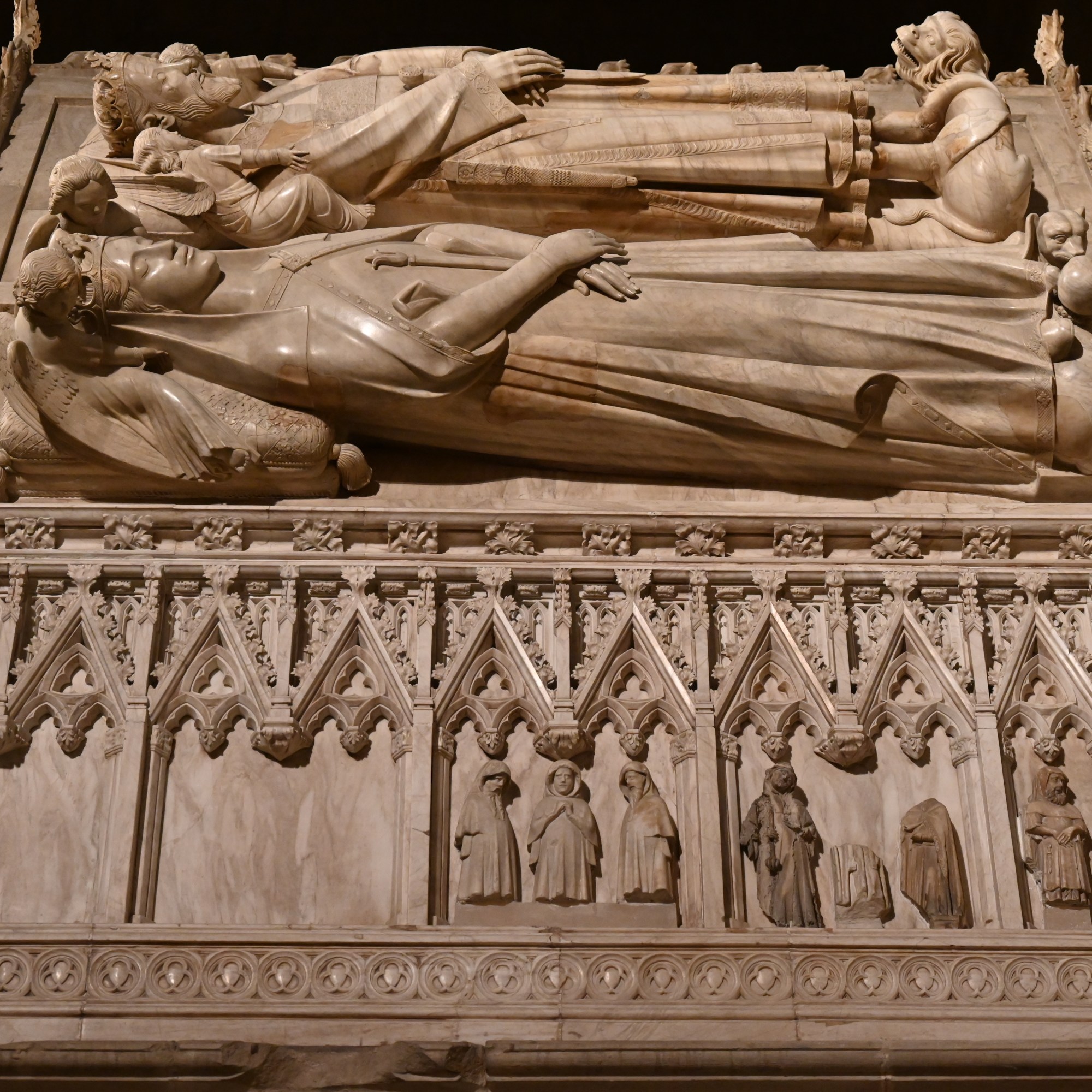

The monastery of Santa Maria de Poblet is even more impressive than that of Santa Creus. The monastery founded in 1151 is one of the largest and most complete Cistercian monasteries in the world. Cistercian monks still live here. The monastery was declared Unesco World Heritage site in 1992. In the church which is the pantheon of the kings of Aragon you find the impressive elevated tombs of the kings, with alabaster statues of the kings on top of the tombs. We drove back to our hotel where we took a dinner in the hotel restaurant.


We had planned a visit to Montserrat on our last day. We checked out after breakfast and headed first to La Colonia Güell to see the chapel built by Gaudi. The settlement was founded by the famous industrial Eusebi Guell, as housing for the workers of his textile mill. Some of the leading modernist architects of the day were involved in the construction of the village, resulting in highly beautiful spacious buildings. Antoni Gaudí was commissioned to design the church and his project consisted of an upper and lower nave, towers at the sides and a belfry measuring 40 m in height. In 1914, when only the lower nave had been completed, the Güell family withdrew funding for the project. The church, now known as the crypt, included Gaudí’s architectural innovations for the first time which were later integrated in the Sagrada Familia in Barcelona.
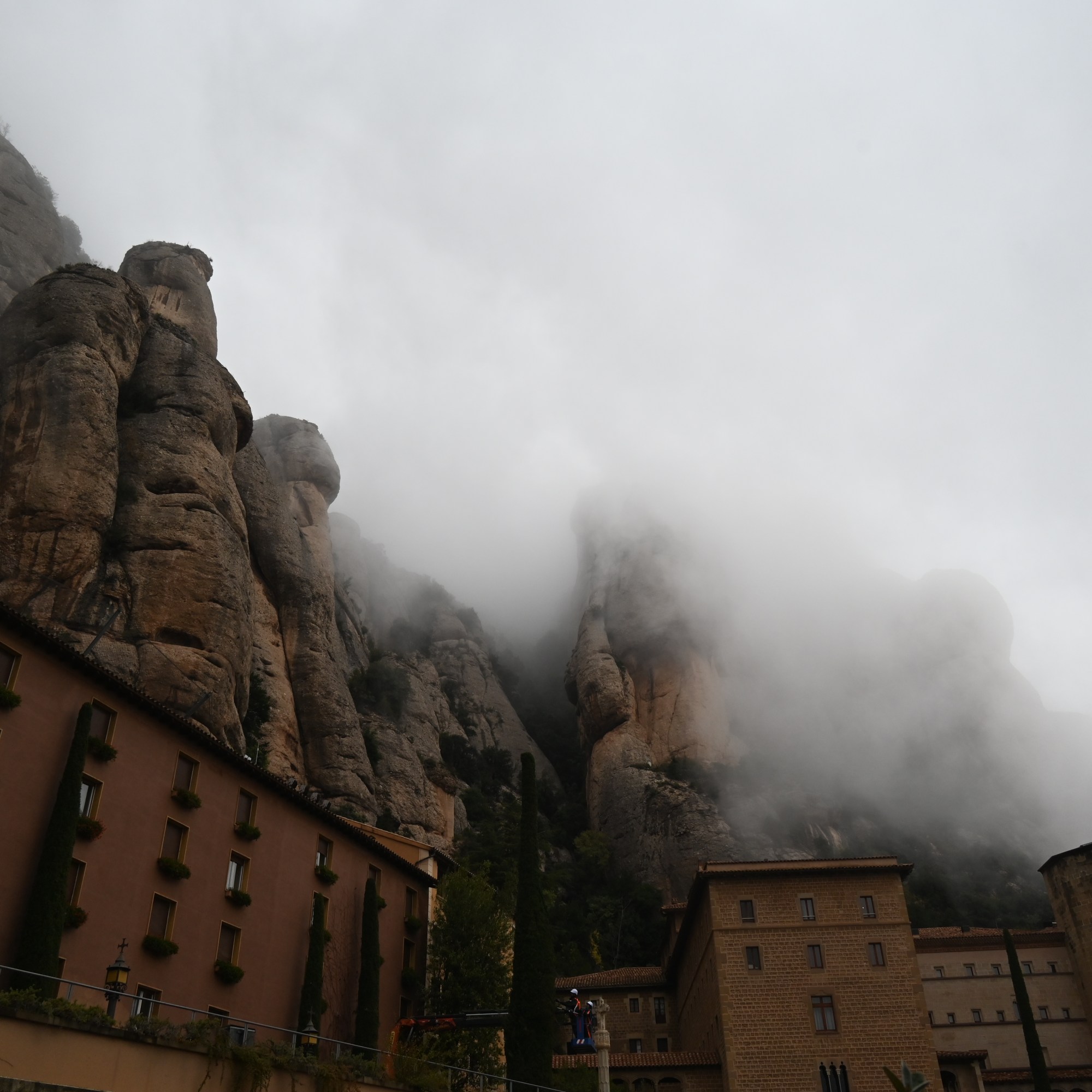

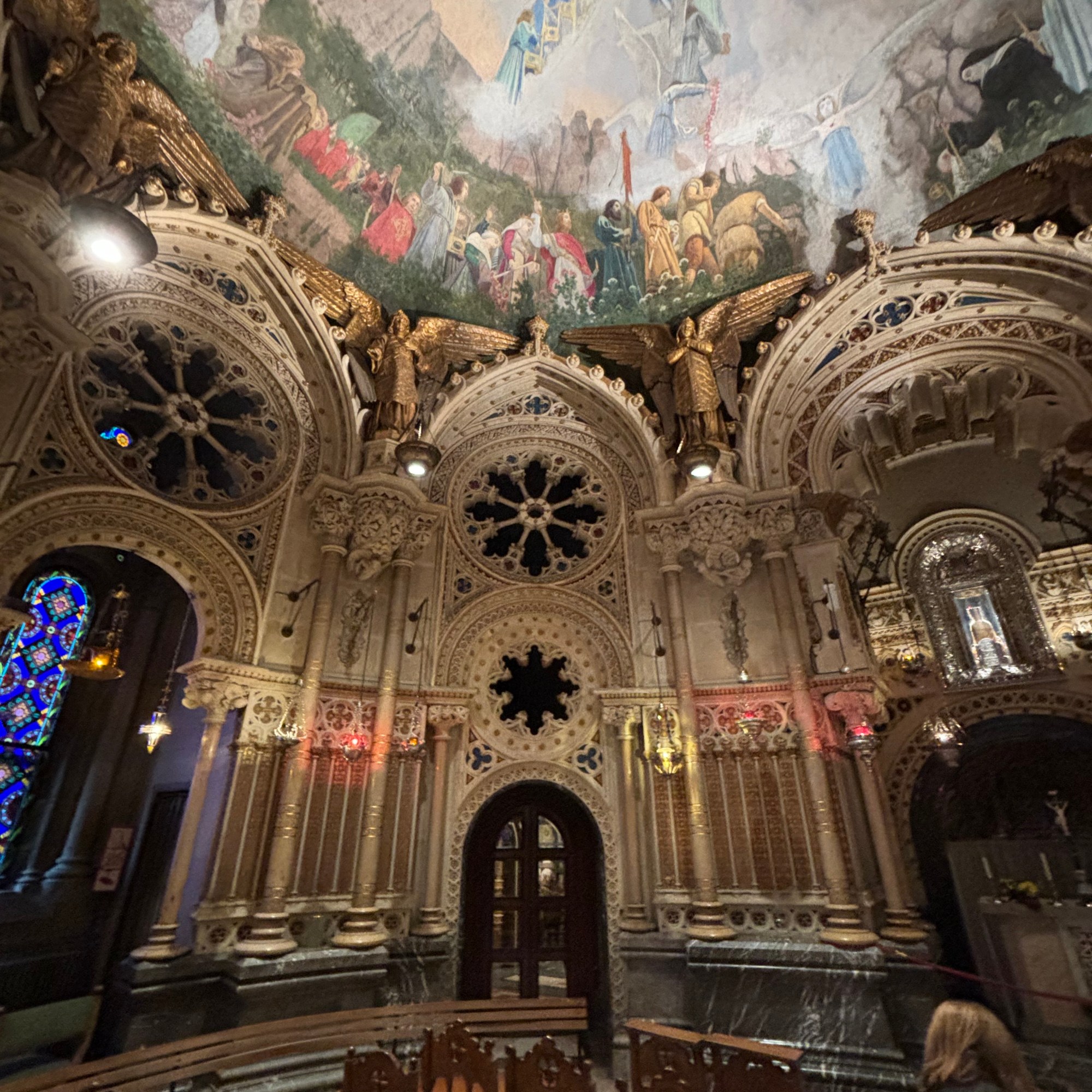
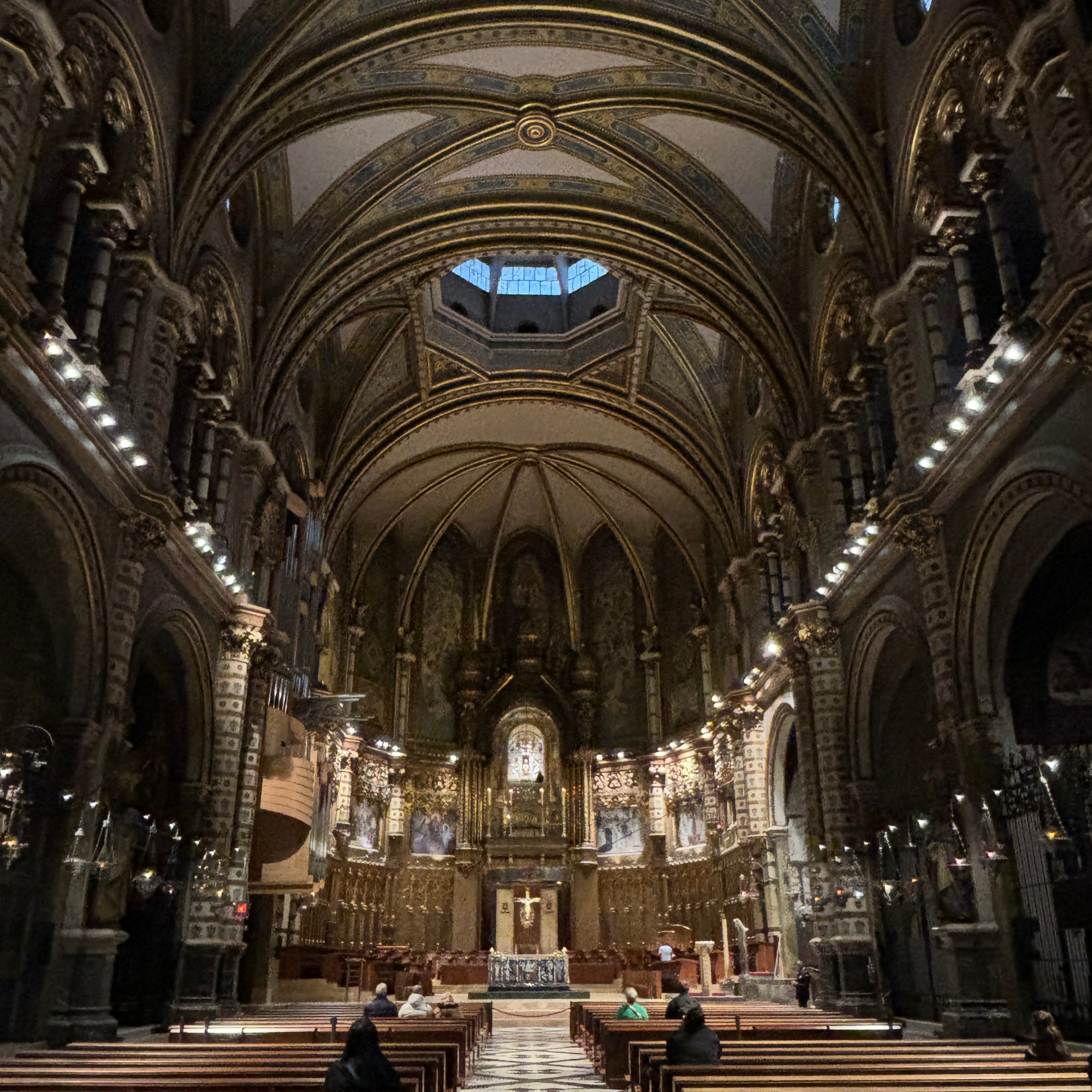
We then continued to the Benedictine abbey Santa Maria of Montserrat. It was unfortunately a very cloudy and misty day, and the natural surroundings were shrouded in mist. We had planned to go hiking after visiting the monastery, but decided against it. Just before driving up to the monastery there is a sign that shows if there are free parking spots in front of the monastery. It was a Monday in November and there were still a lot of free places to park at the monastery, so we drove up. Luckily I had not yet bought tickets for the funicular train that can be taken from the large parking area below the monastery in Monistrol. Just when we were to enter the monastery, the clouds receded for just a few minutes showing the impressive Montserrat mountains behind it. It was almost like a miracle. The monastery was founded in 1025 but was rebuilt in the 19th and 20th century. We had bought tickets in advance for the Virgin and the basilica. You get a time slot to visit the black Virgin, via an entrance on the right side of the basilica. You cannot stand still in the Virgin’s shrine, everyone has to pass it and continue. The virgin is kept behind glass, only her hand holding a globe can be touched for good luck. There is a beautiful chapel behind the Virgin’s shrine. You then visit the basilica which is sumptuously decorated. We did not book a ticket for the famous boy’s choir so I have no idea if it is worth it.


Since we could not go hiking up the hill, we had some extra time, and decided to drive to Sitges. We enjoyed the sunset on the gorgeous seafront of Sitges, a quaint little fisherman’s town and had an Iberian ham sandwich in one of the shops. The shops here close for siesta time and open again at 4 PM in the afternoon. From Sitges we drove back to the airport to return our rental car en take our flight back to Brussels.
 chefmaison